Skip to content


A bar unit and a bar cabinet solve the same problem — they give drinks service a permanent home in a room — but they do it in fundamentally different ways. Choosing between them comes down to what you want the piece to communicate on the days when no one is pouring a drink.
Both types are part of the Eichholtz collection, and both are on the floor at our showroom in Tivoli Village. The bar units — open, freestanding pieces purpose-built for mixing — keep the collection in view. The bar cabinets close everything away and read as sideboards until they're opened. Each is right in the right room. The question is which room you have and what you're asking the piece to do.
A bar piece earns its place not at the party, but on a Tuesday afternoon when the room still needs to look right.
What a Bar Unit Does
A bar unit is the more committed of the two choices. The bottles are visible. The glassware catches light. The piece declares, from anywhere in the room, that this is a home where entertaining has been considered.
This works well when the bar is a destination — a corner of the living room where guests naturally gather, or a dedicated entertaining area with seating arranged to support it. The better bar units are scaled for the moment: a lower working surface where a drink is assembled, a raised shelf tier that brings bottles into view, hardware that reads well from across the room. They're designed to be looked at.
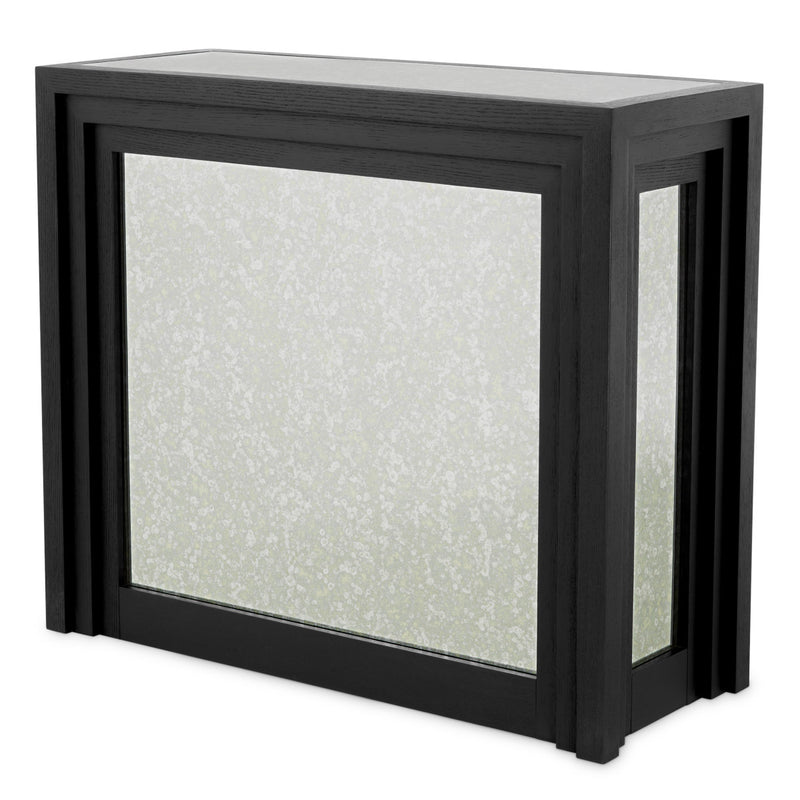
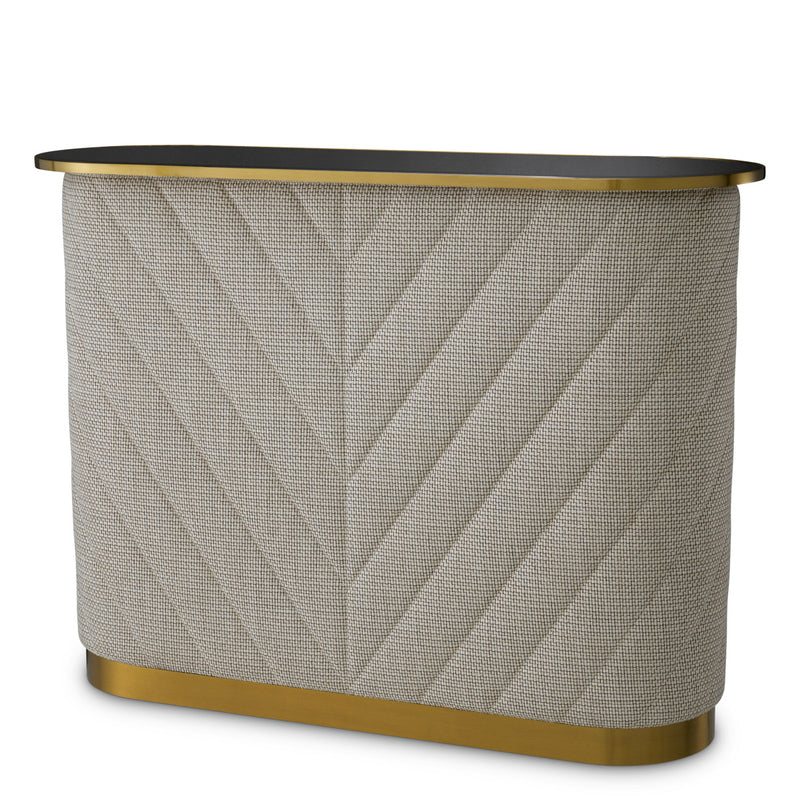
The Bar Metropolitan is a good example of the category at its most considered. It's generous in scale without being imposing, with a material palette and proportions that earn their place in a larger room. The Bar Matthew takes a different direction — more structured and vertical, with a presence that works in tighter spaces without sacrificing any of the character. Both pieces carry the Eichholtz detail standard: the joinery, the hardware, the finish work throughout.
What a bar unit asks of you is a clear edit. You're committing to showing the collection — the bottles, the glassware, whatever else is on the shelves — which means investing in it. You're also committing to the piece as a design element, which means it needs room to breathe and a clear relationship with the furniture around it.

What a Bar Cabinet Does
A bar cabinet is built on a different premise: that a well-designed room doesn't need to show everything. The cabinet contains the ritual of entertaining without announcing it. Closed, it reads as a sideboard — a credenza with considered hardware and a composed exterior. Open, it reveals a purpose-built interior with bottle storage, usually a mirrored back panel, shelving at the right height for service, and enough depth to hold a magnum without compromise.
This is the right choice for rooms where the bar is secondary to the room's primary function. A living room that also serves as a workspace during the week. A dining room that needs to hold its composure before and after meals. A bedroom sitting area where a drinks cabinet is appropriate but a full open bar would tip the register. The cabinet closes off the visual weight of bottles and bar equipment and leaves the room looking intentional even between gatherings.
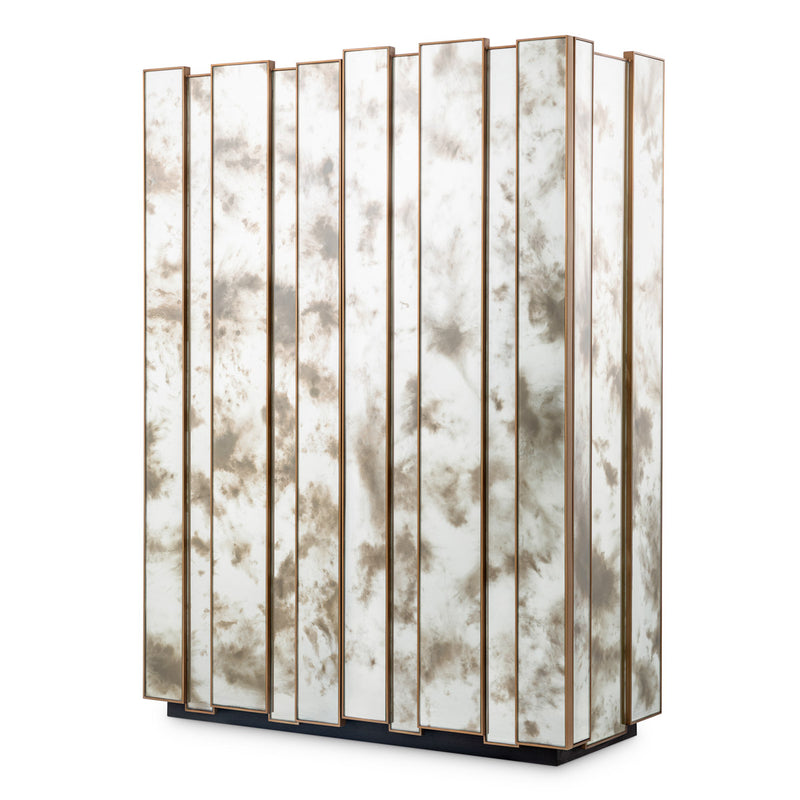
It's also the better choice for people who like the theatre of the reveal — opening a beautiful cabinet is its own moment, and a good bar cabinet makes the most of it. The Bar Cabinet Nottingham shows how much an exterior can communicate before it's opened: restrained proportions, hardware that is precise without being stiff, a finish that reads well in both warm and cool light. Inside, the storage is organized. Outside, it's simply a handsome piece of furniture doing its job quietly.
Bar cabinets also tend to require less clearance than a full bar unit — they run shallower and sit closer to the wall, which is easier to place in rooms where the furniture plan is already committed. If the room is tight or the bar is competing with other significant pieces for visual attention, the cabinet often resolves the problem without negotiation.
The Practical Questions Worth Settling First
Scale is the first thing to resolve. A bar unit needs space around it — room to walk to it, room to stand in front of it, room for the piece itself to be seen. If it backs up to a wall and the nearest seating crowds it, the proportion reads off. A bar cabinet can often take the same footprint as a sideboard, which is a solved problem in most rooms. Both can anchor a wall; only the bar unit anchors a corner as a social destination.
Ambient light is the second factor. An open bar unit with glassware and mirrored elements catches and redirects light — this can animate a room or compete with other pieces, depending on what's around it. A bar cabinet manages this internally: the reflections happen inside the piece when it's open, and disappear when it's closed. In rooms with a strong existing focal point — a fireplace, a view, a large-format artwork — the cabinet approach keeps the peace.
The third question is the rest of your entertaining setup. A bar unit works best when the room is arranged to support gathering — side tables within reach, seating in a layout that works for a group, lighting that performs at 8 PM as well as at noon. A bar cabinet is more self-contained; it can sit against a wall and do its job without requiring the room to reorganize itself around it. If the entertaining happens in a separate dining room or on a terrace, a bar cabinet in the living room is often all the bar infrastructure you need.


In-Stock Availability and Delivery
Both the bar units and bar cabinets in the Eichholtz collection are available to order through the showroom or directly at eichholtzlasvegas.com. For in-stock pieces from the Eichholtz warehouse network, delivery runs two to four weeks — considerably faster than the twelve to twenty-four week lead time that made-to-order luxury furniture typically carries. This is one of the practical advantages of a brand store that holds real inventory: you can commit to a piece with a clear timeline, rather than speculating on a long wait and reconfiguring the room around it.
The showroom in Tivoli Village carries both categories on the floor, which is the right way to evaluate them. The scale of these pieces — the working surface height, the depth of the shelves, the weight of the hardware in hand — is difficult to assess from a photograph. In person, the choice usually resolves itself quickly.
Working with the Trade Team
If you're specifying a bar piece for a client, the Eichholtz designer trade program covers the full bar and bar cabinet range at trade pricing. The team at the showroom can assist with placement — reviewing a floor plan, confirming dimensions against a furniture layout, and working through which piece reads better in a specific room. The trade program is built for working designers sourcing on behalf of clients, and the showroom can serve as a presentation space if you need to walk a client through the options in person.
For hospitality projects — hotel suite service areas, private dining rooms, club environments — the collection includes pieces scaled for those settings. If your project has specific dimension or finish requirements, the team can work through the options before you commit.
See the Bar Range at the Showroom
Both bar units and bar cabinets are on the floor at Eichholtz Las Vegas — the right place to evaluate scale, hardware, and finish before committing to a piece.
Apply for Trade Access