Skip to content


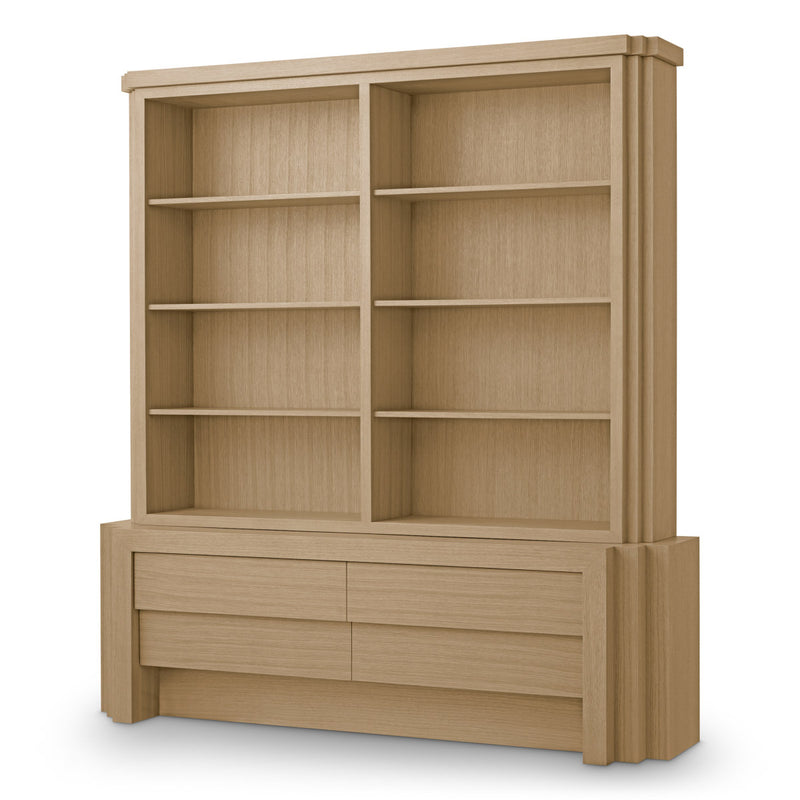
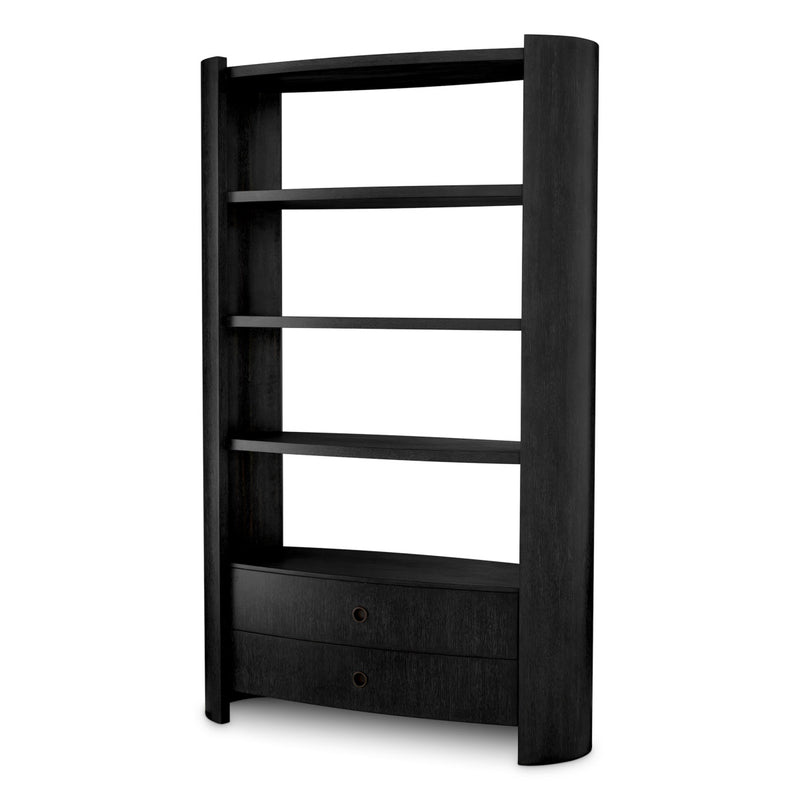
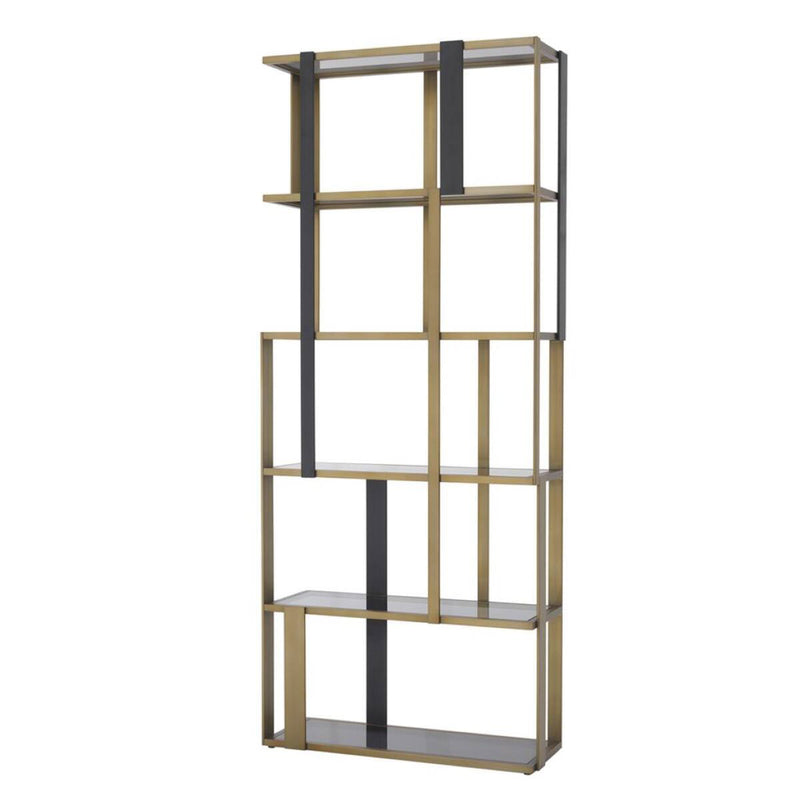
A display cabinet does more than store things. It is a backdrop, a composition tool, and, more often than not, the piece that gives a room its point of view. Eichholtz has built more than forty display cabinet designs — from compact wall-mounted pieces to floor-standing towers that anchor an entire wall — and every one of them is designed to look as considered as the objects placed inside.
Choosing the right display cabinet comes down to three questions: what it will hold, where it will live, and what you want the room to feel like when it is closed. Answer those, and the rest of the decision falls into place.
A display cabinet earns its place by making everything around it look better — including the wall it stands against.
Tall, Low, or Wall-Mounted
The first decision is format. Tall floor-standing cabinets — anywhere from 1.8 to 2.3 metres — are statement pieces. They draw the eye upward, make ceilings feel higher, and work well in rooms that need a vertical anchor. In a dining room, a pair of tall cabinets flanking a buffet wall is a classic move. In a living room, one tall cabinet beside a fireplace balances the chimney breast without competing with it.
Low cabinets — typically 90 to 110 centimetres high — add presence without dominating sight lines, which makes them the right choice for rooms where seating is the priority. A low cabinet behind a sofa doubles as a visual boundary between the seating area and the rest of the room. A low cabinet at the end of a hallway holds objects at eye level and invites closer attention without demanding it.
Wall-mounted pieces offer a third option. They raise the visual weight of a composition off the floor, creating space beneath them that makes a room feel lighter and less cluttered. Wall cabinets — like the Wall Cabinet Highgrove and Wall Cabinet Monforte in the Eichholtz collection — work particularly well in entries, home offices, and smaller rooms where a floor-standing piece would feel too heavy.
- Tall floor-standing. Best for dining rooms, libraries, and rooms that need a strong vertical element. Works in pairs for symmetry — a pair flanking a console or a fireplace is one of the most reliable moves in room design.
- Low cabinet. Best behind a sofa, at the end of a hallway, or as an anchor on a wall that needs weight without height. Leaves the upper portion of the wall available for art or a mirror.
- Wall-mounted. Best in entries, bathrooms, and compact rooms. Elevates the composition, keeps the floor clear, and gives the piece a built-in quality.
What Goes Inside — and How to Edit
The instinct when a new cabinet arrives is to fill it. Resist that. The most compelling cabinet styling in a luxury interior is always edited down — a few objects with space between them, rather than a dense arrangement that competes with itself.
Books are a natural starting point, especially for large glass-fronted pieces. Stack them horizontally in small groups, mix each stack with a single object placed on top, and leave at least one shelf empty or nearly empty so the rhythm of the arrangement has room to breathe. Eichholtz's accessories catalog — which runs to several hundred objects, including vases, boxes, sculptures, trays, and hurricane lanterns — provides exactly the kind of pieces that read well inside a glass front: varied in height, complementary in finish, interesting when viewed from across the room.
For open-shelf cabinets, the key is grouping by material. Brass objects read together. Stone objects read together. A shelf that mixes ceramic, brass, crystal, and wood in equal measure tends to read as noise. Pick a dominant material for each shelf level and let it lead, with no more than one accent material per shelf.
The back of the cabinet matters, too. Many Eichholtz cabinets feature mirrored or lacquered backs — and this is not just decorative. A mirrored back doubles the apparent depth of the arrangement inside, which makes even a sparse composition look considered and full. It also reflects light, particularly useful when the cabinet sits away from windows.
Choosing a Finish
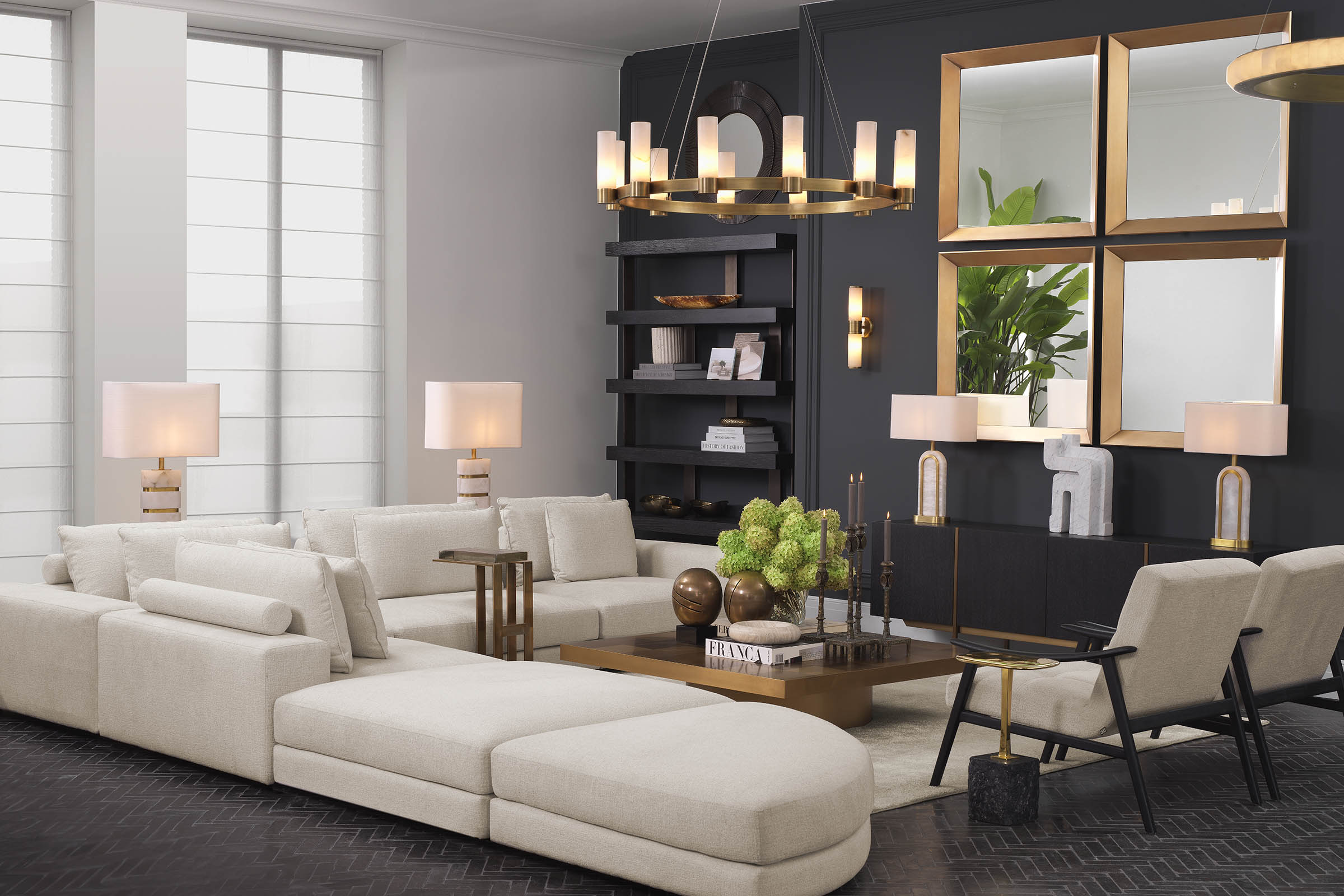
Display cabinets arrive in more finish variations than almost any other Eichholtz category. The range runs from lacquered black and dark-stained wood to brass-inlaid glass fronts, mirrored-back interiors, and mixed-metal combinations. The finish you choose should do one of two things: complement the dominant finish already present in the room, or provide a deliberate contrast to it.
In rooms built on neutral tones — warm whites, stone, sand — a cabinet with a brass-trimmed glass front adds warmth and luxury without shifting the room's palette. In rooms with a strong wall color or an already-bold piece of furniture, a lacquered or dark-finished cabinet often integrates better than a brass-heavy piece that competes for visual attention.
Rooms that already carry a strong dark element — a console in blackened steel, a dark dining table base, a chandelier with dark-finished arms — often benefit from a cabinet in a matching or adjacent dark finish. The effect is tonal coherence: the room looks designed rather than assembled, because the dark pieces echo each other across the space.


Placement: Where a Display Cabinet Works Hardest
Display cabinets are versatile, but they tend to be most effective in a small number of specific contexts.
The dining room is the classic location — and for good reason. A pair of tall cabinets flanking a console or buffet turns a flat wall into a proper focal point. The cabinet holds serving pieces, glassware, and decorative objects, keeping them accessible without leaving them in the kitchen. The arrangement also gives a dining room the sense of ceremony that the table and chairs alone rarely achieve.
In a living room, a single large cabinet anchors a wall that might otherwise feel unresolved — the wall behind a long sofa, the wall opposite the main seating group, or the wall beside a fireplace that needs a counterpart. Libraries and home offices respond particularly well to a full-height cabinet arrangement, which gives the room a sense of considered permanence that almost no other piece of furniture can replicate.
The entry hall is an underused location. A low cabinet in an entry gives arriving guests something to read immediately — objects, color, material, scale — before they have seen the rest of the home. It communicates the interior's point of view in the first few seconds, which is exactly what a display cabinet is built to do.
Bring It In Last
The most practical advice about display cabinets is also the most useful: choose them after the seating, the lighting, and the main upholstery decisions are made. A cabinet that needs to anchor the room is better chosen once you know what tone and finish the room is already committed to — because a cabinet chosen in isolation can easily become the piece that never quite fits.
If the room has brass running through it — lamps, chandelier arms, hardware — lean toward a cabinet with brass trim or a warm metal accent. If the room is built on dark finishes — dark wood tables, a dark accent wall, a chandelier with ebony-finished arms — a lacquered or dark-stained cabinet will feel inevitable rather than selected. The goal is always for the cabinet to look like it was always meant to be there.
In-stock pieces from the Eichholtz collection typically ship within two to four weeks from the warehouse network — considerably faster than the twelve to twenty-four weeks standard on made-to-order luxury furniture. Visit or contact Eichholtz Las Vegas for availability on specific finishes and configurations.
Bring a Display Cabinet Into Your Project
Interior designers can access the full Eichholtz catalog at trade pricing — apply to the Designer Trade Program and browse the complete collection in the showroom.
Apply for Trade Access