Skip to content


Upholstery is the most consequential decision in any seating purchase — and the one most people make last. Fabric determines how a piece feels in use, how well it holds up over years, and whether it still reads as intentional when it has been lived in. This guide covers the main upholstery categories available across the Eichholtz collection and how to think through the choice before you commit.
The Eichholtz catalog runs the full range: tight-weave performance textiles, cotton velvets, structured linens, wovens, and leather. The difference between a piece that wears well and one that does not almost never comes down to the price of the fabric. It comes down to whether the material matches the room’s actual conditions — light exposure, use frequency, and who is sitting in it.
The right upholstery is not the one that photographs best — it’s the one that still looks right two years later.
What “Performance Fabric” Actually Means
Performance fabrics are textiles engineered to handle real use. The category covers a wide range of weaves and materials, but most share a few core properties: stain resistance, easy cleaning, color stability under UV exposure, and the ability to hold their shape over repeated use. They were developed for hospitality and commercial interiors first — environments where upholstery gets tested at a scale that most private residences will never match.
The critical point is that performance fabrics do not look the way the name implies. Several performance weaves in the Eichholtz catalog read as rich and textured as their natural-fiber counterparts. The distinction is in behavior after contact — how the fabric responds to a spill, how it holds its pile after years of use, and how it holds its color in a west-facing room with strong afternoon light.
- Stain resistance. Most performance fabrics repel liquid long enough to blot cleanly. Natural textiles absorb in seconds; performance weaves typically give you enough time to address the spill before it sets.
- UV stability. Rooms with strong south or west exposure will fade natural fabrics over one to two seasons in a climate like Las Vegas. Performance textiles hold color significantly longer — a relevant consideration in most homes here.
- Shape retention. Well-constructed performance fabrics spring back after pressure. Cushions that hold their shape after daily use are almost always built from engineered textiles rather than natural fibers.
- Cleanability. Most performance fabrics respond to water-based upholstery cleaner or gentle solvent. Care instructions at purchase tell you exactly what is and is not approved for that specific textile.
The tradeoff: natural materials develop a patina over time that performance textiles do not fully replicate. Linen softens with age. A well-used velvet develops subtle depth. Performance fabrics hold their appearance — which is precisely their strength — but they do not evolve the way natural textiles do.
The Case for Natural Fabrics
Natural textiles — linen, cotton, velvet, wool — belong in rooms that are used deliberately rather than constantly. A sitting room used mainly by adults in a clean, low-traffic home is a fundamentally different environment from a family room with children, pets, and daily traffic. Context determines the right choice; there is no universally correct answer.
Linen reads cool and relaxed, with a texture that pairs naturally with stone, rattan, and organic materials. It works well in a casual-modern interior, a guest room that sees occasional use, or a reading space that is not a daily throughway. Near bright windows without UV treatment, linen can fade unevenly over a few seasons. Know the light conditions in your room before you commit.
Velvet is more durable than its reputation suggests. A tight-woven velvet pile resists wear well, and water-based stains often blot out cleanly when handled promptly. The visual effect — depth, light play, directional sheen — is difficult to replicate in any other material. It marks temporarily from hand pressure, which either matters to you or does not. Velvet in a formal sitting room or primary bedroom, used mainly by adults, holds up far better than most clients expect.
Cotton and cotton-blend fabrics sit in the middle of the range. They are workable, available in the widest selection of weights and textures, and easier to maintain than either linen or velvet in most configurations. For dining chairs used daily, a well-constructed cotton-blend is often the most practical upholstery choice — durable enough for regular use, and available in enough options to support a composed room.
Leather — The Long View
Leather is a separate category from fabric upholstery, and it behaves differently from anything in the woven range. A well-made leather piece does not look its best on day one. It improves over years of use — developing surface character, a softening of the grain, a patina that no new piece has. For clients who want upholstery that ages into something better rather than something worn, leather is the clear choice.
Full-grain leather, which preserves the natural grain of the hide, is the most durable and the most characterful material. It scratches. Over time, those scratches burnish into the surface and become part of the piece’s story rather than damage to repair. For pieces that will see heavy use for decades — a reading chair, a primary sofa, a frequently used dining chair — this aging behavior is a reason to choose leather, not to avoid it.
Corrected and protected leathers offer a more uniform surface and greater resistance to staining. They are easier to maintain and more consistent in appearance than full-grain. For clients who want leather’s durability and tactile quality without the long-term maintenance considerations, a corrected leather is a reasonable alternative.
Three Upholstered Pieces Worth Considering
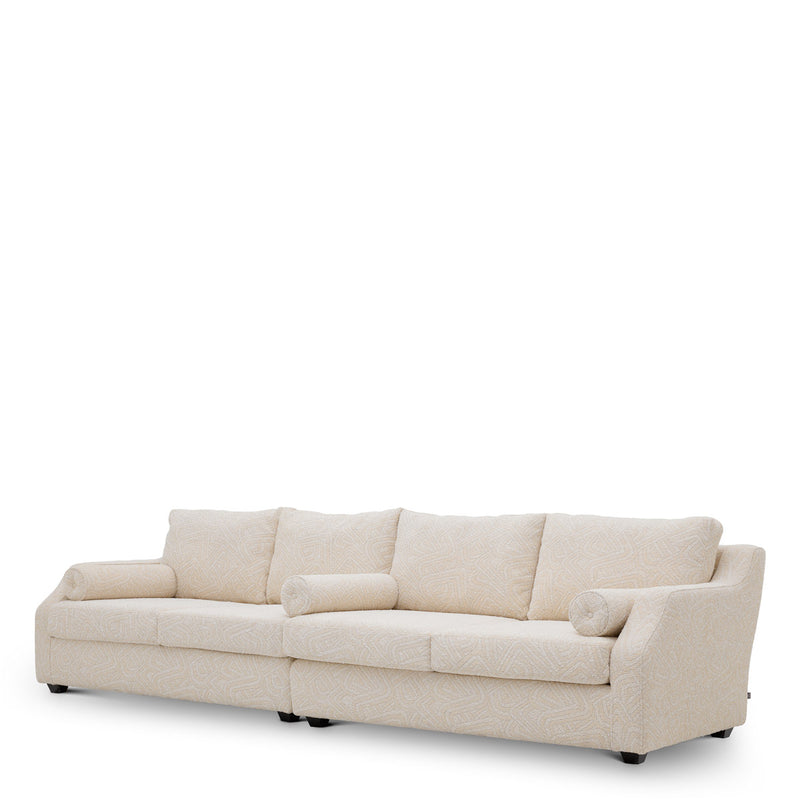
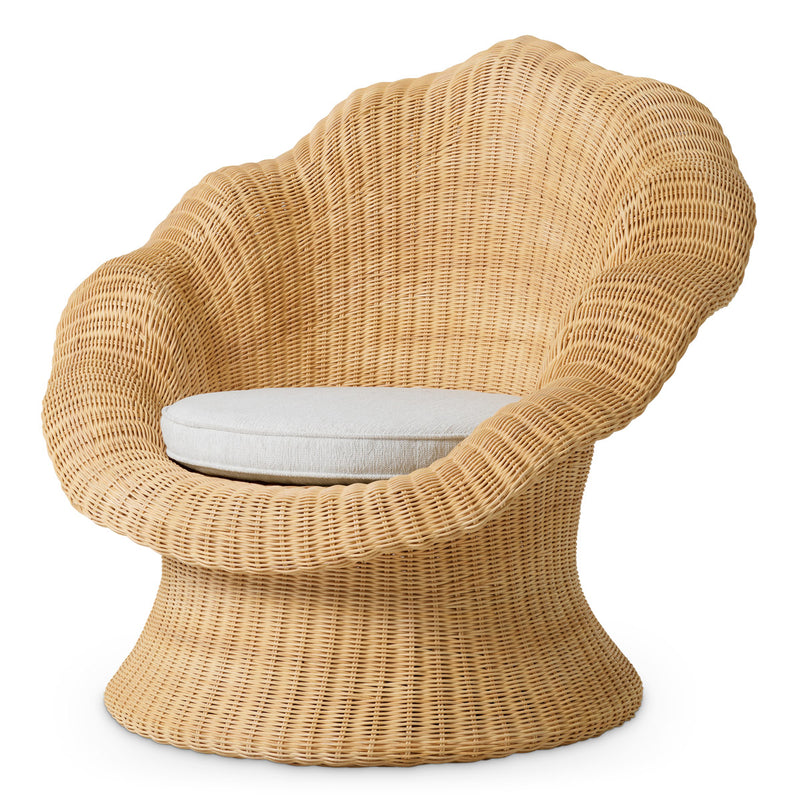
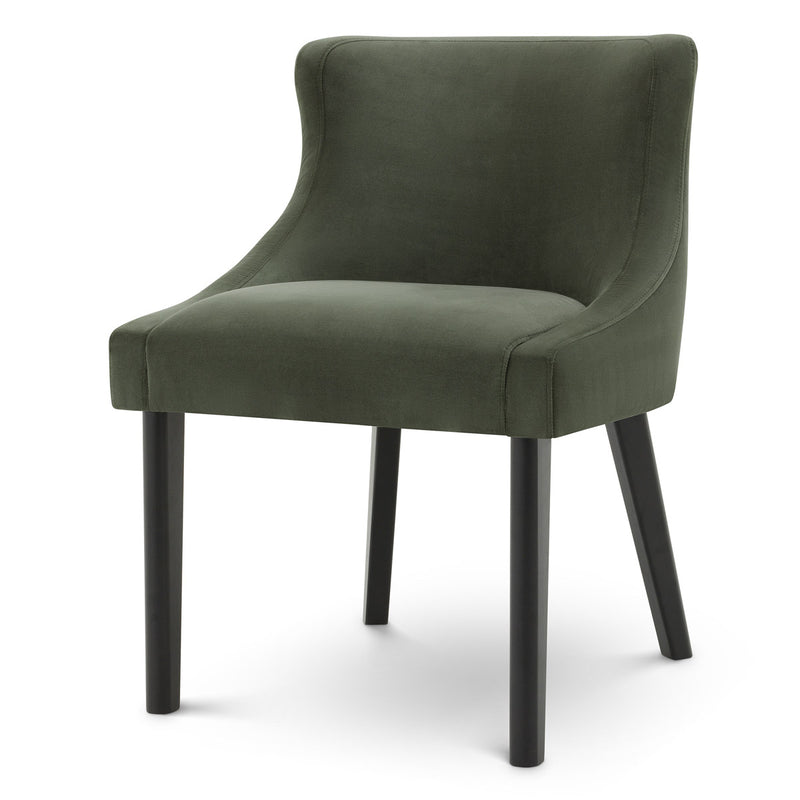
These three pieces represent the range of upholstered seating across the Eichholtz collection — a statement sofa, a lounge chair built for extended sitting, and an upholstered dining chair. Each works differently depending on the fabric it carries and the room it is placed in.


Reading the Room Before You Choose
The most useful framing for any upholstery decision is to start with the room and work backward to the material — not start with the swatch and hope the room cooperates.
Light exposure. In Las Vegas, the direction a room faces is a significant variable. South and west exposures deliver strong afternoon light that fades natural fabrics faster than most clients expect. If you have UV film on the glass or high-performance glazing, the difference between performance and natural fabrics narrows considerably. If you do not, prioritize performance fabrics or leather in those orientations.
Use intensity. A dining chair used at daily meals by a family needs different fabric than the same chair pulled out for dinner parties a few times a month. A sofa in a room that doubles as a television space carries different demands than a sofa in a formal sitting room. Honesty about how a room is actually used produces better outcomes than designing for the version of the room you intend to inhabit.
The cleaning question. More fabric damage comes from incorrect cleaning than from normal use. Using the wrong product on the wrong textile — an aggressive solvent on a velvet, or a steam cleaner on a structured linen — creates visible damage that ordinary use would not. At purchase, confirm the care code for your specific fabric and keep it somewhere accessible.
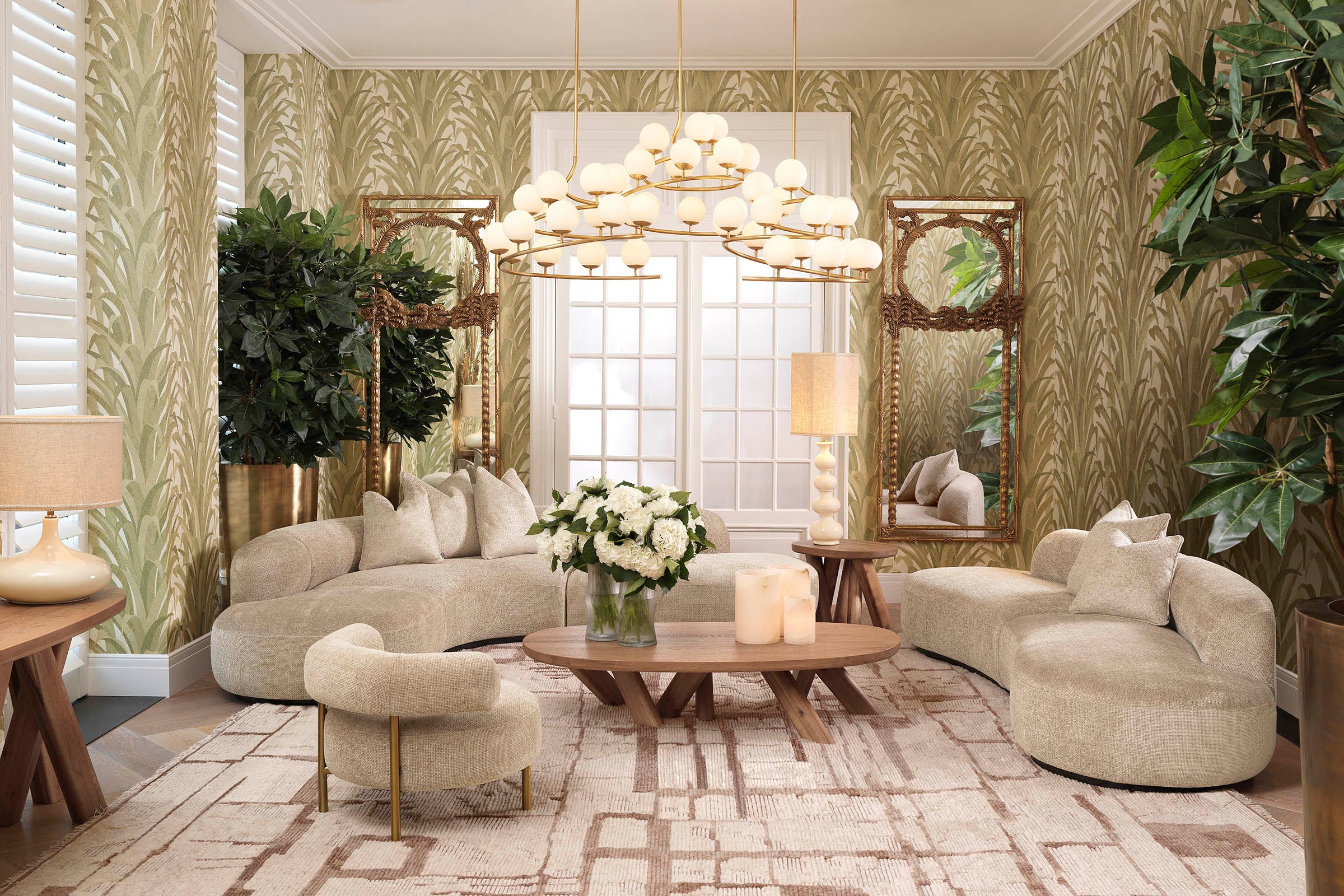
The room’s material context. Upholstery reads differently against stone, hardwood, or a layered rug. A smooth, structured fabric looks intentional in a room with a lot of texture. A nubby, textured weave adds warmth to a room dominated by hard surfaces. The Eichholtz design approach builds on this kind of layering — pieces are designed to compose within a room, not to stand as independent statements.
Seeing It in the Showroom
Fabric swatches look different in hand than on a screen, and fabric at full scale on a cushion looks different than a swatch in hand. This is not a small gap — it is one of the primary reasons that showroom visits produce better outcomes than online specification for upholstered furniture.
Eichholtz Las Vegas opens at Tivoli Village this summer of 2026. Our showroom will carry upholstered pieces across multiple fabric configurations so you can sit in them, handle the materials, and see how they read under actual room conditions. For interior designers, the trade program supports the full specification process — including access to the Eichholtz fabric and finish range for client presentations.
For in-stock upholstered pieces, delivery from the Eichholtz warehouse network typically runs two to four weeks — considerably faster than the twelve to twenty-four weeks standard across most made-to-order luxury upholstery programs. For custom configurations, lead times depend on the specific piece and fabric selection; we can confirm timelines at inquiry.
Apply for Trade Access
Interior designers and architects can request trade pricing and full-catalog access through our trade program.
Apply for Trade Access