Skip to content


Decorative objects are the part of furnishing a room that most people save for last — and that matters most to how the room finally feels. A console table with a lamp and nothing else reads as unfinished. The same table with a pair of vases, a sculptural object, and a stack of books reads as a home. The objects are not decoration in the superficial sense. They are the room's final layer of meaning.
At Eichholtz Las Vegas, accessories are treated with the same seriousness as the furniture itself. The collection spans hundreds of vases, hurricane lanterns, bowls, trays, frames, and sculptural objects — many of them handmade or hand-finished, many of them unique to the Eichholtz catalog. This guide covers how to think about them, how to select them, and what the difference is between an accessorized room and a finished one.
The difference between a furnished room and a finished room is almost always the objects.
Why Objects Matter More Than People Think
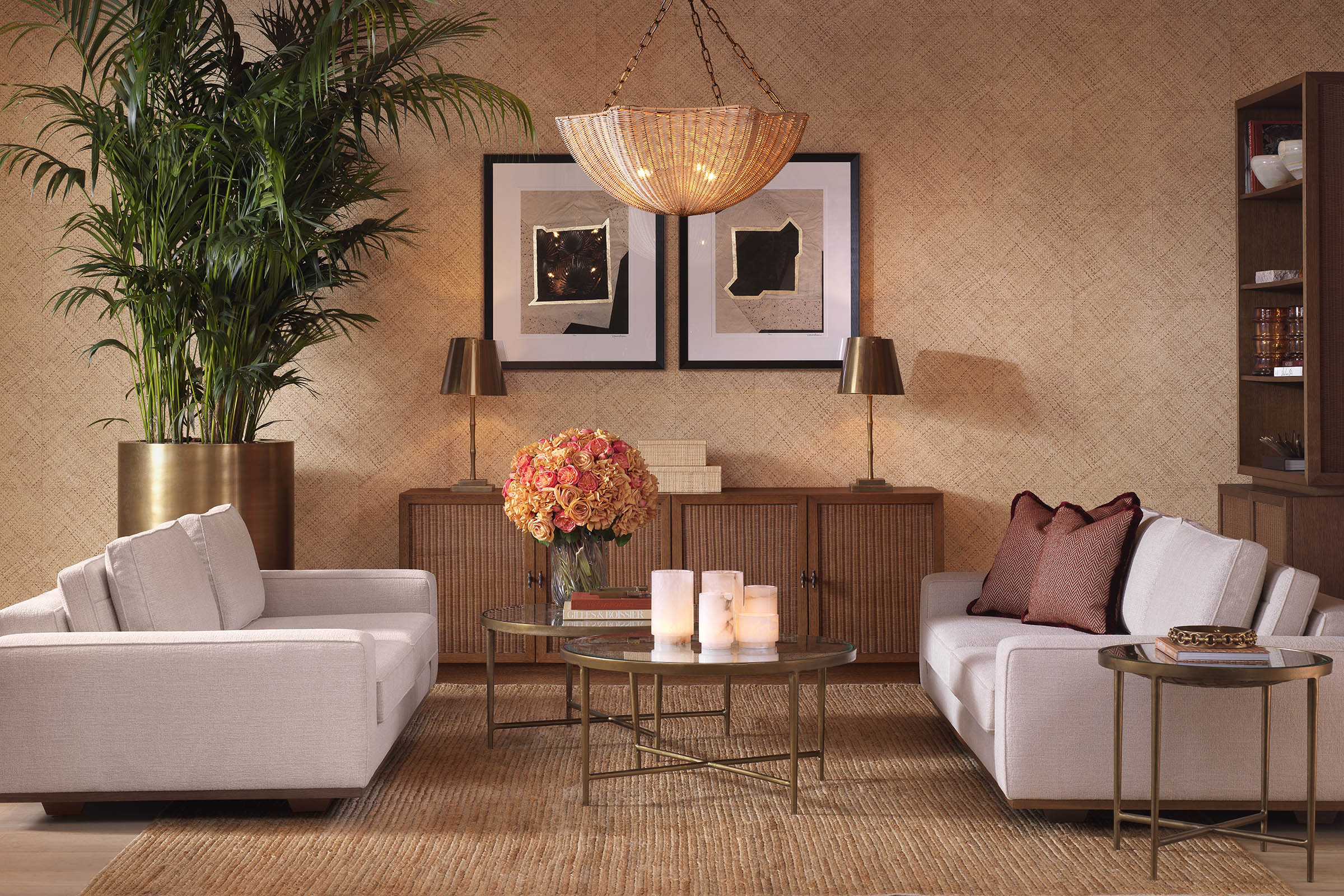
In design terms, accessories are what give a room its specific gravity. Furniture sets the bones. Rugs and window treatments define the planes. But the objects on a console table, the arrangement of vases in a nook, the hurricane lanterns flanking a fireplace — these are what make a room feel intentional, as if someone actually thought about every inch of it.
Interior designers have understood this for a long time, which is why the accessories budget on a serious project rarely falls below ten percent of the furniture spend. The pieces are smaller, but they're visible at eye level, at arm's reach, in close focus. A guest at a dinner party studies the bowl on the side table far more carefully than the sofa across the room. Objects are the scale at which a room is actually experienced.
- Scale matters more than size. A single large vase on a console makes a bolder statement than three small ones. Work at the scale of the surface — not the scale of the room.
- Texture creates contrast. Glass next to matte ceramic next to polished brass reads as intentional. Three pieces in the same material flatten the arrangement.
- Odd numbers read as natural. Three objects on a shelf, five candles on a tray, a grouping of two plus one set apart — the asymmetry creates movement. Even-number groupings can read as rigid unless they're matched pairs with a clear visual logic.
- Negative space is part of the arrangement. An overcrowded surface looks cluttered regardless of the quality of what's on it. Leave room for the eye to rest between objects.
The Three Roles Every Object Fills
The Eichholtz accessories catalog is large enough to be intimidating. A practical way in is to think of three distinct roles an accessory can play — and to choose at least one piece that fills each role on any surface you're working with.
The statement piece. This is an object with enough presence to hold a surface on its own. A large architectural vase — one that's over fifty centimetres tall — does this naturally. So does a sculptural object with an unusual form or unexpected material. These are the pieces guests ask about. They carry a surface when the other objects are quieter.
The ambient piece. Hurricane lanterns belong here. Their job is to create warmth and atmosphere — the quality of light they add to a room, especially in the evening, shifts the entire register of the space. A pair flanking a fireplace, or a trio clustered at varying heights on a sideboard, is a classic arrangement because it genuinely works. The object is doing something — it's not just sitting there.
The layering piece. These are the objects that make a surface feel lived in: a sculptural form, a low bowl, a stack of art books, a small tray holding other objects. They are the supporting cast — they make the statement piece and the ambient piece feel curated rather than staged. On their own they're subtle. In context, they're what keeps an arrangement from looking like a display window.
Three Objects to Start With
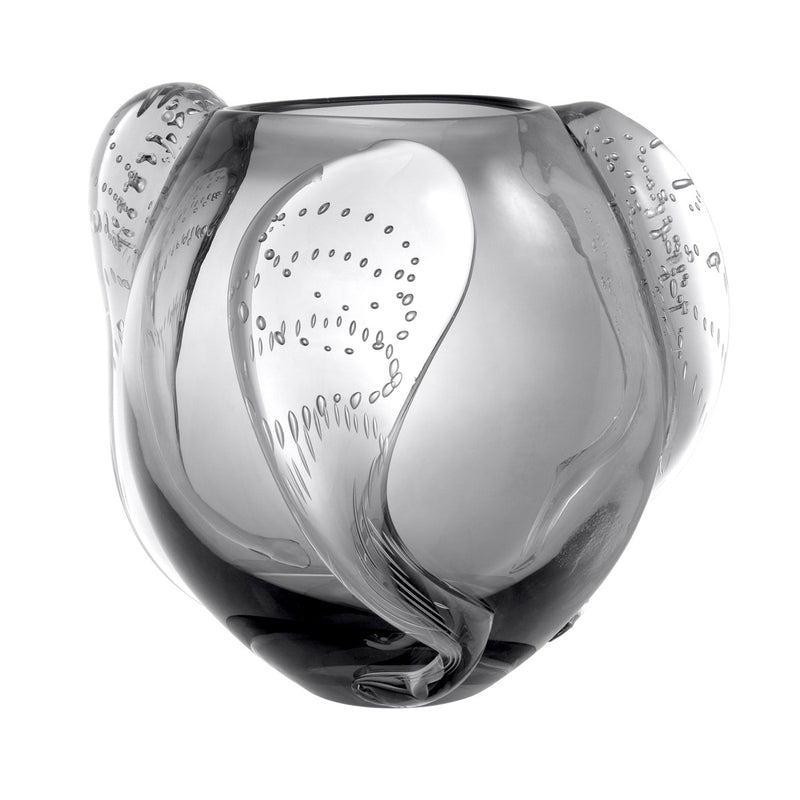
These three pieces from the Eichholtz collection cover the statement, ambient, and layering roles across three different materials and scales. Together they demonstrate what a considered accessories palette looks like.

Building an Arrangement — A Practical Method
When accessorizing a surface for the first time, the most reliable approach is to start with scale and work down. Choose your statement piece first — the largest object, or the one with the most distinctive form. Place it. Then find your ambient piece: a hurricane lantern, a candle in a considered holder, something that adds warmth rather than just occupying space. Then fill in with a layering piece — something lower, something quieter that gives the arrangement depth.
The common mistake is buying accessories individually, picking each one because it's appealing on its own. The result is a surface full of pieces that have no relationship with each other. A more effective approach is to start with a material palette — one metal finish, one or two natural materials (ceramic, stone, shell, wood) — and filter everything through that. Objects that share a material story feel like they belong on the same surface.
At Eichholtz Las Vegas, the accessories section of the showroom is arranged to let you see how pieces work together before you commit to any of them. You can place a hurricane lantern next to a sculptural object next to a vase and understand the arrangement before anything leaves the building. That direct, in-person experience — handling the weight of a piece, seeing how light interacts with the glass or the finish — tends to make the selection process both faster and more accurate.
Editing Is Part of the Work
More objects are not better. The best-accessorized rooms almost always have fewer pieces than you'd expect — they just make each one count. A useful exercise: clear a surface entirely, lay out everything you have, and put back only the pieces you'd genuinely miss. That number is usually two or three, not six or eight. The rest can move to another surface, another room, or storage. A well-edited surface is more effective than a full one.
Eichholtz introduces new accessory pieces with each collection season, which means the showroom carries objects that won't always be available. If you see something you're considering — for a client project or your own home — it's worth noting the SKU and confirming current availability. Most in-stock Eichholtz accessories ship within two to four weeks through the warehouse network, which is considerably faster than the twelve to twenty-four weeks typical of made-to-order pieces from other sources.
The showroom at Tivoli Village, Suite 160, is open during regular retail hours. Our Grand Opening event is planned for summer of 2026. If you're working with a client on a project that needs objects, the trade program gives you access to trade pricing across the full Eichholtz catalog — furniture, lighting, and accessories.
Designer Trade Access
Trade pricing on the full Eichholtz catalog — furniture, lighting, and accessories — for designers delivering to clients across the US.
Apply for Trade Access