Skip to content


Lighting is the decision that changes a room the most for the least square footage. A chandelier, a pendant, and a sconce are not interchangeable — each does a specific job, and getting the combination right is what makes a room feel resolved rather than busy. This is a practical guide to the three fixtures you will see in almost every Eichholtz room, and how to think about them before you specify.
At Eichholtz Las Vegas we plan lighting the way we plan seating. Height, scale, glare, layering, and how a fixture reads when the room is empty all matter. The collection has more than two hundred chandeliers, over a hundred wall lamps, and a small, deliberate pendant program — so the question is rarely whether we can find the right fixture. The question is which one belongs where, and why.
A room with one good light is decorated. A room with three considered fixtures is designed.
What each fixture is actually doing
Before you pick finishes, decide what job you are asking each fixture to do. A chandelier anchors the room visually and sets the ceiling line. A pendant focuses light on a surface — most often a dining table, island, or reading chair — and lives in a narrower vertical zone. A sconce puts light on a wall, frames a doorway, flanks a mirror, or softens a corner without taking up floor or table space.
Think of them as three different scales of light: the room, the surface, and the wall. You rarely need all three in every room, but the rooms that feel the most complete almost always use at least two.
- Chandelier. The room-scale fixture. Lives on a ceiling plate, usually over a seating group, a dining table, a primary bed, or a foyer. Sets the register for the entire space.
- Pendant. The surface-scale fixture. Hangs lower than a chandelier and aims its light at a specific task or zone. Kitchens, islands, breakfast nooks, stair landings, and reading corners are the usual homes.
- Sconce (wall lamp). The wall-scale fixture. Frees up the ceiling and the console. Works in hallways, flanking beds and mirrors, in powder rooms, and up staircases.
Scale, ceiling height, and the layering rule
Scale is where most lighting mistakes happen. A fixture that looks perfect in a photograph can disappear in a ten-foot ceiling, or feel oppressive in an eight-foot one. A few rules of thumb we use when specifying:
- Chandelier diameter. Add the room's length and width in feet, then use that sum in inches as a starting diameter. A fourteen-by-eighteen room sits comfortably under a chandelier in the thirty-two-inch range.
- Chandelier height clearance. The bottom of the fixture should sit no lower than seven feet above the floor in a traffic zone, and roughly thirty to thirty-six inches above a dining table.
- Pendant height over a table or island. Thirty to thirty-four inches from the surface to the bottom of the fixture. Err on the higher side over a reflective stone, the lower side over matte wood.
- Sconce height. Roughly sixty to sixty-six inches from the floor to the center of the fixture. Flanking a bed, slightly lower — eye-level when seated with a book.
- Layer in threes. Ambient (overhead), task (pendant or table lamp), and accent (sconces, picture lights, candle). A room with all three feels dimensional.
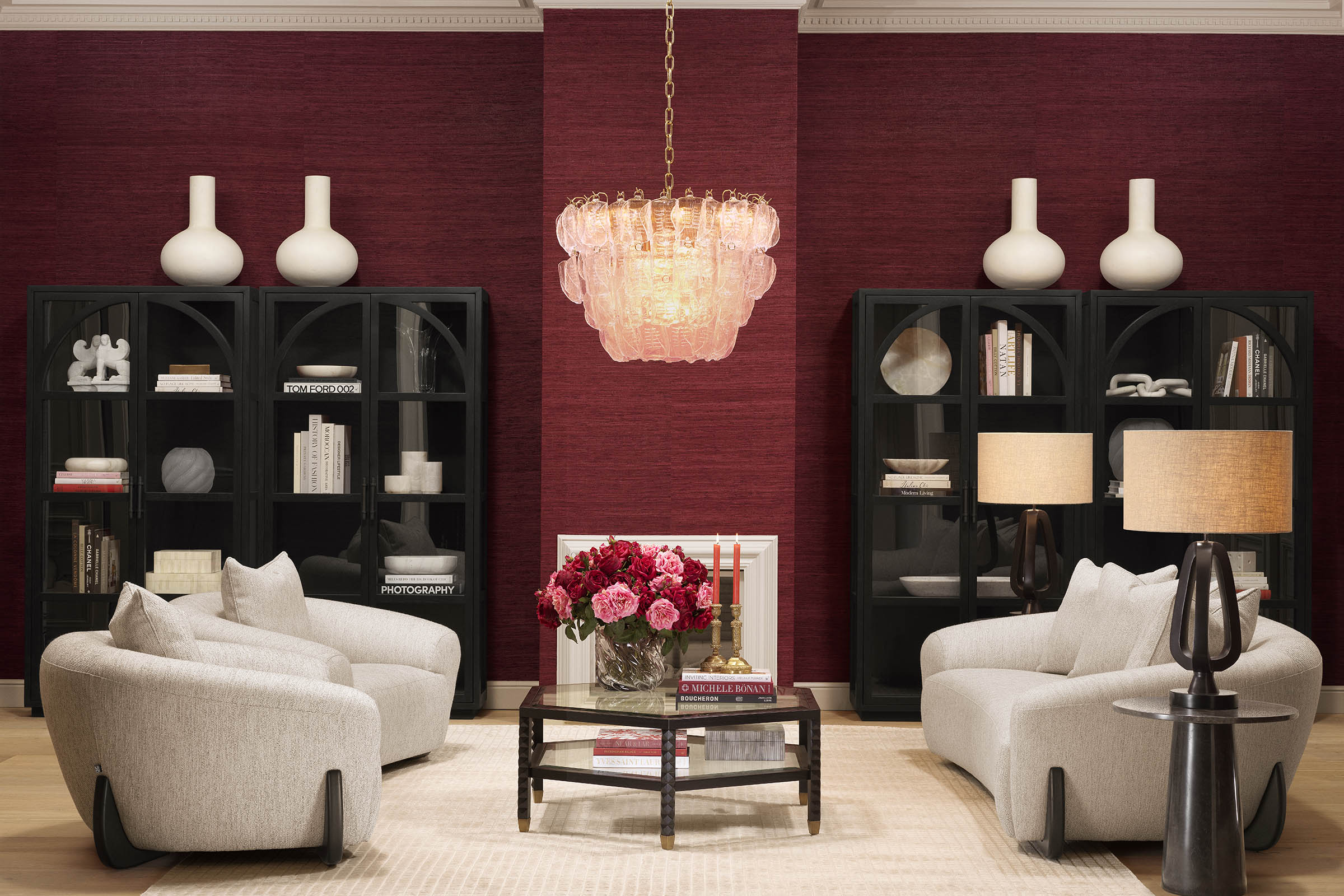
The other scale trap is buying a single statement fixture and calling the room done. A room with one brilliant chandelier and nothing else on the walls tends to feel unfinished at night, when the chandelier flattens everything below it. Adding sconces or a pair of table lamps is almost always what takes a room from decorated to lived-in.
Three pieces that show the range
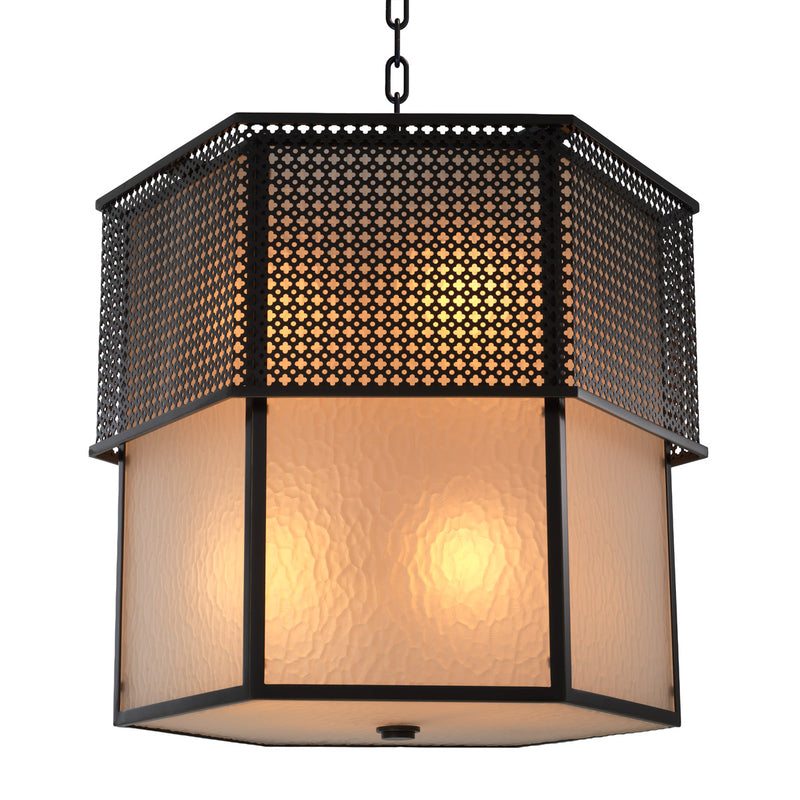
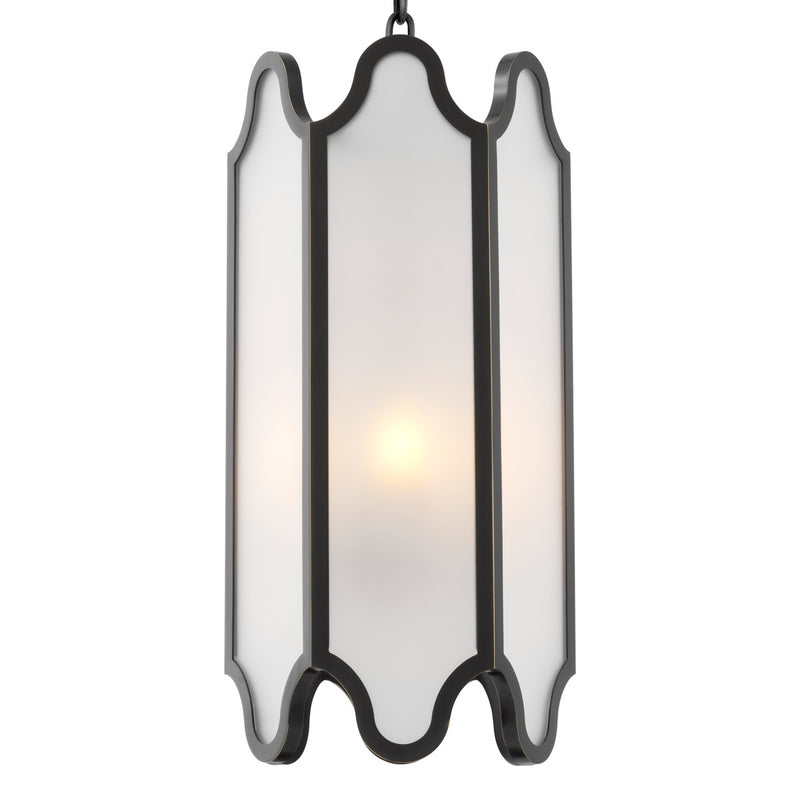
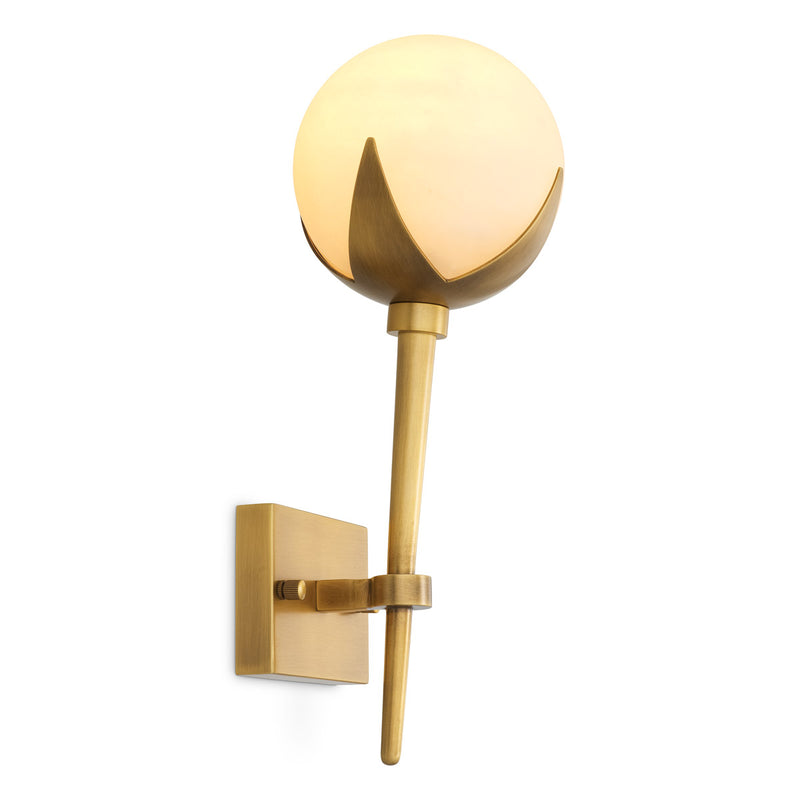
These three fixtures sit in the Eichholtz collection at different scales, but each solves a common problem. A sculptural chandelier for the room that wants a clear center. A pendant that works over a reading chair or a smaller table. And a wall lamp that lets you keep a console or bedside clear.


Common mistakes we see — and how to avoid them
A few patterns come up again and again when clients bring us plans that feel almost-right.
- One fixture for the whole room. The most common mistake. A beautiful chandelier cannot do the work of accent and task light on its own. Add at least one more layer — usually a pair of table lamps or two well-placed sconces.
- Ceiling fixture centered on a ceiling grid, not a room. The structural center of the ceiling and the visual center of the room are often different. We center on the seating group, the bed, or the table. Recentering a junction box is a small electrical job compared to living with a mis-centered chandelier for ten years.
- Mismatched finishes across fixtures. Mixing metals is a skill; using five different golds is a problem. Pick one primary finish for the room's lighting — antique brass, nickel, or blackened metal — and let the furniture or hardware pick up a second, complementary finish if you want contrast.
- Lamping without a dimmer. Every ceiling fixture and every sconce in a living space should be on a dimmer. A chandelier at full brightness is a warehouse light. At fifty percent, it is a room.
- Shades that do not soften. A metal shade on a sconce will throw hard light on a wall. Fabric, pleated, or frosted-glass shades read softer. If you want the architecture of a metal shade, place the fixture where its hard light works for you — over a mirror, washing a piece of art.
Designing lighting for a Las Vegas home
Two things about the local architecture shape how we specify lighting here. The first is ceiling height — a lot of homes in Summerlin, The Ridges, and MacDonald Highlands run ten- to fourteen-foot ceilings in the main rooms, and many of them have a vaulted or coffered moment in the great room. A chandelier that would feel overscaled in an East Coast colonial is often exactly right here. The second is sunlight. Nevada daylight is intense and direct. A fixture that looks too warm at night can pick up the cooler tones of the afternoon and suddenly read green or pink. We light-check every fixture in both daylight and evening before confirming a selection.
The showroom at Tivoli Village is built to let you see fixtures in context — hung, dimmed, layered. We will have chandeliers over the seating vignettes, pendants at the bar, and sconces on the perimeter walls. If you are planning a project and you want to see a piece lit before you commit, bring your sample pulls and meet us in Suite 160 when we open this summer.
How we help on the specification side
Two programs make the lighting specification easier on a real project.
The Designer Trade Program is for interior designers buying the catalog on behalf of clients. It gives you trade pricing on the full Eichholtz collection, tear-sheet access, and a direct line to our team when you need dimensions, lamping specs, or rated-for-Nevada confirmations. Apply at eichholtzlasvegas.com/pages/trade-program.
The Partner Program is a different thing, and worth explaining because the two are often confused. It is a referral program for creators and anyone with an audience — Instagram and YouTube, newsletters, podcasts, real-estate agents closing on a new build. You share a link; your audience buys directly; you earn a commission. No inventory, no reselling. Apply at eichholtzlasvegas.com/pages/partner-login.
On delivery: most in-stock Eichholtz lighting ships in two to four weeks from the warehouse network. We will tell you plainly at the time of the quote whether a piece is in-stock, how it will ship, and what the realistic window looks like for your address. If a fixture is made-to-order, we will say so and give you an honest lead time — typically twelve to twenty weeks on custom lighting, sometimes longer on a piece with specialty crystal or plating.
Planning lighting for a project?
Trade access, specification support, and a showroom built to let you see fixtures lit before you commit.
Apply for Trade Access