Skip to content


The coffee table is the piece most people get wrong. Not because they choose an unattractive one — they almost always pick something they like the look of — but because they choose the wrong shape for how their room actually works. Shape determines traffic flow, visual weight, how a seating group feels in use, and whether a room arrangement reads as intentional or unresolved.
At Eichholtz Las Vegas, we carry more than thirty coffee table designs across a wide range of shapes: round, rectangular, oval, and a handful of organic forms that sit comfortably between categories. Each shape solves a different room problem. Getting that decision right first means the rest of the room tends to fall into place more naturally.
The shape you choose is a decision about how people move through a room — and how the room feels when they stop.
Round: the social shape
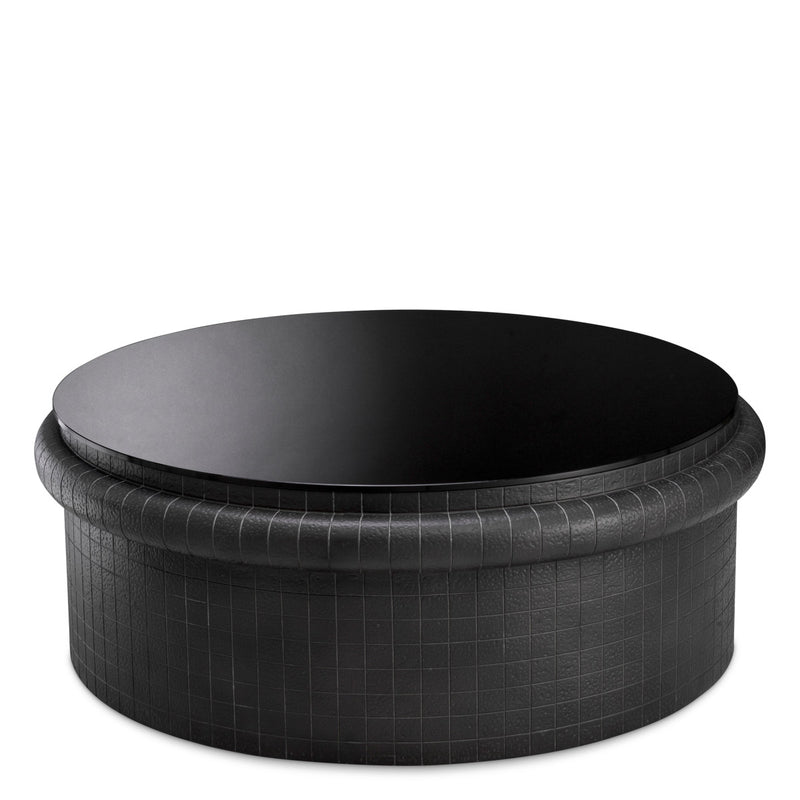
A round coffee table is the most forgiving shape in a living room. It has no corners to navigate around, which makes it the natural choice for compact rooms, square floor plans, and seating arrangements where people are moving in and out regularly — entertaining, reaching across to set down a glass, or simply shifting position during a long evening.
The logic is relational. When sofas and chairs face each other across a round table, everyone seated has roughly equal visual and physical access to the center. No one is reaching past a corner or angling awkwardly to place a drink. The round form distributes attention evenly, which is why it works so well in rooms designed primarily for conversation rather than media consumption.
Scale matters more than most people expect. The diameter of a round table should correspond to the depth of the seating around it, not the length of the room. A table that's too wide for the chairs on either side becomes an obstacle; one that's too narrow looks lost in the middle of a large sofa arrangement. The right proportion is one where a person seated on the sofa can comfortably reach the center of the table without leaning forward.
- Best for square rooms. A round table in a square room repeats the geometry of the architecture without competing with it — a harmony that reads as calm rather than simply neutral.
- Works well with sectionals and curved sofas. L-shaped sectionals and curved or arc sofas both benefit from a round or oval table at the center. The shape softens what can otherwise feel like an angular seating plan.
- Easier traffic flow. In a room that sees regular foot traffic — a family living room, a hospitality space, an open-plan area — the absence of corners makes the round table genuinely easier to live around.
Rectangular: the anchoring shape
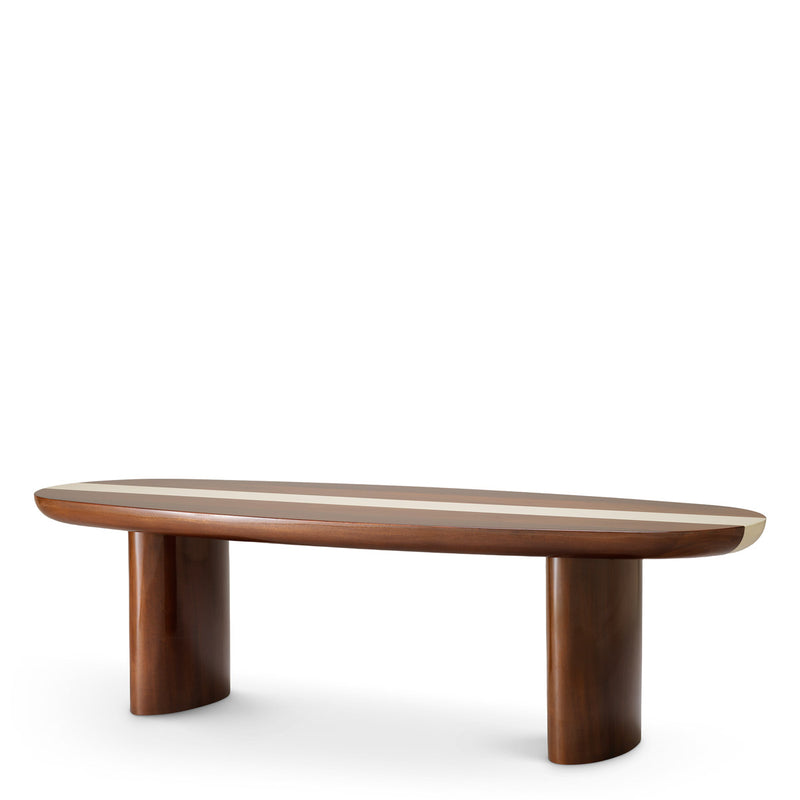
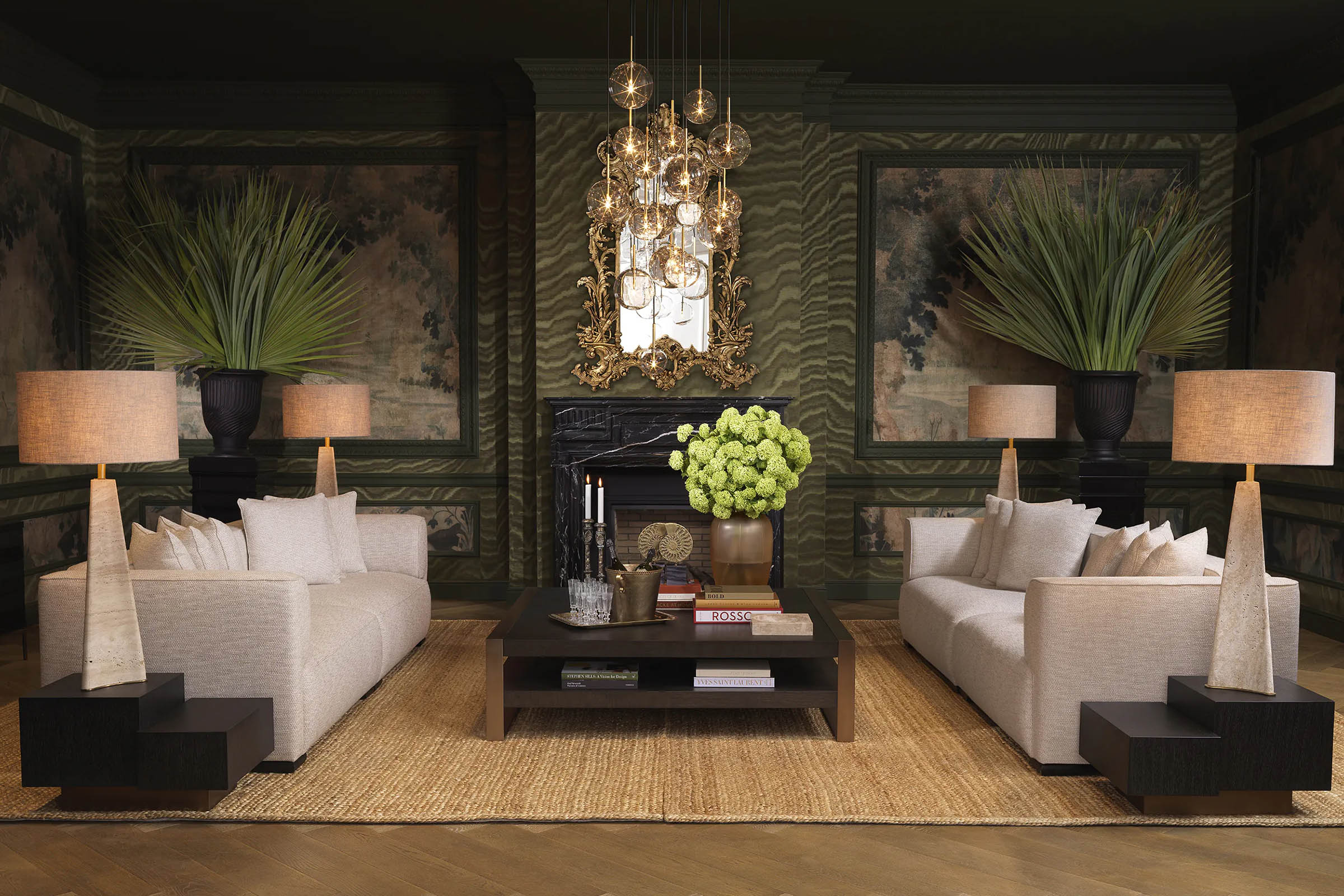
A rectangular coffee table is the right choice when the room is long, the sofa is large, or you want the furniture arrangement to feel firmly grounded rather than loosely gathered. Rectangles follow the geometry of most rooms — and most sofas — which gives them an anchoring quality that round tables don't naturally provide.
The pairing logic is straightforward: a sofa that runs along the length of a room needs a table that matches its proportion. A round table in front of a three-meter sofa will always look slightly undersized, even if it's technically within the right clearance range. A rectangular table with a comparable footprint reads as balanced and considered.
Rectangular tables also offer more workable surface area per footprint. A room used for hosting drinks on a tray, displaying a deliberate arrangement of objects, or doubling as a home office benefits from the linear geometry of a rectangle. There is more usable surface along the long edge, and styling a flat linear surface — a tray, a stack of books, a sculptural object at one end — tends to look more composed than the same objects arranged on a curved top.
The one caution: in a compact room, a large rectangular table can crowd the passage between the sofa and the wall. The standard clearance recommendation is at least 40 centimeters on all sides — enough for a person to pass through without turning sideways. If the room is tight, an oval is often the better compromise — it has the linear presence of a rectangle without the hard corners that reduce circulation space.
Organic and sculptural shapes
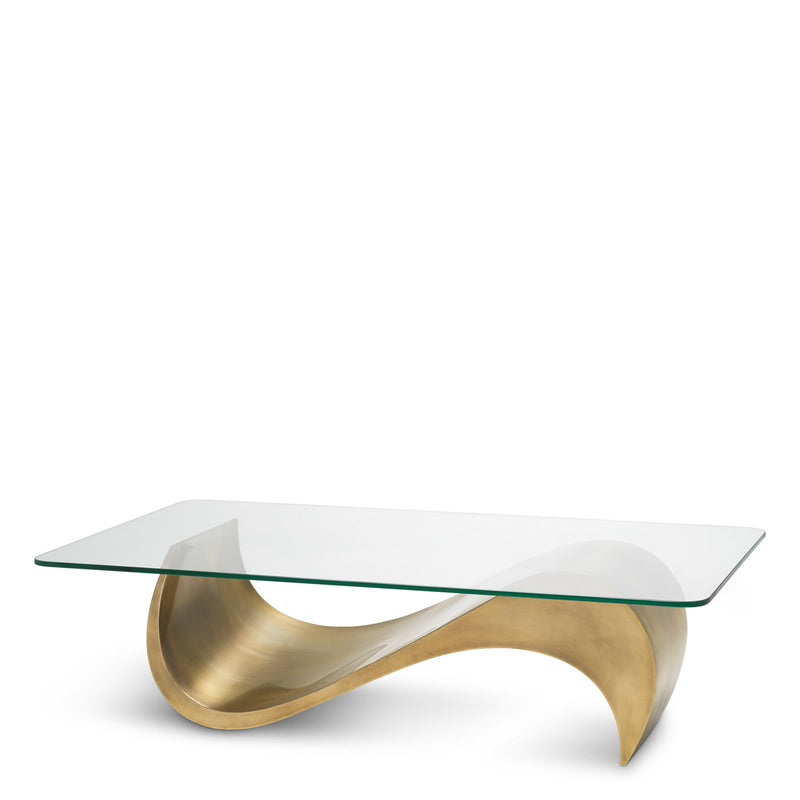
A third category doesn't prioritize geometry at all. These are the organic forms — tables with irregular silhouettes, sculptural bases, or unusual material combinations that make them read as objects in their own right rather than functional surfaces that happen to be in the room.
Eichholtz has a long history in this category. Some of the most distinctive pieces in the collection are coffee tables where the base is the statement — a cast form, a carved stone plinth, a cluster of intersecting shapes — and the top surface is almost secondary to the object beneath it. In a room that is otherwise composed and restrained, a sculptural coffee table introduces productive tension. It gives the eye somewhere unexpected to land, and it prevents a well-designed room from reading as over-coordinated.
The practical note: sculptural tables work best when the rest of the seating arrangement is relatively clean. If the sofas are heavily detailed — nailhead trim, button tufting, ornate carved legs — a sculptural table can look competitive rather than complementary. In a room with quieter upholstery and simpler silhouettes, the sculptural piece has room to read as the focal point it is.
Organic forms also tend to be more tolerant of irregular room shapes and asymmetric seating arrangements. In a room where the sofa doesn't align perfectly with any wall, or where the plan is slightly awkward, a table without a strict geometric footprint can actually make the arrangement look more deliberate.


Height, clearance, and the details that matter
Shape is the primary decision, but a few additional variables affect how a coffee table actually works in a room. Height is the one that affects comfort most directly. The standard range is between 40 and 45 centimeters — close to seat height on most sofas. Tables below 38 centimeters require too much of a reach down; tables above 48 centimeters begin to feel more like dining surfaces than living-room pieces.
The distance between the sofa and the table edge should fall between 40 and 50 centimeters. Closer than 40 and the table becomes a barrier; further than 50 and the table begins to feel disconnected from the seating group, even when it is centered in the arrangement. In very large rooms or open-plan living areas, two smaller tables placed side by side — or slightly offset at different heights — can work better than one oversized piece. The combined footprint is similar, but the arrangement has more visual interest and gives the room flexibility in how it is actually used.
Finish is the final variable. A coffee table in a polished or reflective material will read lighter in a room than one in a matte or dark finish of the same dimensions. If a room is already visually busy — patterned upholstery, layered rugs, heavy window treatments — a table with a simpler, more restrained finish tends to hold the room together. If the room is very spare, a table with more material presence fills the visual gap that spare rooms can sometimes have.
Seeing them in the showroom
Coffee tables are genuinely hard to evaluate from a photograph alone. Scale, finish, and the way a table relates to the pieces around it are things that become clear in person and remain somewhat uncertain on a screen. That is one of the practical advantages of seeing the collection at the showroom — you can place a Chambertin next to a sofa of the same proportion, walk around a sculptural form, and understand how a piece reads from across the room rather than from a single camera angle.
Eichholtz Las Vegas opens at Tivoli Village in the summer of 2026. The full catalog is available to browse now at eichholtzlasvegas.com. In-stock pieces ship from the Eichholtz warehouse network — typically two to four weeks for items confirmed available, which compares favorably to the twelve to twenty-four weeks that is standard on made-to-order furniture through most luxury channels.
Explore the collection — or visit the showroom
Interior designers can access trade pricing on the full Eichholtz catalog through the Designer Trade Program.
Apply for Trade Access