Skip to content


A living room comes together around three core decisions: the sofa that defines the scale, the coffee table that anchors it, and the overhead fixture that completes the picture. Get these three right and the rest of the room follows. Add the wrong lamp or a table that's three inches too short, and the arrangement never quite settles — no matter how many pieces you layer in afterward.
At Eichholtz Las Vegas, we see this pattern consistently. Designers and clients come in with a specific piece in mind — a sofa in a woven chenille, a chandelier they've had bookmarked for months — and the conversation quickly becomes about what surrounds it. The sofa needs a table. The table needs the light. They're not independent choices. They're a system, and each one puts constraints on the others. Understanding those constraints makes the decisions easier.
A living room isn't built piece by piece — it's built around a conversation between three.
Start with the Sofa
The sofa is the largest piece in the room. It determines the traffic flow, the proportion of the seating zone, and the visual weight of the space. A wide sectional reads differently from a clean three-seat with low arms. A deep seat in performance chenille signals one kind of room; a linen sofa with tight backs signals another. Before you decide on a silhouette, it helps to know what the room needs to do.
A room that takes daily use — family living, pets, a household that actually sits down on things — calls for something in a durable fabric. High-performance chenille wears well and cleans easily. A room used primarily for guests or for a more formal kind of entertaining can sustain a more delicate weave, a jacquard, or a natural linen. The material choice is really a lifestyle choice. The silhouette comes after.
Scale is the other question. Sofas are typically measured by seat depth (the distance from the front of the cushion to the back) and overall length. A deeper seat — forty inches or more — invites lounging and works in a large, relaxed room. A shallower seat, around thirty-six inches, suits tighter plans or rooms where you want the seating to feel composed rather than lived-in. Neither is wrong; the right one depends on the room's proportions and the register you're aiming for.
- Fabric before silhouette. Decide how the room is used before deciding how the sofa looks. A beautiful sofa in the wrong material becomes a problem within a year.
- Arm height matters more than most people think. Low arms read as modern and relaxed. Higher, boxier arms feel more formal and hold the wall better on a long elevation.
- Color anchor. A sofa in a neutral — warm white, natural, soft greige — gives you the most flexibility to shift the room's character through textiles and objects over time.
- Seat depth and traffic. In a room where people need to move freely, a deeper sofa can create circulation problems. If the room is tight, measure before you commit to a 42-inch seat.
The Coffee Table — What It's Actually Doing
A coffee table is doing more work than it appears to. It's defining the perimeter of the seating zone, giving guests a surface for a drink, and — visually — bridging the gap between the sofa and the floor. Without it, a sofa floats. With the right one, the seating arrangement locks into place and the room becomes readable from the entry.
The most useful sizing rule: aim for a table that's roughly two-thirds the length of your sofa. A table significantly shorter reads as underscaled. A table wider than the sofa creates navigation problems and can make the room feel crowded. Height matters too — most coffee tables land between sixteen and eighteen inches, which keeps a glass at a comfortable reach from the sofa without the table feeling obtrusive.
Material is where you make a statement. A white marble top brings lightness and a quiet confidence — it works against darker upholstery or natural fabrics without competing. Brass-finished metal frames warm up a room without the visual weight of a full wood piece. Stone and brass together has been a recurring pairing in the Eichholtz catalog for years, and it persists because it reads as definitive without being heavy. The combination ages well, too — as the room shifts around it, a marble-and-brass table tends to hold.

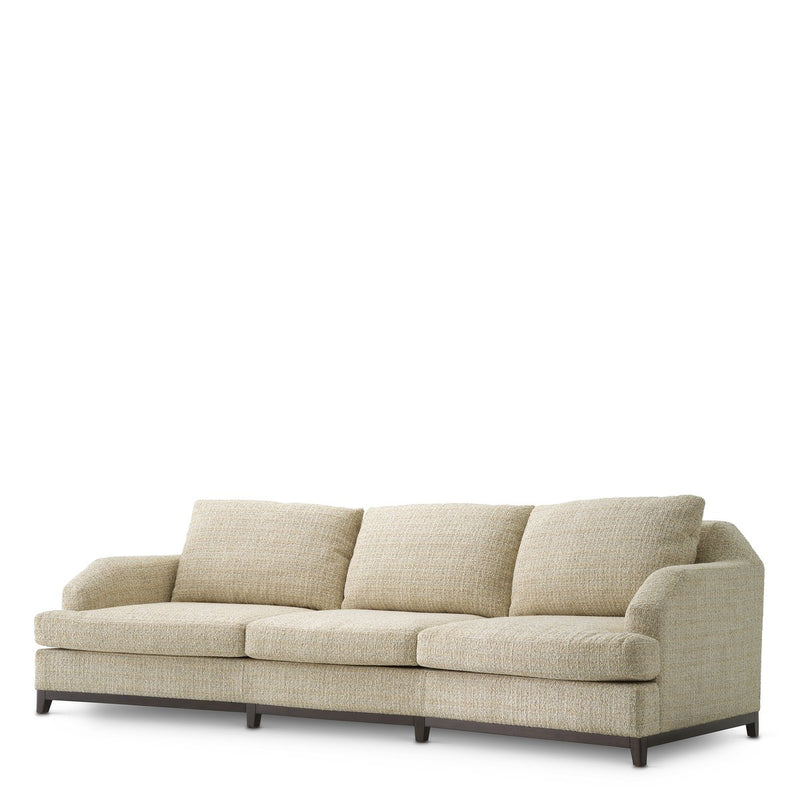
Sofa Vestry winslow chenille beige

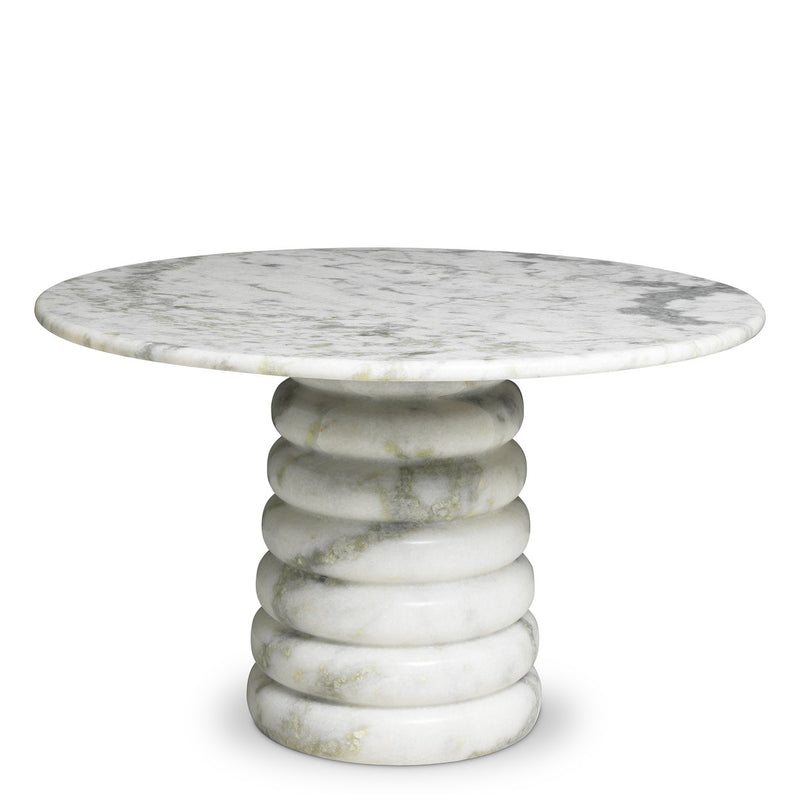
Coffee Table Lerici white marble

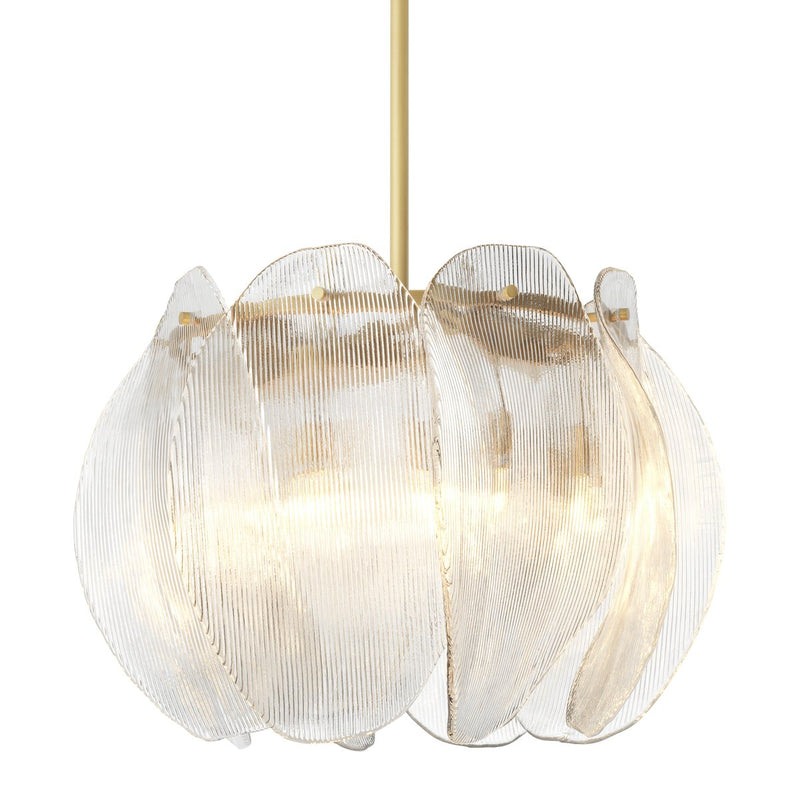
Chandelier Hibis L antique brass
The Chandelier — The Piece Most People Get Wrong
Most people treat the chandelier as decoration. It is, but it's also the primary ambient light source for the room, and if it's undersized or hung at the wrong height, the room will always feel dim — or it will read as a jewelry piece that doesn't quite commit. Getting the chandelier right is about calibrating it to the room first, the furniture second.
Scale is where most decisions go wrong. A chandelier sized to the sofa below it rather than to the room around it will look correct in isolation and strange in context. A practical starting point: add the room's dimensions in feet, and use that sum in inches as the chandelier's diameter. A fifteen-by-eighteen-foot room calls for a chandelier around thirty-three inches across. This is a guide, not a formula — but it anchors the decision better than visual instinct alone, especially at the showroom stage when the piece isn't yet in the room.
Hanging height matters in a living room — perhaps more than in a dining room, where the table defines the floor plane and the chandelier needs to clear it. In a living space, seven feet of clearance from the floor to the lowest point is a workable minimum in a room with standard nine-foot ceilings. In rooms with more height, let the chandelier come down further. A chandelier hung tight to the ceiling in a twelve-foot room reads as an afterthought.
Finish is the last call. Antique brass works with almost any palette, from cream to deep charcoal, because it adds warmth without color. Clear glass — globes, teardrops, or open frames — brings refraction and movement without introducing a competing hue. The combination of warm metal and clear glass is one of the most versatile in the Eichholtz lighting range precisely because it integrates rather than asserts. It becomes part of the room rather than a comment on it.
When the Three Are Calibrated
The three-piece system works because each element is carrying a different responsibility. The sofa sets the scale of the human zone. The coffee table defines its perimeter and gives it purpose. The chandelier anchors the ceiling plane and brings the room's ambient light down to a usable level. When the three are proportional to each other — and unified by a consistent palette of material and finish — the living room reads as a whole. When one of them is off, the room reads as assembled rather than designed.
This is one of the conversations we have most often at Eichholtz Las Vegas. Someone arrives knowing what they want for one of the three, and part of our job is helping them see how the choice they've already made creates an argument for the next two. The sofa in a warm chenille leans toward a brass-framed table rather than a chrome one. The chandelier with clear glass works against either. The room builds its own logic if you let it.
Most of the pieces we carry are in stock and ship to your address in two to four weeks — which compares well against the twelve to twenty-four weeks typical on made-to-order luxury furniture. We open this summer at Tivoli Village, Suite 160, in Summerlin. Come in and work through the three-piece question in person.
Apply for the Trade Program
Interior designers can access trade pricing on the full Eichholtz collection through our Designer Trade Program.
Apply for Trade Access