Skip to content


A sofa sets the bones of a room. The cushions on it tell you how the room wants to be felt.
That's not an overstatement. The right decorative cushion — the right fabric, the right scale, the right arrangement — changes the mood of a seating group the way a frame changes a painting. It's a finish move, but it's also one of the highest-impact choices in the room. Which is why the designers who walk our showroom floor spend more time on cushions than most homeowners expect.
At Eichholtz Las Vegas, we carry a curated selection of decorative cushions from the Eichholtz collection: jacquard weaves, bouclé textures, embroidered silhouettes — all made to the same material standard as the furniture they dress. This is what the current range looks like and how to use it.
The right cushion completes a room. The wrong one tells you something is still missing.
What Separates a Good Cushion From a Great One
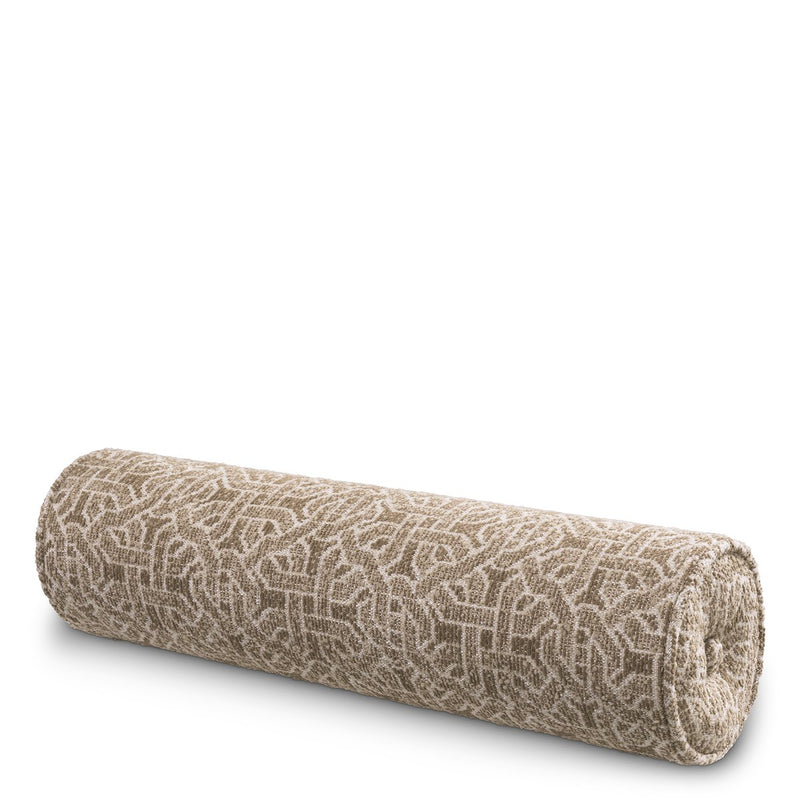
The most visible difference is fabric — specifically, whether the pattern or texture lives in the weave itself or is printed on the surface. Eichholtz jacquard cushions are woven rather than printed. The pattern is structural, which means it doesn't fade with washing, doesn't crack at the creases, and doesn't develop the thin, worn-out look that printed fabrics develop after a few years. You can see the difference in person in a way that's hard to convey in a photograph.
Construction matters separately. A cushion that holds its shape — that returns to a clean pleat after someone actually uses it — is a cushion with a well-matched fill. Too little fill and the cushion collapses. Too much and it won't deform gracefully when someone sits against it. The Eichholtz cushion range uses fills calibrated to the size and intended placement of each piece.
The cover matters too. A cover that zips cleanly and sits flat when closed is one that can be maintained. In a high-use setting — a client's living room, a hospitality suite, a primary bedroom — that difference compounds over time.
- Jacquard-woven textiles. The pattern is built into the weave rather than printed on the surface, which means better durability and richer visual depth. The pattern shifts slightly as natural light changes throughout the day — morning versus late afternoon reads differently on a woven textile than on a flat print.
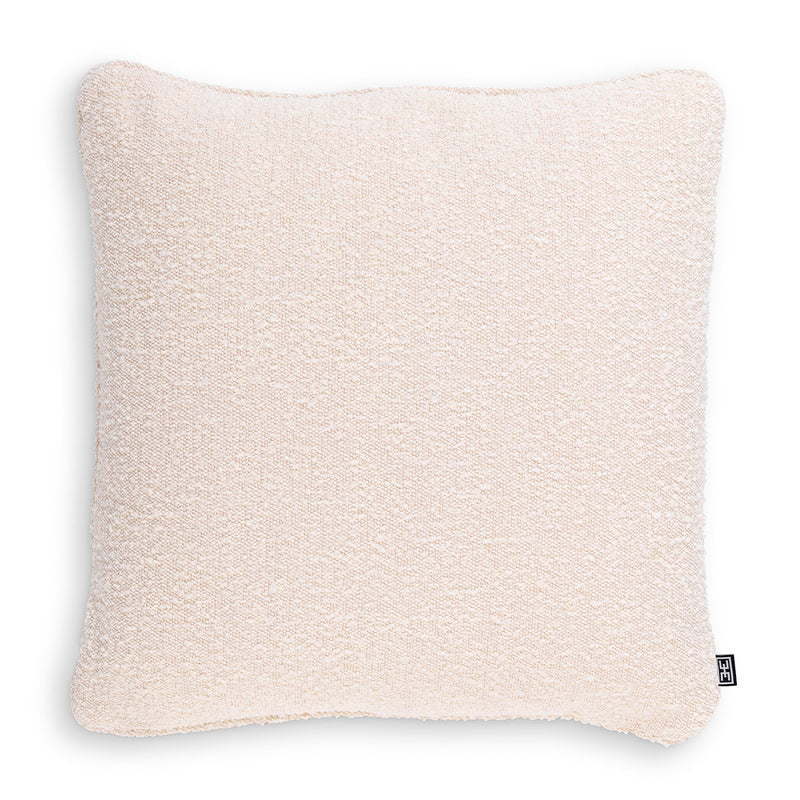
- Bouclé fabric. The looped pile texture that defines the most prominent upholstery of the last several years, translated into a cushion you can layer and move. Adds tactile warmth to a smooth linen or velvet sofa without competing for visual attention.
- Calibrated fill. Eichholtz cushions are sized so the fill matches the scale of the piece — smaller cushions with a firmer fill that holds its shape, larger ones with a fill that allows graceful compression without going flat.
How Many Cushions Belong on a Sofa
This is the question we hear most often in the showroom. The answer starts with the sofa, not with a fixed number.
A deep three-seat sofa — 250 centimeters or wider — can carry five or six cushions without looking crowded. The arrangement that works: two large squares at the outer ends, two medium squares inside those, and a rectangular lumbar in front of the center. This layered arrangement gives you depth and somewhere to lean anywhere along the seat.
A standard two-seat sofa works with fewer. Two squares at the corners and one lumbar centered in front is a clean starting point. Four cushions on a loveseat reads cluttered; three reads considered.
A daybed or bench runs differently — typically a row of three equally-sized cushions along the back, all the same scale, creating a uniform line rather than a layered arrangement. Symmetry matters more here because the piece is often against a wall and viewed from the side as much as the front.
The underlying principle across all three: layer from large to small as you move toward the center. Odd numbers tend to read more naturally than even, because even numbers suggest you could split them in half — which pulls the eye to the gap rather than the composition.
Scale is where most people make the wrong call first. A 60-centimeter square cushion overwhelms a compact two-seat sofa. A 45-centimeter square disappears on a deep sectional. Most Eichholtz cushion patterns are available in multiple sizes — Small, Large, Rectangular — which means the scale decision is built into the buying process. If you're not sure, come into the showroom and we'll pull the right size alongside the furniture you're specifying.
Pairing Cushions With Upholstery
The general principle is contrast, not match.
A smooth linen sofa in warm greige benefits from a cushion with tactile variation — bouclé, a nubby jacquard, a velvet. The contrast makes both materials more legible. Two smooth fabrics layered together flatten each other; your eye can't find anywhere to land. Two different textures in the same tonal range give the eye something to rest on without disrupting the palette.
Color is more flexible than most people believe. A monochromatic palette — all warm neutrals — creates visual calm, which is often exactly what a bedroom or a lounge needs. Introducing one tonal accent — a cushion that's a shade or two deeper or warmer than the upholstery — adds depth without requiring a full redesign. A stronger accent works best when it picks up a color already present in the room: the undertone in a marble tabletop, the amber in a brass lamp base, the warm wash of a piece of art on the wall.
The approach that works consistently: start with the upholstery and the rug. Those two pieces share more of a color story than they're often given credit for. Pull the cushion palette from what those two already have in common. You're not inventing a new direction — you're completing one that already exists.


Three Design Directions in the Collection
The current Eichholtz cushion range covers three design directions, each suited to a different room situation.
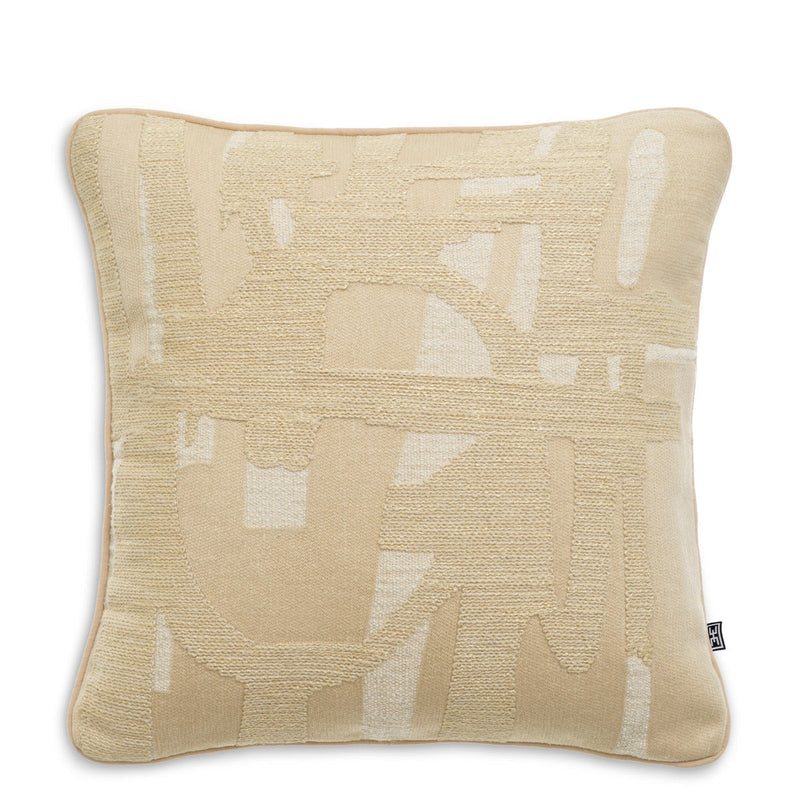
The first is pattern-forward. Jacquard weaves, damask-inspired motifs, and repeating geometric structures that bring visual structure to a room that's otherwise very neutral. These read from across the room. They're the right call when the furniture and walls are clean and you need the textile layer to carry some visual weight.
The second is texture-forward. Bouclé, velvet, slubbed linen, and looped pile fabrics where the interest is entirely in how the surface feels rather than in any pattern. These are the quieter pieces — they add warmth and depth without pulling focus. They work well in rooms that are already busy visually, where another pattern would create noise instead of interest.
The third is understated solid. A premium fabric in a single color, often with a contrast-stitch trim or a subtle variation in the weave surface. These are the utility players: easy to pair with almost anything, easy to change out as a room evolves, and they photograph cleanly. If you're specifying for a rental property, a hotel suite, or any setting where you want long-term flexibility, solids are usually the right starting point.
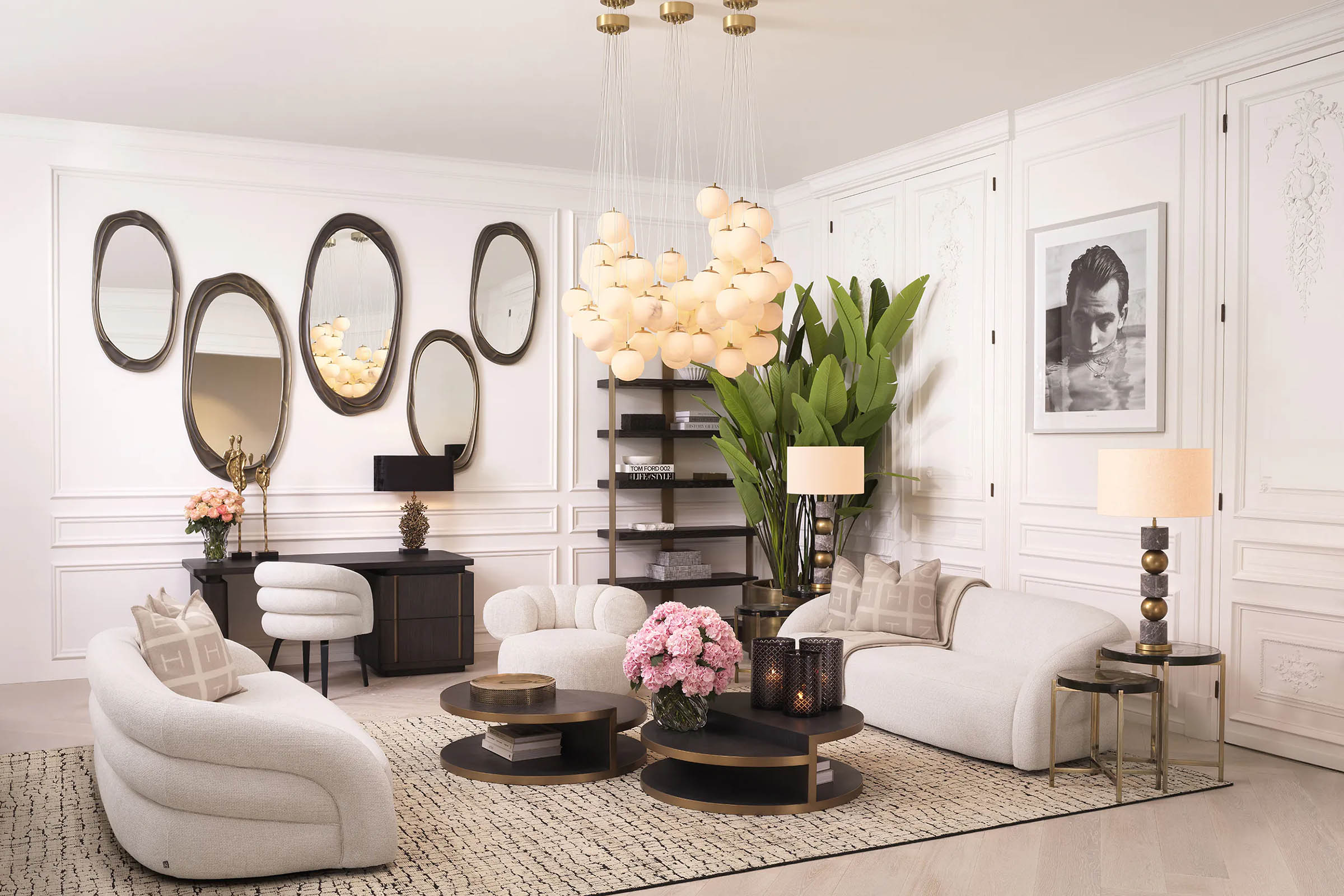
All three directions are on the showroom floor, which means you can see how they read in actual light alongside actual furniture — not on a white background in a product photo, but next to the velvet sofa or the linen sectional you're genuinely considering.
The Sequence That Produces the Best Results
Most cushion purchasing happens after the fact. The room is furnished. Something feels unfinished. Cushions arrive as a retrofit — chosen in isolation from the upholstery, the rug, and the rest of the palette. The result is usually fine. It rarely looks as good as it could.
The rooms that look best tend to be specified the other way. Furniture, rug, and textile layer are chosen together, in the same palette, at the same time. The cushions arrive with the sofa. The room is dressed from the first day. There's no gap between "furnished" and "finished."
This is how we work on the showroom floor at Eichholtz Las Vegas. When we build a display vignette, the cushions are selected alongside the furniture — not placed as an afterthought. Scale chosen relative to the sofa depth. Texture chosen relative to the upholstery. Palette pulled from the rug and the ambient light in that corner of the floor.
If you're furnishing a room with us — whether you're a designer specifying a client's living room or a homeowner working through your own — we can help you approach the textile layer the same way. Browse the full cushion collection online, or come into the showroom and we'll pull the right scale and texture alongside the furniture you're working with. The full range ships from the Eichholtz warehouse network, typically two to four weeks for in-stock pieces — considerably faster than made-to-order upholstery, which means the cushions can often arrive with the furniture rather than after it.
See the Full Cushion Collection
Visit the showroom or browse online — and if you're a designer specifying at scale, the Trade Program gives you access to trade pricing and sample support.
Apply for Trade Access