Skip to content


The entry of a home is the first thing anyone sees, and in most homes it is also the least considered space. An entry vignette — a console, a mirror, a light source, and almost nothing else — is a small investment that changes the entire feeling of a place from the moment the door opens.
At Eichholtz Las Vegas, the entry is one of the first design decisions we talk through with trade clients. It is the moment of transition: from outside to inside, from public to private. Getting it right sets the tone for every room that follows. Getting it wrong — or leaving it unaddressed — is an opportunity lost every time someone walks through the door.
The entry is not a hallway. It is the first room.
The three elements of an entry vignette
A well-composed entry vignette has three components, and they need to work together as a system rather than as individual objects placed in proximity. Remove one and the composition falls apart. Add too many and it becomes a display case rather than an entry.
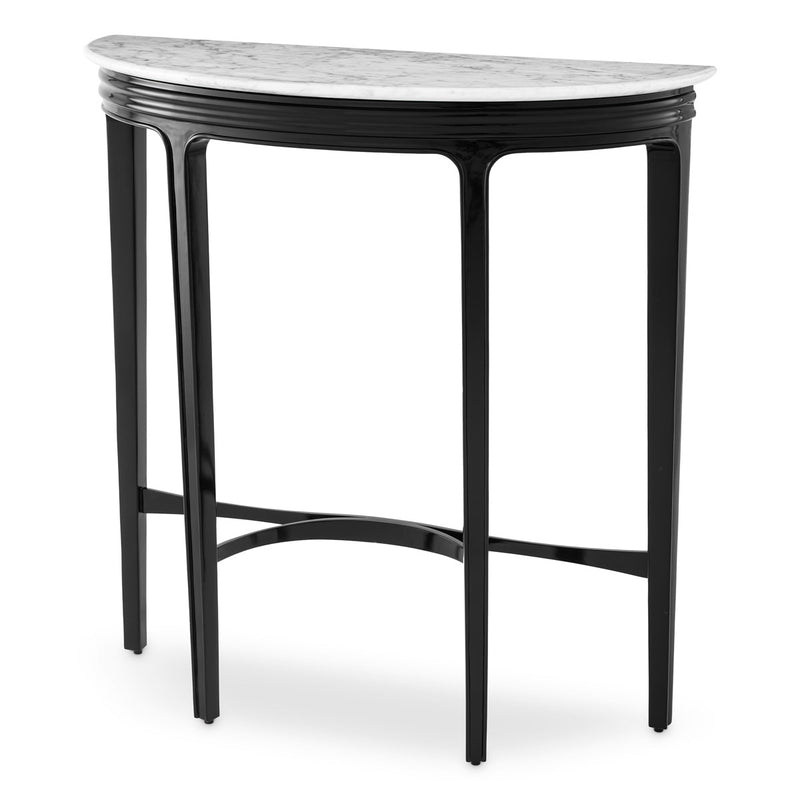
- The surface. Almost always a console table — narrow enough not to obstruct movement through the space, long enough to anchor the wall it occupies. The console is the foundation of the vignette. Everything else responds to it. In terms of proportion, aim to cover sixty to seventy percent of the available wall width. A console that is too short for its wall reads as tentative; one that fills the space correctly reads as intentional. Depth matters too: forty to fifty centimeters is the standard, though slimmer wall-mounted consoles solve tight corridors effectively.
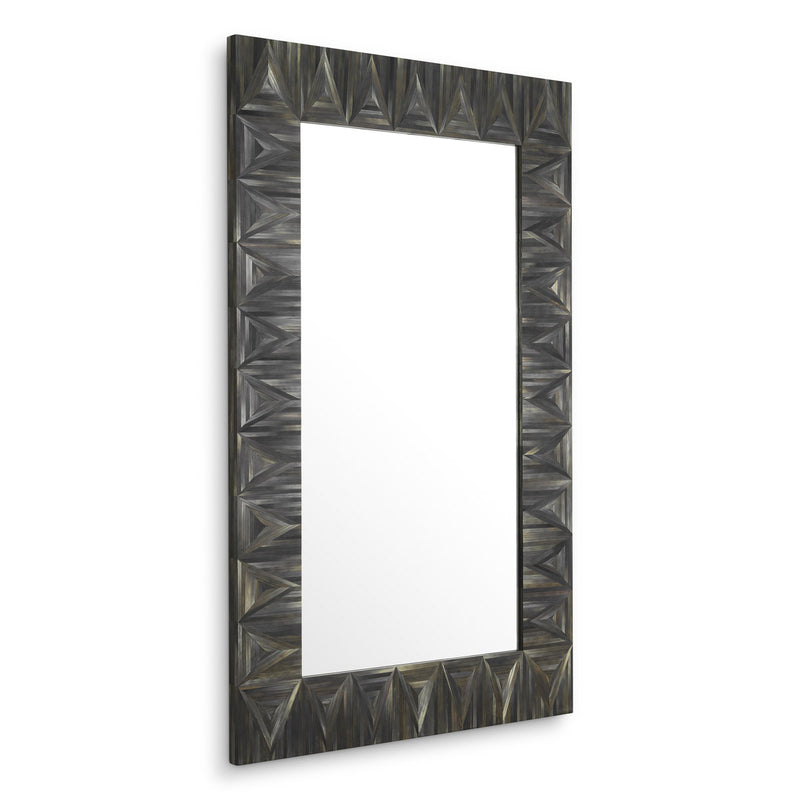
- The focal point. A mirror above the console serves two practical purposes — it reflects light into what is often a darker transitional space, and it gives occupants and guests one last look before they leave. Size it generously: a mirror that is too small looks like it belongs in a bathroom rather than a foyer. The top edge of the mirror should sit at eye level or above. As a rule, the mirror should be at least two-thirds the width of the console, and never wider than it. An oversized frame with a smaller reflective surface is often more interesting than a plain mirror of identical dimensions.
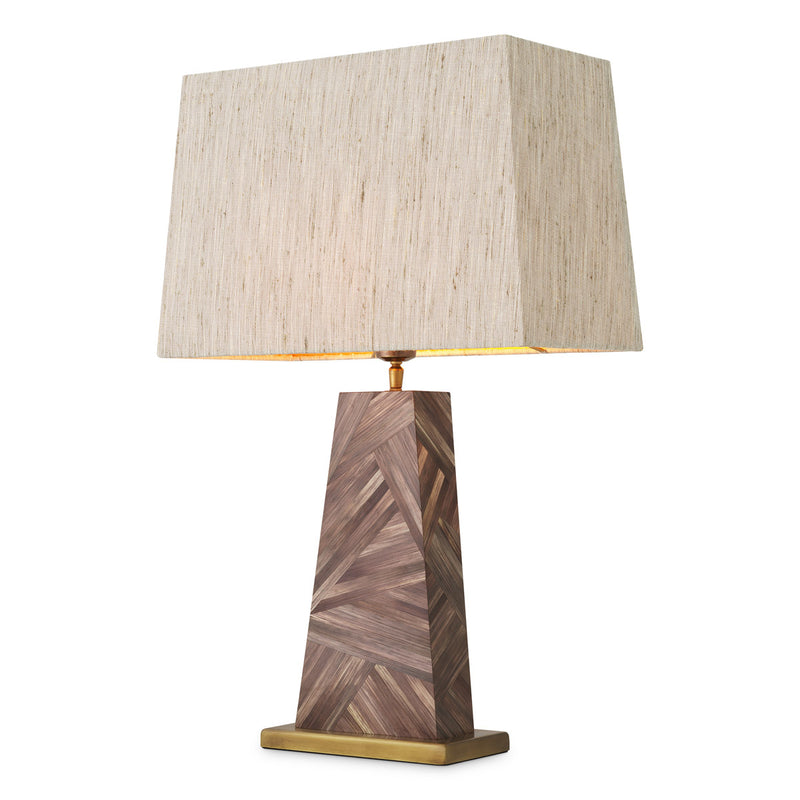
- The light source. Table lamps on a console are not about illumination — the entry already has its ceiling fixtures. They are about warmth and mood. You want a warm color temperature, a shade that diffuses rather than directs light, and a base with enough visual weight to read from across the room. A spindly lamp base on a heavy stone console looks accidental. A substantial brass or ceramic base anchors the surface and ties the composition together.
Proportion: the mistake most people make
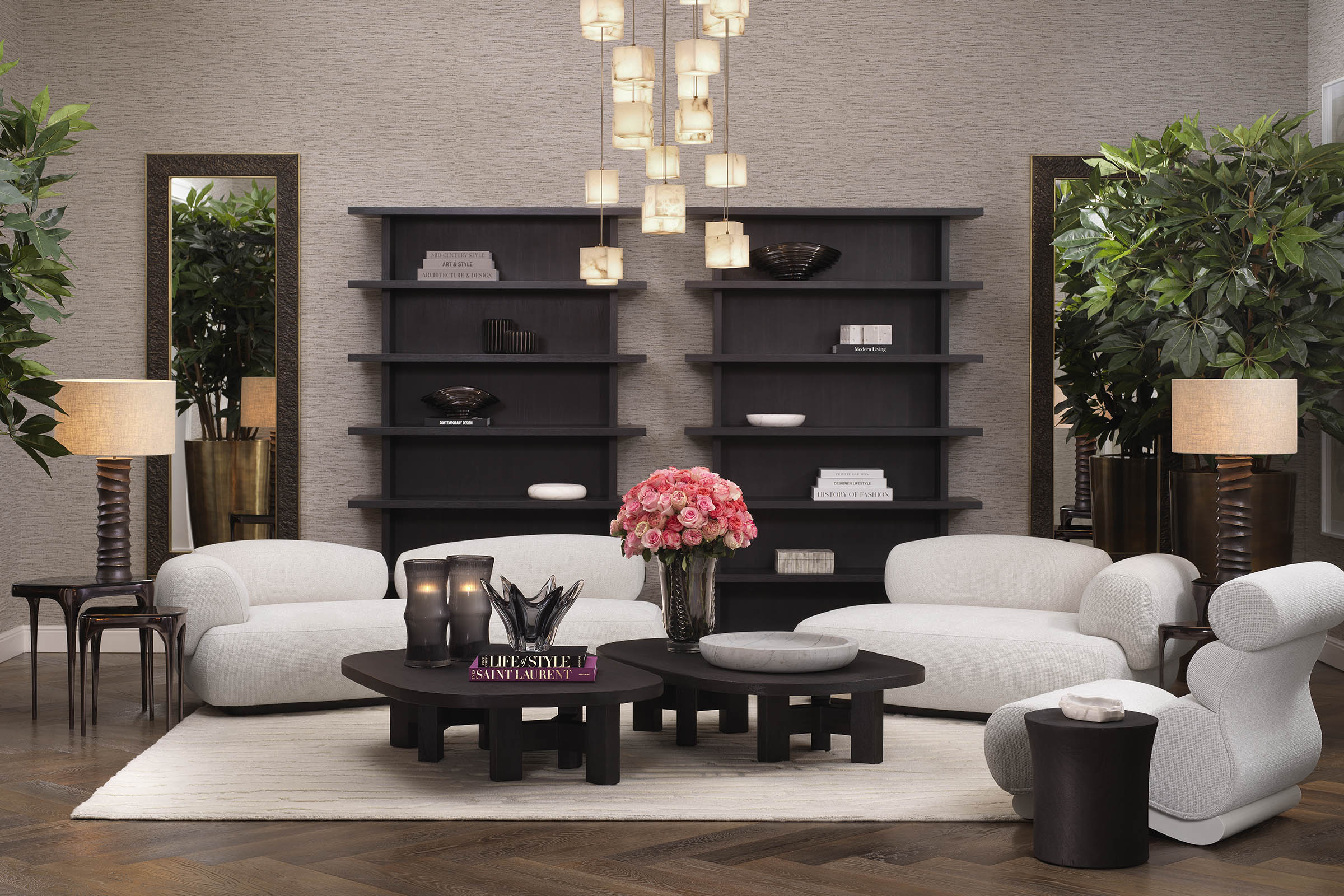
The most common entry vignette error is under-scaling. People choose a console that is too narrow for the wall, a mirror that is too small for the console, and a lamp that disappears into the arrangement. The result is a space that reads as furnished but not designed — the pieces are there, but they don't register.
Scale is not about using large pieces. It is about using correctly proportioned pieces relative to the space and to each other. A slender brass console with refined legs can fill a wall perfectly without being bulky. A large-frame mirror in a simple finish can feel almost weightless while doing exactly the work the composition needs. The Eichholtz collection includes console tables ranging from compact wall-mounted options to full-length statement pieces — and mirrors in shapes and finishes that pair with all of them.
One useful test: stand in the doorway and look at the entry as a stranger would see it for the first time. Is the arrangement the first thing that registers? Does it tell you something about how the rest of the home is decorated? If the answer to either question is no, the scale is probably the issue.
Three pieces from the Eichholtz collection
The three pieces below represent one complete entry composition — a console, a mirror, and a table lamp. They are not the only combination that works, but they illustrate how pieces from different categories within the Eichholtz catalog can function together as a vignette rather than as three unrelated objects.


Styling the surface
Once the three structural elements are in place — console, mirror, lamp — the styling of the surface itself follows a few reliable principles. The goal is not to fill the surface but to complete it.
- Odd numbers. Three objects on a surface read as a composition. Two reads as a pair. One reads as forgotten. Work in threes: lamp, vase, object — or lamp, tray, small sculpture. The lamp counts as one of your three.
- Varying heights. The lamp is typically the tallest element. Bring in one medium-height object — a bud vase, a small framed photograph, a ceramic — and one low object, like a tray, a stack of books, or a decorative box. This gives the eye a path to follow from tall to medium to low and back again.
- Edit ruthlessly. The entry console is not a drop zone. It is a statement. Keep the surface almost empty — the lamp and one or two well-chosen objects is almost always enough. If something does not contribute to the composition, it belongs somewhere else.
- Natural elements. A single stem in a bud vase or a small bowl of stone objects brings a texture to the entry that manufactured pieces alone cannot. The Eichholtz accessories collection includes vases, objects, and trays that work at the scale of a console without competing with the lamp or mirror for attention.
When the entry is a double-height space
A double-height entry changes the equation. When the ceiling rises to six or seven meters, table lamps on a console read as furniture-scale, not room-scale. The entry needs something overhead — a chandelier or pendant — to fill the vertical space and justify the height.
This does not replace the console vignette. It adds a fourth element: an overhead focal point that anchors the height the way the console anchors the floor. A well-chosen chandelier in a double-height entry is one of the highest-return investments in any home — it is visible from the entry, from the stairs if there are any, and often from the adjacent living room. It does more visual work than almost any other single object in the space.
The Eichholtz lighting collection has more than two hundred chandelier options. At the showroom at Tivoli Village, we have a dedicated lighting area where you can see scale in context — which is the only reliable way to select a chandelier for a double-height space. Photographs and spec sheets don't communicate scale the way standing under a piece does.
Ordering and timing
Eichholtz ships from its warehouse network — orders go from the warehouse directly to your home or project site. For most in-stock pieces, delivery takes two to four weeks. That is significantly faster than the twelve to twenty-four weeks typical of made-to-order luxury furniture, but it is not immediate. If you are working on a project with a fixed move-in date, order the console and mirror first — they are larger pieces and take slightly longer to coordinate — and handle the lamp last, since smaller lighting pieces ship quickly.
Trade clients can also request access to the full Eichholtz catalog, including pieces not shown on the public site, and can view specification sheets and finish samples at the showroom. If you are specifying an entry for a client project and need to verify dimensions or finishes before ordering, contact us directly through the trade program.
The showroom at Tivoli Village is opening this summer. If you are visiting before or at Grand Opening, the entry vignette is one of the first compositions you will encounter — which, given the subject of this article, is intentional.
Apply for Trade Access
Interior designers can access trade pricing across the full Eichholtz catalog, including the console, mirror, and lighting collections.
Apply for Trade Access