Skip to content


Benches get skipped. Homeowners plan the sofa, the dining table, the chandelier — and the bench ends up as a last-minute compromise or doesn’t get ordered at all. That’s a missed opportunity. A well-chosen bench is one of the most flexible pieces in a home, capable of solving problems in rooms where nothing else quite fits.
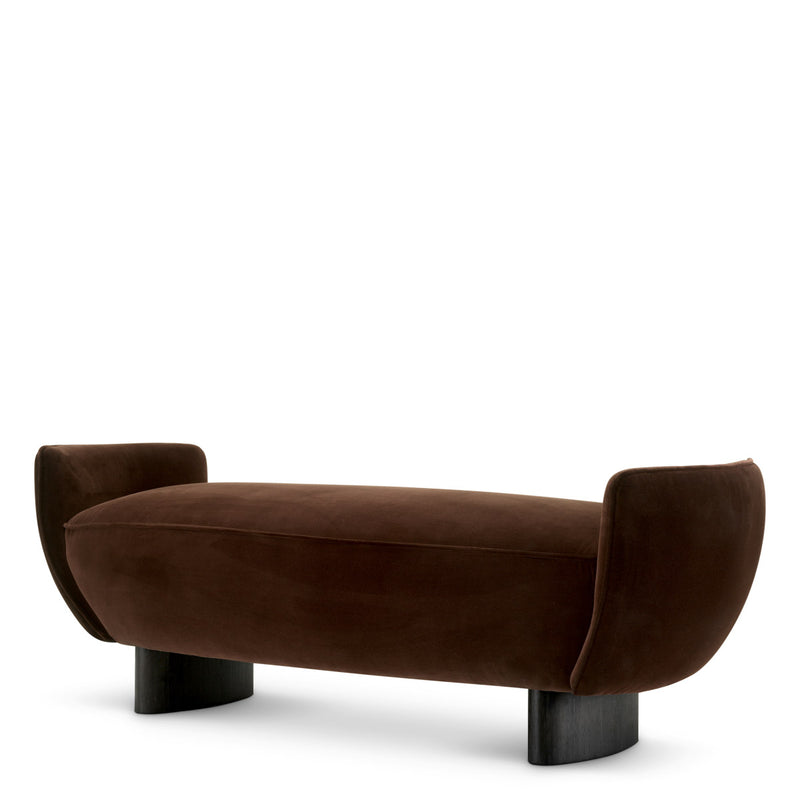
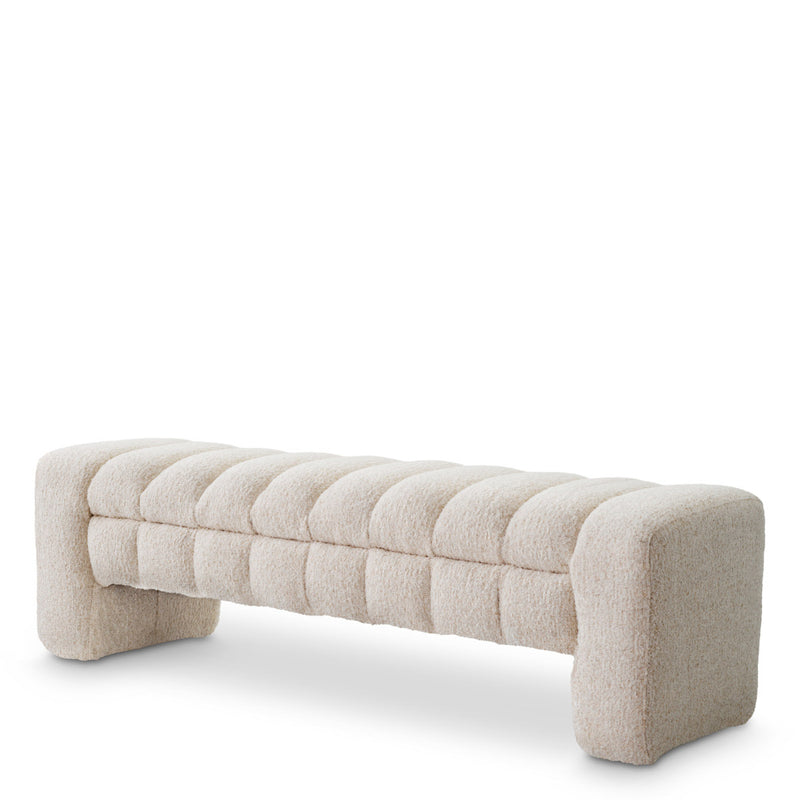
The Eichholtz collection covers benches in formats for nearly every placement: narrow upholstered entry pieces, wide bedroom-end formats, structured pieces for hallways and libraries, and long-form benches that work alongside a dining table. What follows is a guide to four common placements — and what to look for in each one.
A bench tells a room it’s done.
At the End of the Bed
The most common placement, and the one most designers specify first. A bedroom bench does three things at once: it adds upholstered softness to the lower half of the room, gives you a surface to sit on when getting dressed, and fills the visual gap at the foot of the bed that otherwise reads as empty floor space.
For sizing, the standard rule is to match the bench roughly to the width of the bed. A king bed (76 inches) reads well with a bench between 60 and 70 inches long. A queen (60 inches) works with something in the 48-to-60-inch range. Going narrower than the bed makes the piece look like an accent; going wider creates an imbalance that draws the eye for the wrong reason.
Height matters as well. Most bedroom benches sit between 18 and 20 inches — the same seat height as a dining chair, which makes sitting and standing comfortable without effort. Under 16 inches and the piece starts to read as an ottoman. Over 22 inches and it sits too high for casual use at the foot of a bed.
- Upholstery. Velvet, bouclé, and leather all work well at the end of a bed. Velvet and bouclé add texture to a room that can easily become visually flat. Leather holds up in a bedroom that doubles as a dressing room — daily wear over years shows less on leather than on soft weaves.
- Leg finish. Brass and dark metal are the most common in the Eichholtz bench collection. Brass connects naturally to chandelier hardware or nightstand handles; dark metal adds contrast in a lighter room without competing with upholstery.
- Back or no back. Backless is the right call for a foot-of-bed placement. A backed bench in that position blocks the view of the bed from across the room — it reads more like a loveseat than a finishing piece.

In the Entry Hall
An entry bench is one of the few pieces in a home that earns its place entirely on function — and still has to look considered. Guests sit on it to remove shoes. Bags land on it. It takes daily wear. And yet it is often the first piece visitors see when they step through the front door, which means it sets the register for the entire home before any other furniture gets a look.
Entry benches tend to be narrower than bedroom formats — typically 18 to 24 inches deep, because most entry halls cannot spare more floor space. Length varies with the hall: a standard entry might carry a 48-inch bench comfortably; a wider hall or a double-door entry can take something 60 inches or longer without reading as oversized.
Material choices shift in an entry context. If the entry takes significant daily traffic — shoes, bags, outerwear — a leather or performance-fabric seat holds up better than velvet over time. If the entry is more of a formal gallery pass-through where the bench is primarily decorative, velvet works beautifully and signals a deliberate level of finish from the moment someone arrives.
One detail worth noting in an entry placement: leg height. A bench on slender, elevated legs leaves the floor visible beneath it, which makes a narrow entry feel less blocked. A bench on a solid base or very short legs reads heavier and makes a tight hall feel more enclosed. In most entry halls, an elevated-leg format is the more considered choice.
Along a Dining Table
Placing a bench along one long side of a dining table is a choice that reads as distinctly European — and it changes the dynamic of a dining room in ways that are hard to predict until you have lived with it. The bench side seats more people per linear inch than individual chairs do. It is also less formal: guests slide in rather than pulling out chairs, and conversation along that side of the table tends to stay looser and more relaxed.
The bench seat height should match — or sit within an inch of — the seat height of the chairs on the other side of the table, so everyone sits at the same eye level. For most dining tables, that means a bench in the 18-to-20-inch range.
Length-wise, a dining bench should span close to the full length of the table — no shorter than about 75 percent, or it looks undersized and leaves guests at the ends without comfortable seating. A six-foot table works well with a bench in the 54-to-68-inch range.


In the Library or Living Room
A bench in a library or living room is the third-seat option — the piece you add when a room needs more seating for a gathering but cannot take another sofa or a second pair of armchairs. Placed in front of a fireplace, in a windowed alcove, or pushed against a wall behind a coffee table, a bench is low-profile enough to read as furniture rather than as improvised overflow seating.
For this placement, a backless bench works best. It can be pulled into the seating area when needed, then pushed back against a wall or in front of a bookcase when not in use. Length tends to be shorter here than in bedroom or dining formats: a 42-to-54-inch bench fits most secondary positions in a living room without dominating the composition.
In a library, a bench at the end of a reading table or placed in front of a run of shelving serves double duty — additional seating for working sessions and a strong horizontal element that grounds the vertical lines of the bookcases behind it. This is a placement where material is a real decision: velvet reads as a deliberate design choice against dark shelving; leather holds up to frequent repositioning.
Choosing the Right One
The starting point is always placement. Before selecting a bench, know exactly where it will live — because the dimensions, height, and material requirements all follow from that answer. A bedroom-end bench is not the same object as an entry bench is not the same as a dining bench, even when they come from the same collection.
Eichholtz benches are available through Eichholtz Las Vegas as both catalog selections and Atelier custom builds. The Atelier option is worth considering for bedroom and entry placements in particular, because those spots are dimension-sensitive: a few inches too short or too narrow reads immediately in the context of the piece it is anchoring. Atelier allows the length, upholstery, and leg finish to be specified to the room, so the bench arrives built for the space rather than adapted to it.
Catalog benches ship from the Eichholtz warehouse network in two to four weeks for confirmed in-stock pieces — a meaningful contrast to the twelve to twenty-four weeks that fully custom furniture typically requires. For projects on a schedule, a catalog bench in the right format is often the practical call.
Come see the current collection at Eichholtz Las Vegas, Suite 160 at Tivoli Village, in Summerlin. The design team can help with sizing, placement, and upholstery choices for your specific room.
Trade Pricing on the Full Collection
Interior designers receive preferred pricing on every Eichholtz bench and the full catalog through the Designer Trade Program.
Apply for Trade Access