Skip to content


Autumn brings a straightforward problem: the room that felt exactly right in July now reads as slightly cool, slightly empty, slightly off. The daylight is different. The hours inside are longer. The same furniture, the same rug, the same objects — but the room no longer holds.
The fix is rarely what most people reach for first. It is not a new sofa or a fresh coat of paint. It is a layer — warm-fabric seating, ambient lighting positioned at the right height, a textile or two placed with intention. These three categories are what this article covers, because together they account for most of the work that makes an autumn living room feel complete.
The difference between a summer room and an autumn one is almost always two or three pieces, not a renovation.
The Anchor: Warm-Fabric Seating
Start with the seating because it has the largest visual mass and the most immediate effect on how warm a room reads. Linen and cotton — reliable in summer — do not register as warm. Their weave is open, their surface is light, and they reflect rather than absorb the cooler tones of autumn light. Velvet, bouclé, and heavier woven fabrics work differently. The pile catches light at an angle, the surface appears deeper, and the eye reads warmth before the body even makes contact.
Eichholtz's Atelier line is the made-to-order tier of the collection — pieces specified to a particular frame finish and fabric combination rather than produced in a fixed configuration. The Chair Elisha, in an eucalyptus frame with Sonoma Brown velvet, is a useful example of how this tier works: the eucalyptus brings grain and visual weight, the velvet brings depth, and the specific shade of brown sits in the range that reads as warm across most autumn palettes without reading as seasonal in the way a darker chocolate or an orange would.
Placement matters as much as the piece itself. An armchair positioned at forty-five degrees from the primary sofa — angled toward the window or toward a secondary light source — creates a distinct seating moment without competing with the room's main conversation area. Add a side table within reach, a lamp at armrest height, and a cushion or small throw across the seat, and the vignette reads as complete even before anyone sits in it.
A note on the Atelier line in general: because pieces are made to specification rather than pulled from stock, lead times are longer than the standard catalog — typically eight to twelve weeks depending on the piece and the configuration. The Chair Elisha and other Atelier items are worth starting early if you have a specific deadline in mind. The broader Eichholtz catalog ships in two to four weeks for in-stock pieces, which is the timeframe for the majority of what you see at eichholtzlasvegas.com.
The Lamp: Ambient Light at the Right Level
In summer, overhead lighting is often adequate. Rooms are bright by default, and ceiling fixtures supplement natural light rather than replacing it. In autumn and winter, this reverses: natural light drops earlier, overhead fixtures cast downward shadows, and the room reads as exposed rather than warm. Table lamps solve this.
A lamp positioned at eye level from a seated position — roughly at the height of a sofa's armrest — spreads light horizontally across surfaces. It creates a pool of warm illumination around the seat rather than a cone of bright light from above. The result is a room that feels inhabited and enclosed in a way that ceiling light cannot produce.
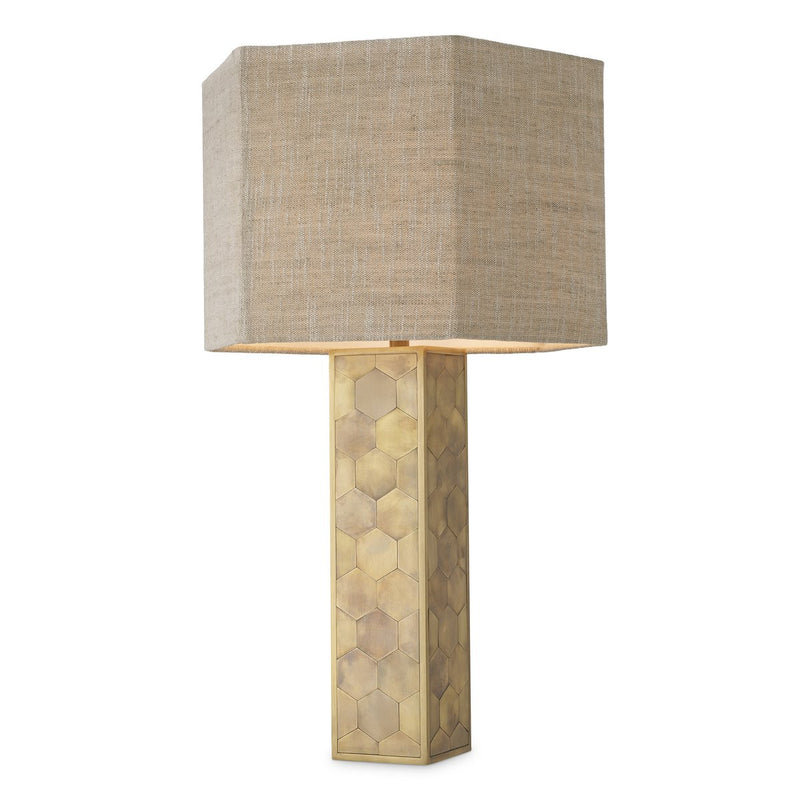
Brass handles autumn well because it reflects the warm end of the spectrum. Vintage brass in particular — slightly deeper, less chrome-bright than polished — reads well in lamplight and pairs naturally with the browns, tans, and muted ochres that appear in autumn palettes. The Table Lamp Montreux in vintage brass is built for exactly this kind of placement: the base proportions suit a console or end table without overwhelming it, and the included shade diffuses the light to a spread rather than a focal point.
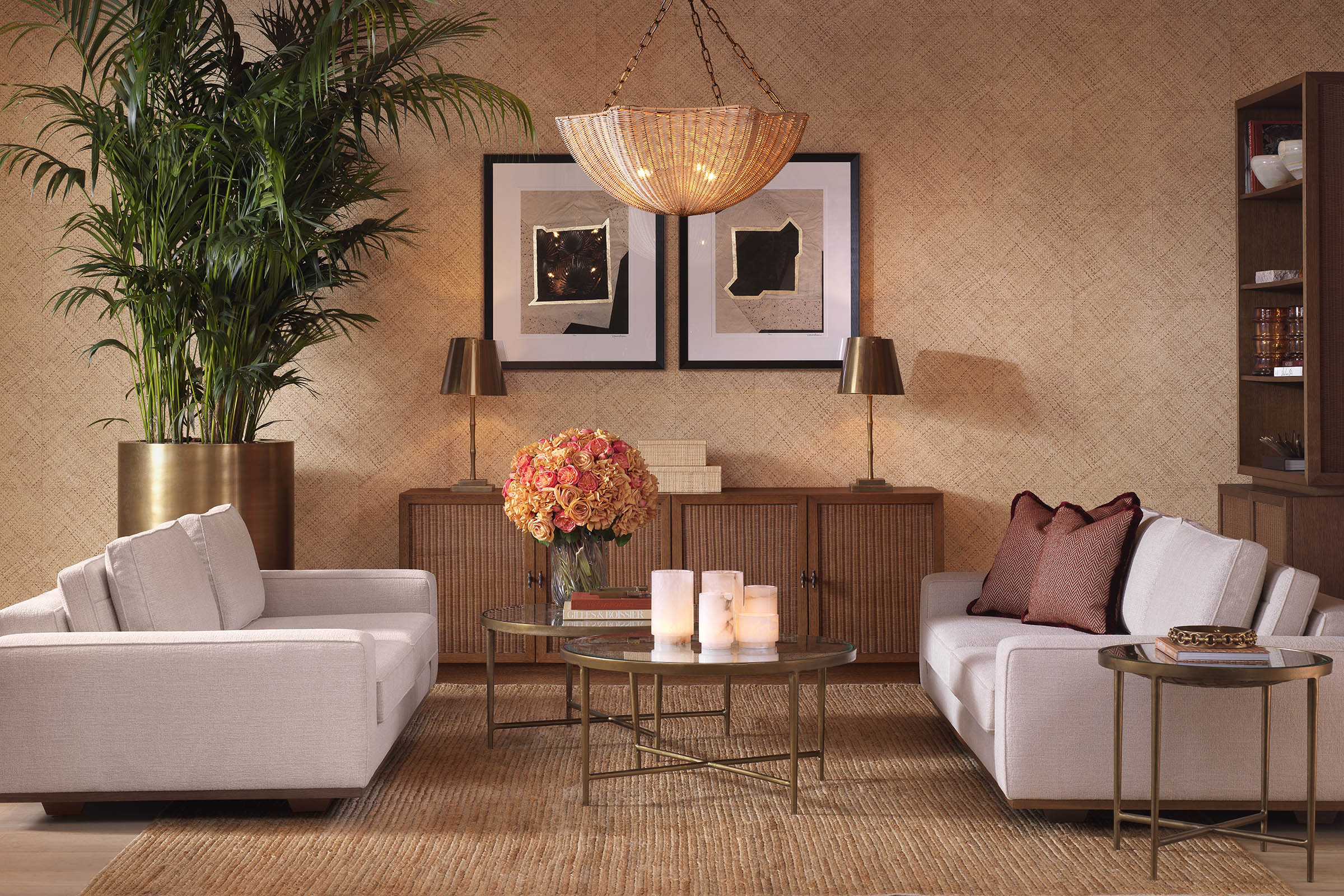
- Armrest height is the working zone. A table lamp set at the end of a sofa, with the bottom of the shade near armrest level, produces the most flattering living-room light. Higher reads as task lighting; lower reads as a decorative object. The middle zone is where ambient light lives.
- Three sources, two levels. A well-lit autumn room typically has three light sources: two table lamps at sofa-arm height, and one floor lamp or reading lamp near a secondary seat. This triangulation means no corner of the room goes fully dark when overhead lighting is off.
- Consider the bulb before the lamp. If existing fixtures work but the light feels cold, switching to a bulb with a warmer color temperature — 2700K or below — changes the room immediately without requiring new purchases.
The Textile Layer: Pattern and Weight
Textiles are the fastest change in any room and the most reversible. A cushion on an armchair, a throw across a sofa back, a heavier-weight fabric over an existing piece — any of these shifts the temperature of a room without touching its structure. They are also the category where pattern does the most useful work in autumn, because the eye processes pattern as visual weight even when the physical weight is minimal.
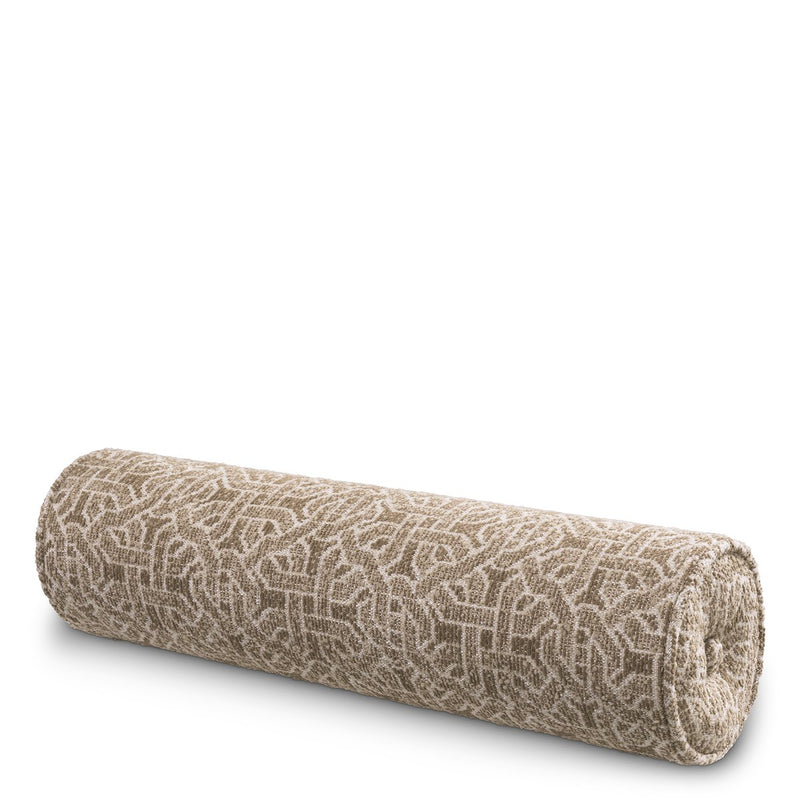
The Eichholtz accessories program includes a range of cushions in fabrics suited to seasonal layering. The Cushion Amarante in frieze jacquard beige introduces both pattern and tactile weight — the jacquard weave raises the surface slightly, which reads as more formal and more substantial than a plain-woven cushion at the same dimension. Beige is useful here because it sits between the warm and neutral ends of the spectrum: it does not pull the room in a specific color direction, which means it works alongside most autumn palettes without requiring everything else to coordinate around it.
On the question of how many textiles to add: less is usually more once you account for throws. A throw on a sofa, another throw on an armchair, and cushions across both pieces quickly reads as a showroom floor rather than a lived-in room. The approach that tends to work is to commit the throw to a single piece of furniture, then let the cushions carry the textile layer across the rest of the seating. One throw, placed with intention, reads as a considered choice. Multiple throws placed identically read as a kit.

Chair Elisha eucalyptus + sonoma brown velvet

Table Lamp Montreux vintage brass

Cushion Amarante frieze jacquard beige
Putting the Season Together
The three categories above — warm-fabric seating, ambient lamp placement, and textiles — are not independent choices. They work together because they operate at different scales. The seating piece is the room's anchor: it sets the dominant material and tone. The lamp is a functional placement: it solves the light problem at the right level. The textile is the fine adjustment: it introduces pattern, weight, and another layer of warmth at the scale of a cushion or a folded piece of fabric.
The sequence that tends to produce the best result is: seating first, lighting second, textiles third. This is also the sequence in which changes compound. If the seating works, the lamp has a surface and a context to illuminate. If the lamp is well placed, the textiles in its light look finished rather than added. If the textiles are chosen last, they can address whatever the room still needs — more warmth, more pattern, more softness — rather than solving a problem in advance.
Visit the Showroom This Season
The Eichholtz Las Vegas showroom opens at Tivoli Village, Suite 160, this summer of 2026. The full collection is available year-round at eichholtzlasvegas.com, with most catalog pieces shipping in two to four weeks for in-stock items. Atelier pieces and made-to-order specifications have longer lead times — worth starting those conversations early if you have an autumn deadline in mind.
Design Access for Professionals
Interior designers working with clients can apply for trade pricing on the full Eichholtz catalog.
Apply for Trade Access