Skip to content


A vignette is a composed grouping of objects on a surface — a console, a coffee table, a shelf, a sideboard. Done well, it makes a room feel curated rather than furnished. Done poorly, it looks like a collection of things that arrived separately and never introduced themselves.
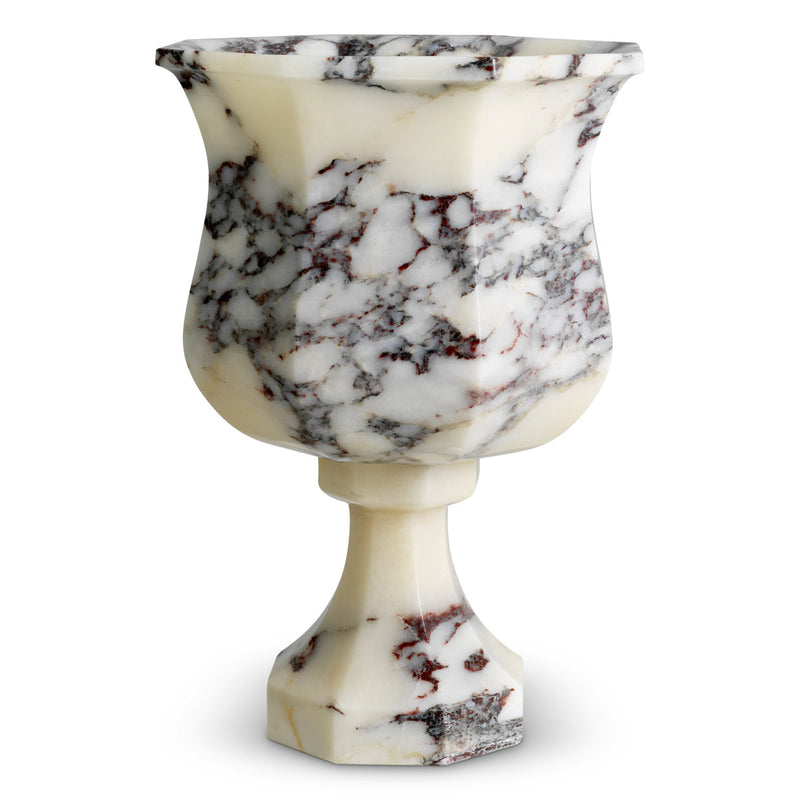
The Eichholtz collection includes over two hundred decorative objects: vases, bowls, hurricane lanterns, trays, candleholders, and sculptural pieces in marble, alabaster, brass, and glass. Most are designed to work in groups. Understanding how to compose them is the difference between a surface that holds objects and a surface that holds your attention.
A great vignette tells you something about the room before you sit down in it.
Three Principles That Apply to Every Surface
Surface styling follows a short set of rules that hold across every room type, surface height, and object category. These are not design theory — they are practical decisions you make when you put two objects next to each other.
- Scale contrast. Group objects of different heights. A tall vase beside a low bowl beside a mid-height lantern creates movement. Three objects of similar height sit flat and read as a line rather than a composition.
- Material variety. Combine at least two different materials in a vignette — glass and stone, brass and ceramic, marble and woven rattan. The contrast creates visual texture. All-glass or all-brass reads as monotonous even when the individual pieces are beautiful.
- Negative space. Leave room on the surface. Objects packed tightly compete with each other; objects with breathing room command more attention individually. The empty surface is part of the composition.
- Odd numbers. Groupings of three work better than two or four. Two objects feel like a pair; four feel like a grid. Three creates a natural focal center and two supporting elements.
- Anchor piece first. Start with the tallest or most dominant piece — the statement vase, the large hurricane. Place everything else in relation to it. The anchor sets the scale for everything that follows.
Choosing the Right Objects for the Room
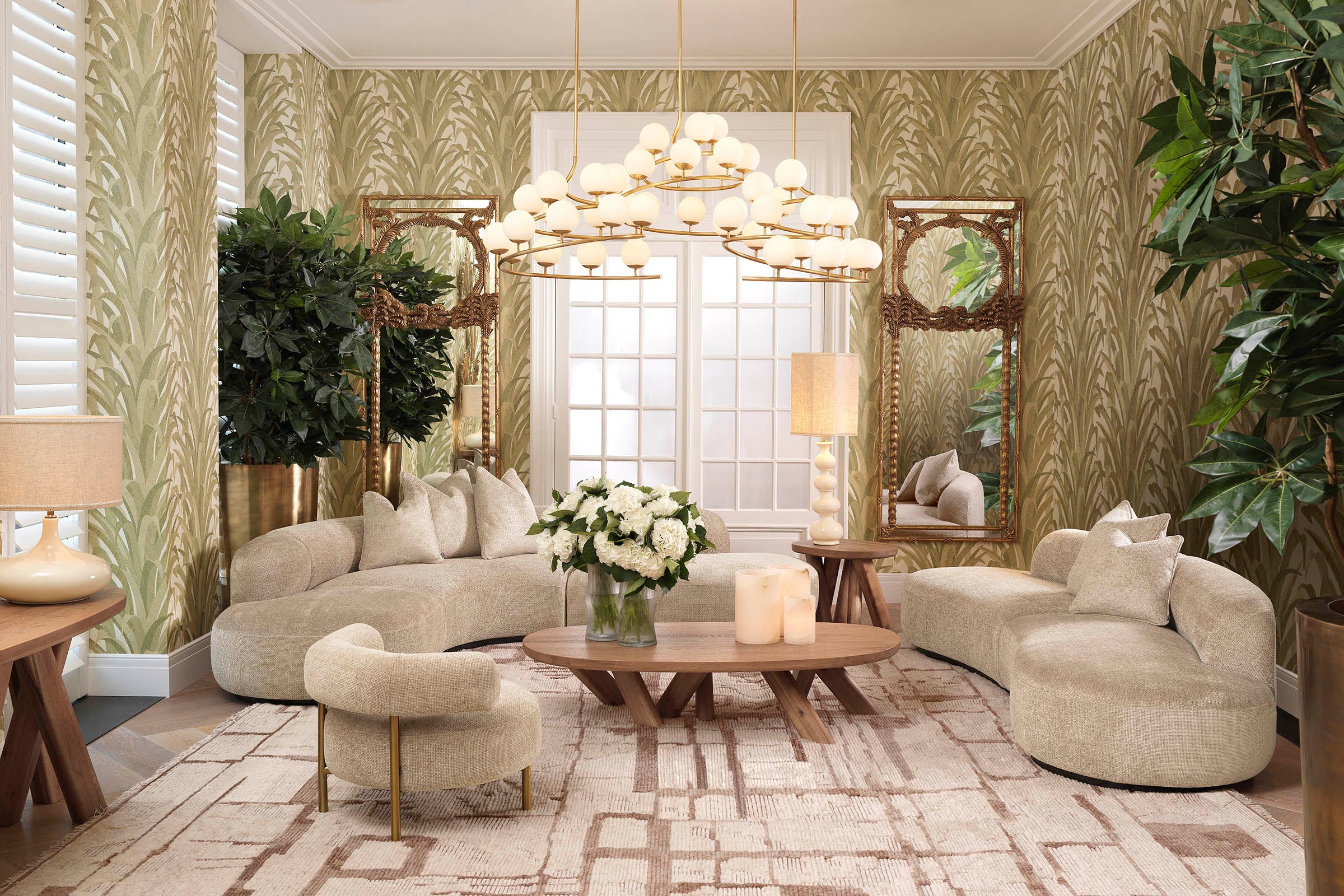
The objects in a vignette should connect to the room's broader character — its palette, its material story, its weight. A room built on warm tones — amber, ochre, terracotta, aged brass — calls for organic forms and natural materials. Ceramic vases with matte glazes. Alabaster bowls. Brass hurricane lanterns with clear glass. The warmth compounds.
For rooms built on cool neutrals — cream, soft grey, polished plaster — look for pieces with more graphic clarity. Clear crystal vases. Lacquered bowls. Nickel-finish candleholders. The objects add interest without disrupting the room's calm.
Eichholtz designs accessories with this in mind. Most pieces are available in a narrow range of finishes and colorways — not because the collection is limited, but because each piece is designed to land in a specific part of the visual spectrum. When you select from within that range, the pieces naturally support each other.

The Console Table Vignette
A console table is one of the most important surfaces in a home because it is almost always the first thing you see when you enter a room — or the first thing a guest sees when they walk through the front door.
A strong console vignette usually has three elements: something tall (a vase, a sculptural lamp), something wide and low (a tray, a bowl, a stack of books), and something with detail (a small object, a candleholder, a piece with interesting texture or surface finish). The tall piece goes slightly off-center toward one end. The wide piece anchors the middle or opposite end. The detail piece fills the gap.
Mirror placement affects the vignette. A large mirror above the console doubles the visual depth of the surface — the objects appear both from the front and in reflection. This is why mirrors are so common above consoles: they extend the composition vertically and multiply its effect without adding any surface clutter.
The Coffee Table Vignette
Coffee table surfaces operate differently from console tables because they are viewed from all four sides. There is no back to the composition. This means the vignette needs to read in the round — nothing should face a single direction, and the negative space should be visible from the sofa.
The common mistake is treating a coffee table like a console: placing everything along one axis. Instead, work in concentric zones. A large tray in the center contains the inner grouping — a candle, a small object, a few books — and defines its footprint. Outside the tray, one or two loose objects (a larger vase on one side, a sculptural piece on the other) extend the composition to the table's edge.
Scale is especially important on coffee tables because the objects are at seated eye level. A vase that works well on a tall console will overpower a low coffee table. The rule of thumb: the tallest object on a coffee table should not exceed the height of your sofa's seat cushion — roughly forty to forty-five centimeters for most Eichholtz upholstery pieces.
Hurricane Lanterns and Candlelight
Hurricane lanterns serve a specific role in vignette composition: they bring light into the surface. A group of three lanterns at varying heights does something that no amount of ambient lighting can replicate — it creates a warm, localized glow that draws the eye to the surface itself.
The Eichholtz hurricane lantern collection runs from small decorative pieces to large statement lanterns with significant visual weight. Mixing sizes within a single vignette — one large, two small — creates a family of objects that read as a set even when they are technically individual pieces. The glass and the flame reconcile the difference in scale between them.
Lanterns also work on surfaces where a vase would be too tall. A low credenza, a bedside table, a window ledge — these surfaces often need warmth more than height, and a cluster of hurricanes solves that without requiring anchor pieces at all.
Seeing It in the Showroom
The showroom at Tivoli Village is styled with working vignettes throughout — not as demonstrations, but as the way the space actually functions. Every console, coffee table, and display surface is composed with Eichholtz accessories in the same way a real room would be.
When you visit, you can see how pieces work at actual scale — how tall the Vase Bennington reads against a console, how the Hurricane Sterling distributes light in a seated-view arrangement, how a bowl sits in relation to the objects around it. This is genuinely difficult to judge from a product page and straightforward to read in person.
The team is available to walk through the accessories collection and help match pieces to a specific project or room. Most Eichholtz decorative objects ship in two to four weeks from in-stock inventory — significantly faster than the twelve to twenty-four weeks typical of custom or made-to-order pieces in this category.
Visit the Showroom or Apply for Trade Access
See the full accessories collection at Eichholtz Las Vegas, Tivoli Village — or apply for trade pricing on your next project.
Apply for Trade Access