Skip to content


Table lamps solve a problem that overhead lighting cannot: they put light at the height where it reads as warmth. A ceiling fixture illuminates a room. A table lamp makes a room feel inhabited.
Most rooms are lit in layers — ambient light from the ceiling, task light for reading or working, and accent light that defines the mood after dark. Table lamps live in the third layer, and it’s the one that guests notice most. They also pull double duty as sculptural objects, which means the base and shade you choose matter as much during the day as they do when the lamp is switched on. Getting this layer right changes how a room feels around the clock.
A room lit only from above is a room that hasn’t been finished yet.
The Three Roles a Table Lamp Can Play
Table lamps are more versatile than they appear. Before you choose one, it helps to know what role you’re asking it to fill.
- Bedside companion. The classic position: one lamp per side, placed so the center of the shade sits at shoulder height when you’re sitting up in bed. The right bedside lamp eliminates the harshness of an overhead reading light without casting the room into darkness. Most people undersize bedside lamps and then wonder why the room feels dim even when the lights are on.
- Console anchor. A lamp on a console table behind a sofa grounds the space behind the seating area and creates a visual connection between foreground and background. A pair reads as deliberate; a single lamp reads as casual. Either is valid — the question is what the room asks for.
- Side-table accent. Placed next to a chair or at one end of a sectional, a side-table lamp defines a seat as a destination — the place in the room where you settle in. The lamp signals that this is a spot for reading, conversation, or simply sitting.
- Surface sculpture. In a library, on a credenza, or on a bookshelf with adequate depth, a lamp that’s switched off still contributes. The base is a sculptural object; the shade is a soft focal point. Treat both accordingly, and the lamp earns its space twenty-four hours a day.
Reading the Base
The base is where the lamp earns its place during the day. Eichholtz table lamp bases span a wide range — ceramic, cast resin, brass, textured glass — but they resolve into a few broad families worth knowing before you start shopping.
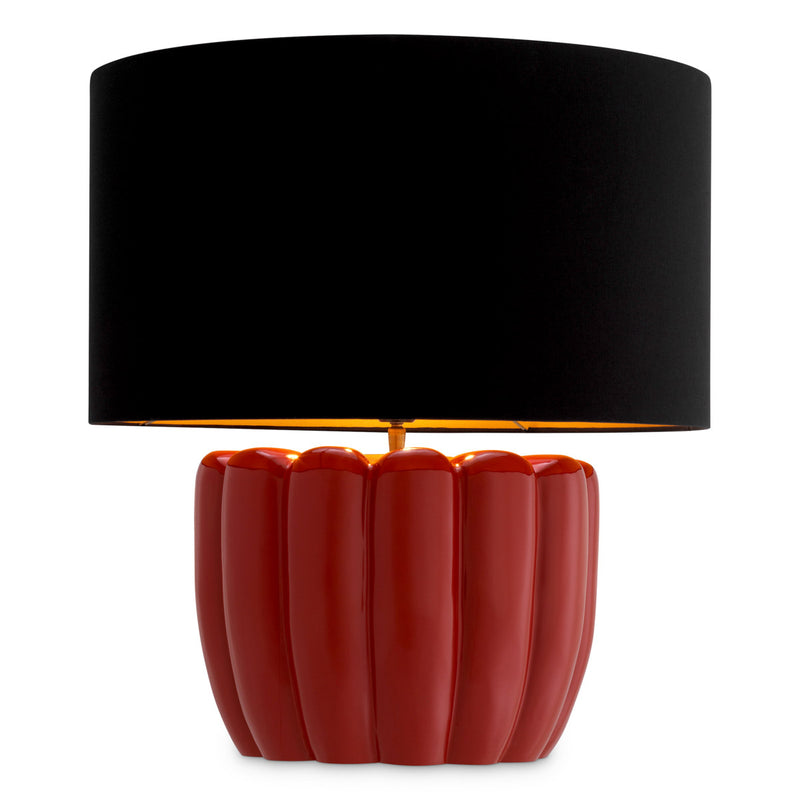
Ceramic and resin bases are the most common and the most varied. They can be matte or glazed, organic in form or architectural in silhouette. A ceramic base with a hand-applied glaze carries visible texture and depth that a metal lamp cannot match — it looks finished at close range in a way that printed or applied finishes don’t. These work equally well in a bedroom, a library, or on a console.
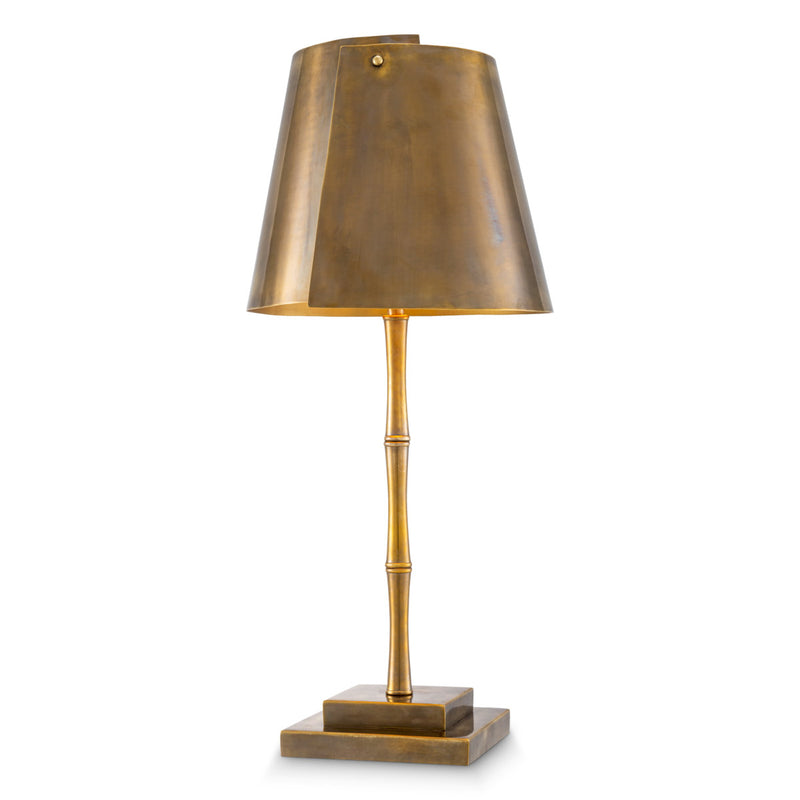
Brass and metal bases read differently. They catch light and reflect it. In a room that already carries brass hardware — cabinet pulls, a chandelier, picture-frame molding — a brass lamp base connects the room without duplicating it. A lamp doesn’t need to match the chandelier; it needs to rhyme with it. That distinction matters when you’re building a room rather than decorating one.
Sculptural resin and composite bases are the Eichholtz signature. Many of the most distinctive pieces in the catalog start as a sculpture concept — a rope wrap, a layered form, an abstracted figure — and the lampshade is almost secondary. If you find yourself drawn to a lamp for its base before you’ve thought about its shade, you’re probably looking at this category. Treat the shade as a complement, not the point.
One proportion rule worth keeping: the shade should be roughly two-thirds the height of the base for the combination to look settled. A tall, thin base with a very wide drum shade reads as top-heavy. A squat, rounded base with a narrow empire shade reads as pinched. The rule won’t make every combination beautiful, but it rules out the ones that clearly don’t work.
Choosing the Shade
The shade controls how light behaves in the room. Drum shades diffuse light broadly, casting a circle of warmth on both the surface below and the ceiling above. Empire shades — wider at the bottom, narrower at the top — focus light downward and read as more traditional. Cylinder shades are architectural: the beam is tighter and more directional, which suits a reading position or a side table more than an ambient setting.
Linen and cotton shades produce warm, diffused light. Pleated fabric shades refract light at the folds and add visual texture of their own — they look different in every light condition, which is part of their appeal. Structured shades in paper or hardback material are sharper and more graphic, and they hold their shape better over time.
Color matters more in a shade than most people expect. An off-white shade warms the light itself — the room glows amber rather than white. A true-white shade is cooler and crisper. Dark shades — black, deep navy, forest green — focus the beam tightly and turn the lamp into a statement piece: less ambient contribution, more directed presence. In a room with mostly soft, diffused lighting, one dark-shade lamp creates welcome contrast and draws the eye.


How Many, and Where
The working rule for table lamps is straightforward: odd numbers of light sources feel relaxed; even numbers feel deliberate. A single lamp on a console reads as casual. A matched pair flanking a sofa reads as composed. Three lamps distributed across a room — bedside, side table, and console — feel collected rather than matched, which is usually the better result in a room that’s still being furnished.
Height is the variable most often miscalculated. A bedside lamp should put the center of the shade at sitting-up shoulder height — roughly sixty to sixty-five centimeters from the mattress top, depending on mattress depth. A lamp on a side table next to a sofa should put the bottom of the shade at approximately eye level when seated, so the light hits the page or the face rather than the ceiling or the floor. When in doubt, go slightly taller: you can always use a shorter side table, but you can’t stretch a lamp.
Mixing lamp styles across a room is generally more interesting than matching them exactly. A pair at a console might be identical — symmetry reads well there — but the single lamp on a side table across the room can be something different in base material and shade style. The room feels collected rather than showroomed, which is the goal.
The pair question comes up frequently: do both lamps in a pair need to be identical? No — they need to be in the same family. Similar height, similar visual weight, similar tone. Two brass-based lamps with different shades read as deliberate coordination. Two lamps with identical shades and different bases can feel collected or mismatched, depending on how far apart the bases are in character. When you’re unsure, identical is always defensible.
In the Showroom
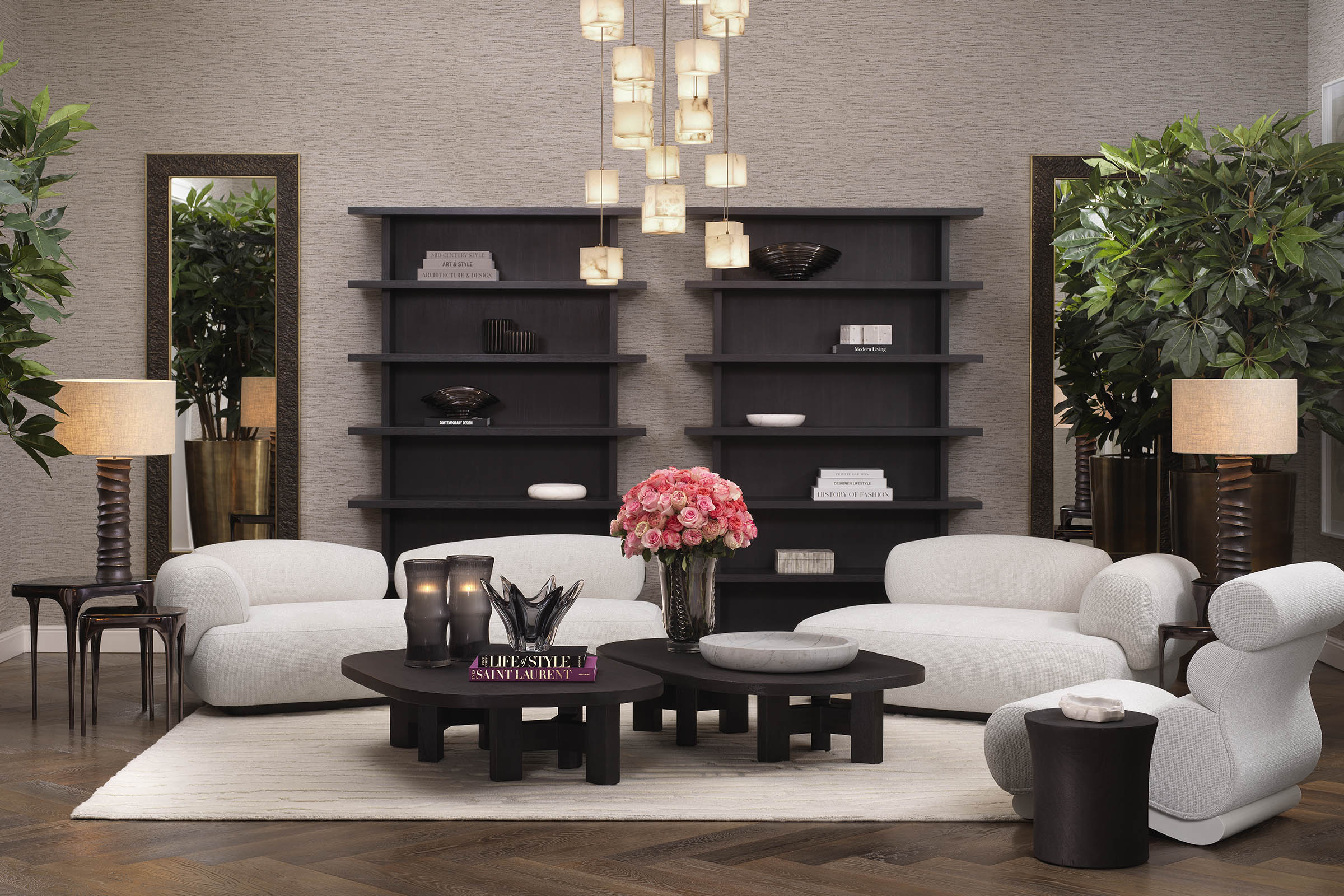
The Eichholtz Las Vegas showroom carries a curated range of table lamps across ceramic, brass, sculptural resin, and mixed-material bases. Because these are live display pieces, you can see exactly how they look switched on and off, next to furniture, and in a real room context — which is a completely different experience from a product image on a white background. Lamp shades in particular read differently in person: the quality of light they produce, the way they interact with the surrounding colors, and the texture of the shade material all register in ways that photography cannot fully capture.
If you’re specifying for a project, bring a floor plan. We can work through height, positioning, and pairing questions in context before you order. In-stock pieces are available to ship within two to four weeks from the Eichholtz warehouse network — significantly faster than the twelve to twenty-four weeks typical for custom or made-to-order lighting from other sources.
The Layer That Finishes a Room
Table lamps are not a finishing touch in the decorative sense — they’re a structural element of how a room feels after dark. The chandelier sets the tone from above. The floor lamp defines a corner. The table lamp is the layer that sits with you, at the height where light and life actually meet. Get the base right, get the shade right, get the height right — and the room takes care of itself.
See Them In Person
Visit Eichholtz Las Vegas at Tivoli Village to see the full table-lamp collection switched on, in context, next to real furniture.
Apply for Trade Access