Skip to content


The sofa is the largest piece of furniture most living rooms will ever hold. It shapes how the room is used, how conversation flows, and how the whole space feels from the doorway. Getting the configuration right matters more than almost any other decision — and the primary question is usually the same: three-seat or sectional?
Both configurations have a legitimate place in a well-designed home. The answer depends on your room's architecture, how you actually use the space, and what the sofa needs to do beyond providing seating. This guide works through the key considerations so you can make the decision once and live with it comfortably.
The configuration of your sofa determines the logic of your entire room — not just the seating, but the traffic patterns, the conversation, and the sight lines.
What a Three-Seat Sofa Does Well
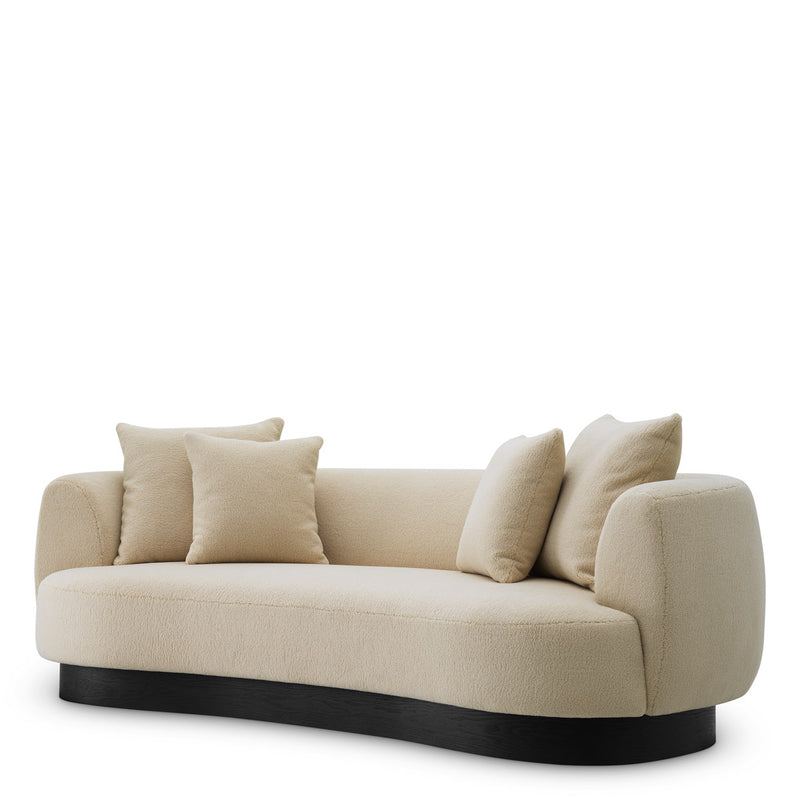
A classic three-seat sofa — a single unified frame, typically between 84 and 96 inches wide — is the default form for a reason. It reads clearly as one object in a room. It anchors the seating area without dominating it. And because it has a defined front, back, and two ends, it is easy to orient: face it toward the fireplace, face it toward the view, face two of them toward each other across a coffee table. The geometry is clean.
Three-seat sofas perform well in rooms where circulation matters. A single piece with legs allows you to see floor beneath it, which visually expands the room. They tend to work better in spaces under roughly 350 square feet of dedicated living area, where a sectional would eat too much floor and close off movement.
For designers specifying hotel suites, club lounges, or residential spaces with formal entertaining in mind, the three-seat often wins on visual weight alone. Two matching sofas facing each other across a low table is one of the most enduring room layouts in hospitality — it looks intentional in a way that is harder to achieve with a sectional.
- Defined orientation. A three-seat has a clear front and back, making it easier to organize the rest of the seating plan around it — whether that is a facing sofa, a pair of accent chairs, or an ottoman.
- Lighter visual footprint. Less floor coverage means the room reads larger, especially important in spaces under 400 square feet of open-plan living area.
- Pairs well. Two matching three-seats facing each other is a classic hospitality layout that translates just as effectively into residential interiors.
- Flexible placement. A single piece can be repositioned without rearranging an entire configuration, which is useful if your layout or household changes over time.
What a Sectional Does Well
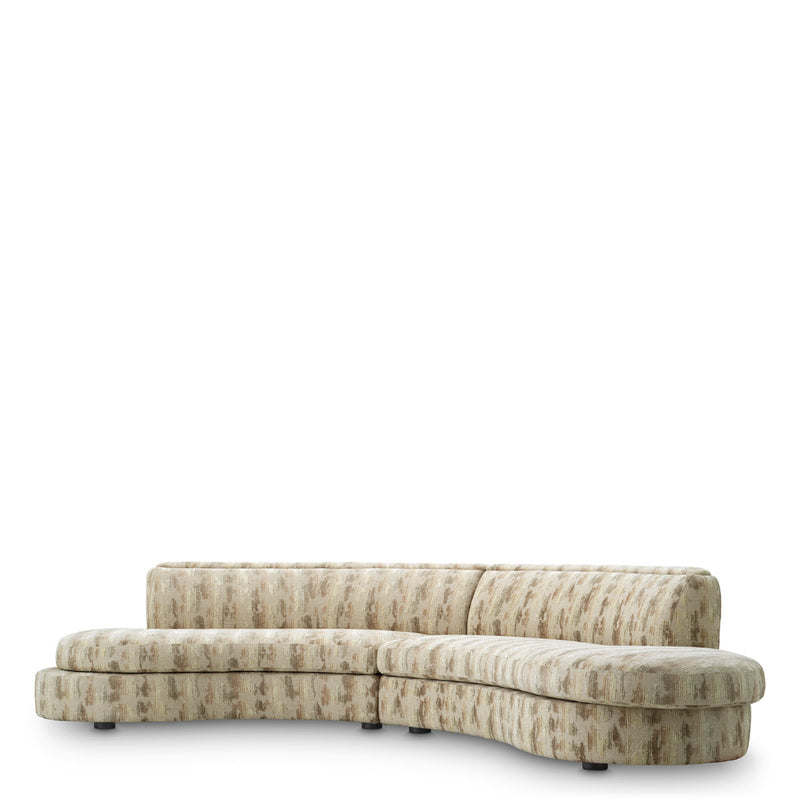
A sectional — whether L-shaped, U-shaped, or built from modular components — trades the formal clarity of a three-seat for generosity of surface. More seating, more lounging positions, and often a chaise that doubles as a resting spot. In rooms built around casual living, family use, or media-watching, a sectional usually wins on function.
The architectural argument for a sectional is equally strong. In a room with an obvious corner — a bay window, an L-shaped floor plan, or a recessed niche — a sectional fits naturally where a standard sofa would leave awkward dead space. It takes a room that might otherwise feel unresolved and gives it a settled, composed look.
Modular sectionals from the Eichholtz collection are designed to be specified piece by piece: left arm, middle sections, corner piece, right arm, optional ottoman or chaise. This means the configuration can be sized precisely to the room rather than forcing the room to adapt to the sofa. For open-plan spaces above roughly 500 to 600 square feet of living area, a well-proportioned sectional tends to anchor the seating zone more convincingly than a freestanding three-seat that can read as too small for the scale.
- Generous seating surface. More people, more reclining options, and a natural landing spot for everyday household life.
- Fills architectural corners. An L-shape or chaise configuration resolves a corner that a standard sofa would leave unused or awkward.
- Anchors large open plans. In rooms above roughly 500 square feet of open living area, a sectional gives the seating zone visual weight that a smaller sofa cannot match on its own.
- Customizable to the room. Modular builds let you specify the exact depth, width, and arm configuration so the piece fits the space rather than the other way around.
Room Size as the Deciding Factor
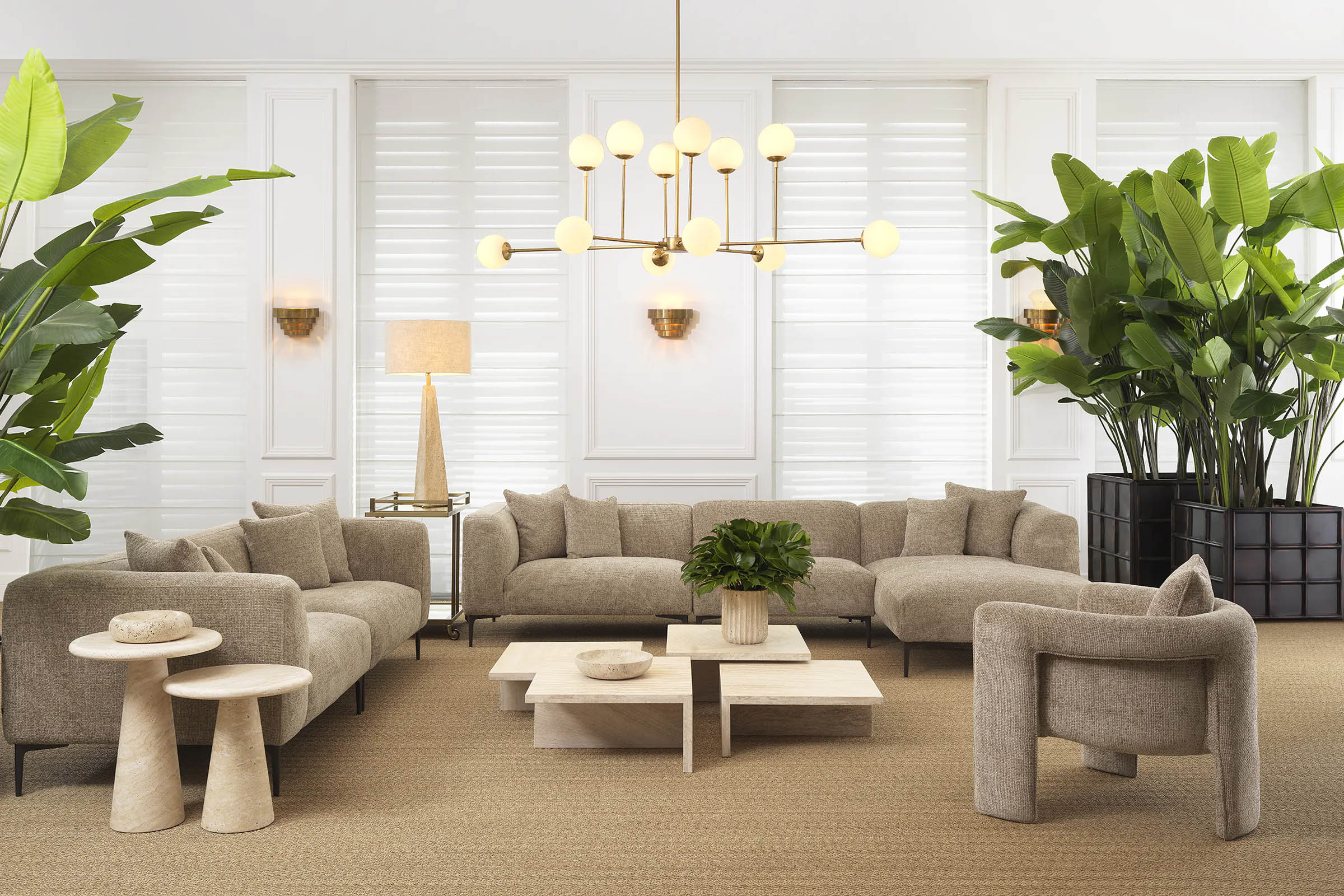
When the choice is not obvious, room dimensions are the most reliable guide. The general rule: a dedicated sitting room or formal living room under roughly 350 square feet of total floor area tends to read better with one or two three-seat sofas. An open-plan living and dining space above 500 square feet — especially where the sofa serves as the main room divider — tends to read better with a sectional.
Depth matters as much as width. A deep modular sofa, 40 inches or more from front to back, is luxurious in a large room but can feel oversized in a tight one. Three-seat sofas are often 34 to 38 inches deep, which leaves more breathing room for circulation. If you are measuring carefully and hoping it just fits, the three-seat is probably the right call.
Traffic flow is the other variable worth mapping before you decide. In a room where guests regularly move between a living area and a dining area — or where children and pets create constant cross-room movement — a sectional with a chaise pointing into a traffic lane becomes a daily obstacle. Sketch the paths first. If the sectional interrupts them, a three-seat with separate accent chairs solves the seating without blocking the flow.
Fabric and Finish
Configuration aside, the material choices on a sofa determine how it performs over years of use. Eichholtz sofas come in a range of performance and heritage fabrics — bouclé, velvet, linen-blends, leather — and the right choice depends on how the piece will actually be used.
Bouclé remains one of the most popular choices for statement sofas: the texture reads well at any scale, it carries a neutral room without competing with the art or architecture, and high-quality bouclé holds its shape better than lower-thread-count alternatives. Velvet brings depth and richness, working especially well in darker rooms where the pile catches and reflects light. Leather and performance-leather options hold up better in high-use environments and are easier to maintain where spills are a regular occurrence.
For sectionals built from multiple modular pieces, fabric consistency across the entire configuration matters. Ordering all sections from the same fabric run avoids subtle dye-lot differences that can become visible under certain lighting. The Eichholtz Las Vegas team can advise on current stock availability to ensure a matched set across larger builds.
Specifying for a Hospitality or Design Project
Interior designers and hospitality buyers working on contracts often face the three-seat versus sectional question at scale — across multiple suites, multiple seating areas, or an entire lobby layout. For contract specifications, the three-seat almost always wins on flexibility: it is easier to reconfigure a lounge or lobby when individual pieces can be repositioned without disconnecting a modular system.
For residential projects, the right answer depends on the client's lifestyle and the room itself. That is why a showroom visit tends to resolve the debate faster than any floor plan can. Sitting in the pieces — feeling the depth, the arm height, the seat firmness — makes the decision intuitive in a way that digital renders and spec sheets do not.
The Eichholtz Designer Trade Program is designed for exactly this kind of specification work: trade pricing across the full sofa catalog, sample access, and a dedicated showroom space at Tivoli Village where the scale of each piece is visible in a real room. Applications are open at the link below.


Making the Call
There is no universal answer. The three-seat is more formal, more flexible over time, and easier to work with in smaller or more traditional rooms. The sectional is more generous, more architecturally decisive in larger spaces, and better suited to casual everyday use. Rooms that genuinely cannot decide between them are often rooms that benefit from a primary three-seat alongside a separate accent chair or chaise — capturing the best of both configurations without the floor commitment of a full sectional.
The Eichholtz Las Vegas showroom at Tivoli Village — opening summer of 2026 — will have both configurations on the floor at full scale. It is the best way to see how the proportions read before committing. In-stock pieces are typically available for delivery within two to four weeks; made-to-order configurations in custom fabric take longer and are worth planning well in advance of any project deadline.
See the Collection in Person
Apply for trade access and visit the showroom at Tivoli Village to see the full sofa range at scale.
Apply for Trade Access