Skip to content


A rug is one of the few furnishings that changes a room completely when you get it right — and subtly undermines everything else when you don't. It defines scale, anchors furniture, and introduces texture and warmth that hard surfaces can't provide on their own.
Most people select a rug last — after the sofa is in, the curtains are hung, and the coffee table has arrived. The better approach is to treat the rug as a starting point rather than a finish detail. Its dimensions determine how large a seating area reads, whether the dining table feels properly contained, and how much warmth a room carries at floor level. Get the rug wrong and the furniture arrangement never quite settles. Get it right and the room feels composed from the moment you step into it.
The rug is not what goes under the furniture. It's what defines the space the furniture lives in.
Size First — and Bigger Than You Think
The most common rug mistake is buying too small. A rug that only fits under the coffee table — with all four sofa legs sitting off it — makes the furniture group appear ungrounded, every piece floating independently. The rule of thumb exists because it works: at minimum, the front legs of every seating piece in the group should sit on the rug. Ideally, all four legs land on it.
For a standard living room seating group, that means a rug of at least eight by ten feet. In rooms wider than fifteen feet, a ten-by-thirteen or twelve-by-fifteen reads more appropriately. Dining rooms follow their own logic: the rug should extend at least twenty-four inches beyond each side of the table so that chair legs remain on the rug when pulled out. There's nothing more disruptive than a dining chair half-on, half-off a rug every time a guest sits down.
- Living room seating group. 8'×10' as a minimum; 10'×13' or larger for rooms over fifteen feet wide. Front legs of every seating piece should sit on the rug — ideally all four legs.
- Dining room. Add at least 24 inches on each side of the table so chair legs stay on the rug when pulled out. For a table seating eight, a 10'×13' rug is the right starting point.
- Primary bedroom. Center under the bed and extend 18–24 inches on the sides and at the foot. A 10'×13' works for a queen; go larger for a king.
- Study or reading corner. A 6'×9' rug can define the zone without overwhelming a smaller footprint — enough to ground two chairs and a side table.

How a Rug Is Made
Construction method determines how a rug feels underfoot, how it ages, and what it costs. Three methods appear throughout the Eichholtz collection, each with a distinct character.
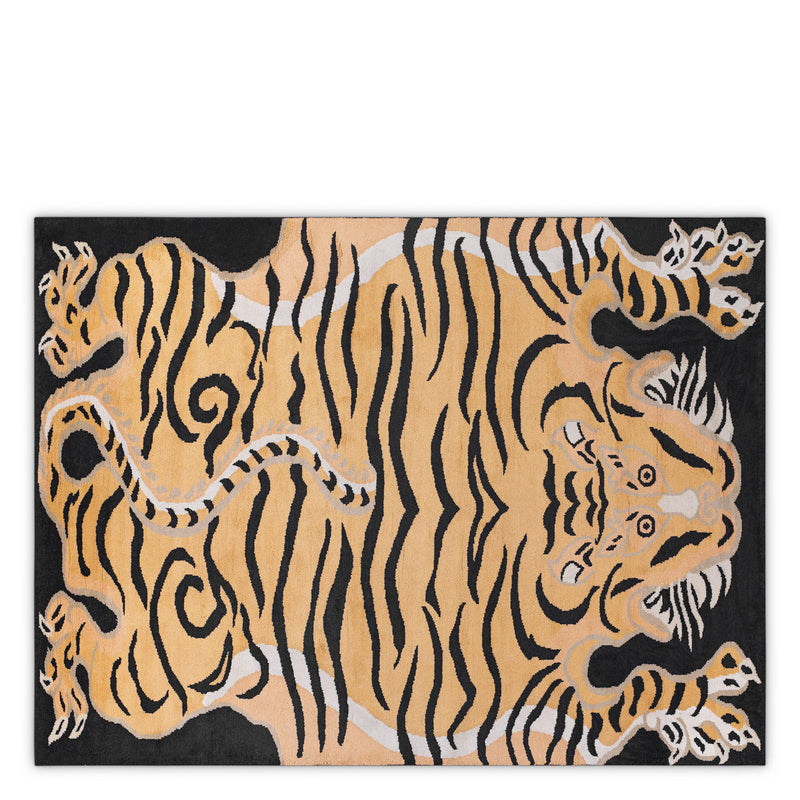
Hand-knotted rugs are the most labor-intensive — each knot tied individually around warp threads, a process that takes months of work for a large area piece. The result is a rug with exceptional density and durability, one that develops a natural patina with use and can last for generations with basic maintenance. The Zandria is hand-knotted: its intricate amber-and-terra-cotta pattern comes from weavers working knot by knot across the full surface.
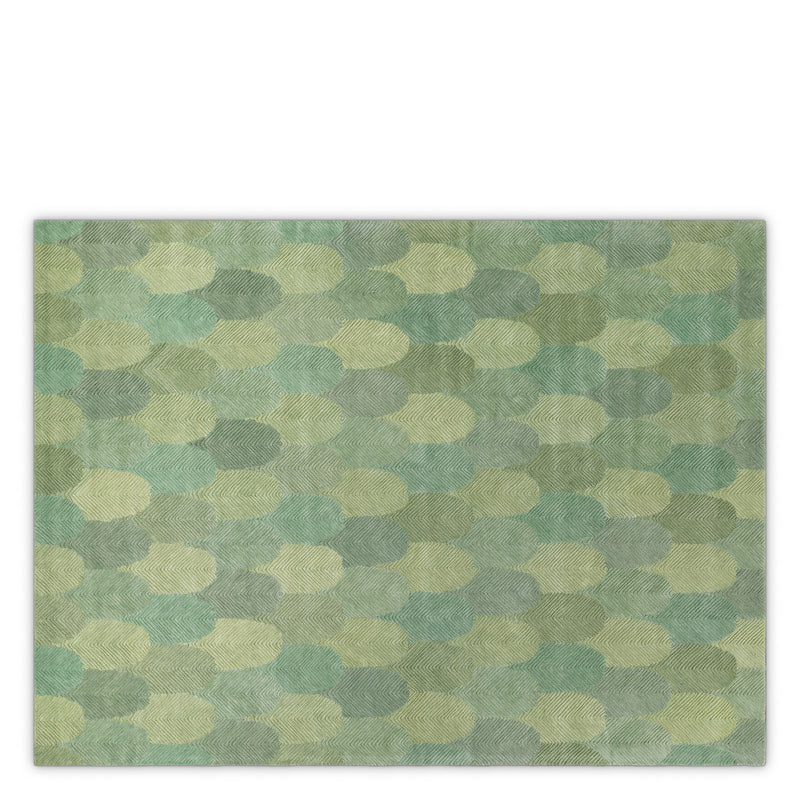
Hand-tufted rugs are made by pushing yarn through a canvas backing with a hand-operated tool, then finishing the underside with a fabric liner to hold the structure. The process is faster than hand-knotting, which puts hand-tufted pieces at a different price point — but done with quality wool, the results carry real substance. A cut-loop or cut-pile surface gives hand-tufted rugs a dimensional texture that reads especially well in bedrooms and sitting rooms where warmth underfoot matters. The Mayfield is hand-tufted in sage and forest green, with a surface that rewards a close look as much as it rewards the room-level view.
Machine-woven rugs deliver consistency and durability that make them practical in high-traffic areas. They hold their shape under daily use and clean well — sensible qualities in a dining room under a table, an entryway, or a family room. Eichholtz machine-woven rugs carry the same design language as the hand-made pieces: patterns and colorways that integrate naturally into a finished interior rather than reading as a lesser substitute.
Color, Pattern, and Texture in Context
A neutral rug in a neutral room disappears into the floor. That's not wrong — sometimes the goal is a quiet foundation that lets the furniture speak. But a rug with real character adds a layer of visual warmth and interest at a scale nothing else in the room can match.
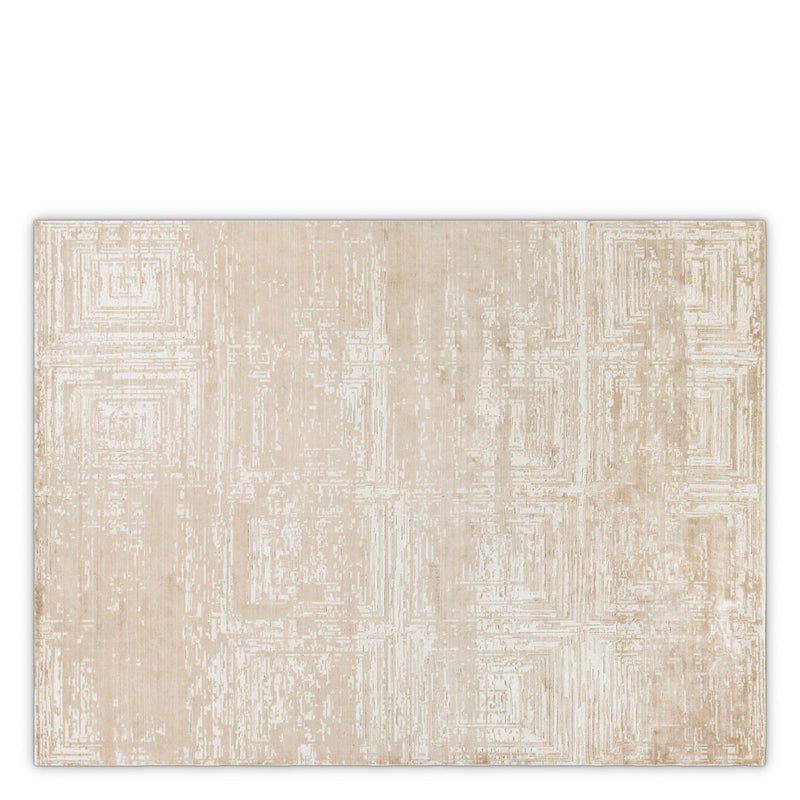
The Featherstone uses a subtle diamond-weave pattern in beige and grey — present enough to add texture without demanding attention. It's the kind of rug that works under almost any color palette and holds its composure in a room that's already layered. The Mayfield takes a different position: the sage and forest green of its hand-tufted surface make it a piece a room gets organized around. Paired with cream upholstery, natural wood, and aged brass, the green reads warm rather than jarring. And the Zandria — hand-knotted in amber and terra cotta — suits rooms that lean toward the richer end of the neutral spectrum, where warm walnut, deep velvet, and burnished metal already establish the mood.
One practical consideration: pile direction affects color. The same rug can appear warmer or cooler depending on which way the nap faces the primary light source. A rug that looks one way in the showroom may read differently in your space if the daylight comes from a different direction. Viewing a large sample in your own room — or seeing how the rug reads in a fully styled showroom context — matters more than trusting a photograph.


Layering and Finishing
Layering rugs — placing a smaller patterned or flat-weave rug over a larger neutral base — is a technique designers use in large open-plan rooms or double living rooms where a single rug might not define the space distinctly enough. The base rug acts as a quiet anchor; the layered piece introduces color, pattern, or texture at a more intimate scale. The combination works best when the two rugs differ clearly in character: a flat base with a pile top, or a plain base with a patterned overlay.
Rug pads are non-negotiable regardless of the floor surface. A rug without a pad shifts underfoot, can damage hardwood or stone, and loses the flat, settled appearance that makes a room look composed. A quality pad also cushions the rug from abrasion on its underside and adds meaningful softness underfoot — something immediately apparent in a bedroom when you step off the bed barefoot onto a well-padded rug versus a thin one lying directly on a hard floor.
Selecting in the Showroom
Seeing a rug in isolation — flat on a photography surface or rendered against a white background — tells you relatively little about how it will read in your room. The scale of a pattern that looks bold in a catalog image resolves completely differently across ten by thirteen feet. Colors shift with ambient light and with the furnishings that surround the rug on all sides.
At the Eichholtz Las Vegas showroom at Tivoli Village, rugs are displayed within fully realized vignettes — under furniture, within seating groups, alongside the lighting and accessories that complete the picture. Seeing a rug grounded under a sofa and coffee table, with a chandelier overhead and wall finishes behind it, gives you the read you need to make a confident decision. Our design staff can pull comparable options together for a side-by-side assessment before you commit to a size and colorway.
For designers working on a client project, we can assist with sizing guidance and facilitate samples for on-site review. Most in-stock rugs deliver within two to four weeks — a timeline that fits most installation schedules without the twelve-to-twenty-four-week wait that custom pieces typically require.
Specify With Us
Trade members receive dedicated design support, streamlined ordering, and access to the full Eichholtz catalog.
Apply for Trade Access