Skip to content


A nightstand is the most-used piece of furniture in the bedroom. You reach for it before you fall asleep and first thing when you wake up. It holds your lamp, your book, your glass of water—and from across the room, it sets the tone for the entire space. Despite how central nightstands are to everyday living, they tend to get ordered last, after the bed, the headboard, the rug. That's how mismatched bedrooms happen.
At Eichholtz Las Vegas, the nightstand collection spans enough styles and configurations that most design directions have a strong fit. Lacquered and painted finishes. Upholstered bodies. Geometric brass-and-wood compositions. Low profiles for platform beds; taller pieces for traditional frames with box springs. The question isn't whether you can find a nightstand—it's knowing what to look for before you start.
The nightstand is the last piece you notice from the door and the first one you reach for in the dark.
Getting the Height Right
The functional target is simple: the top surface of the nightstand should sit within two inches of your mattress top. That puts your lamp at a comfortable eye level when you're sitting up and keeps your phone or water glass within reach without twisting your shoulder. Most platform beds with low-profile mattresses work well with a nightstand in the 24–26 inch range. Traditional frames with taller mattresses and a box spring typically need something in the 28–30 inch range.
Width is more forgiving. Eighteen inches works in a compact room as long as the surface holds a lamp base and a small item alongside it. Going wider—to 24 or 28 inches—adds usable surface and visual presence, but a nightstand wider than 28 inches starts to read as a small dresser. In rooms where storage is a priority, that's not necessarily a problem.
- Platform bed, low mattress. A nightstand in the 24–26 inch height range keeps proportions balanced and avoids a stacked, top-heavy look beside a low-profile frame.
- Traditional frame with box spring. Height in the 28–30 inch range. The taller Nottingham series in the Eichholtz collection was designed with exactly this bed type in mind.
- Adjustable or storage bed. Measure to the mattress top with the bed at the height you actually sleep at, then add one inch for comfortable reach.

Matching Pairs vs. Deliberate Contrasts
A matched pair of nightstands signals order—the kind of precision that reads as intentional from the moment you walk into the room. It's the default approach in hotel design for exactly this reason. But it isn't the only one. Interior designers mix nightstands often, and when it's done well, the room feels collected and personal rather than catalog-coordinated.
The rule for mixing is that the two pieces should share at least one variable: finish, material family, height, or scale. A brass-accented nightstand on one side and an all-wood piece on the other can work if they're within an inch of the same height and the top surfaces read similarly. What doesn't work is a random mismatch—two pieces that share nothing but proximity to the same bed.
The Eichholtz collection includes paired sets—the Nottingham line comes in left and right versions, mirrored configurations for symmetrical placement—as well as single-model nightstands that work naturally in pairs. Some designs are assertive enough to anchor a one-nightstand layout in a smaller room without the space feeling incomplete.
Surface and Material
Most nightstands fall into three material families: lacquered or painted wood, upholstered body, and mixed-material frame. Each reads differently in a bedroom context.
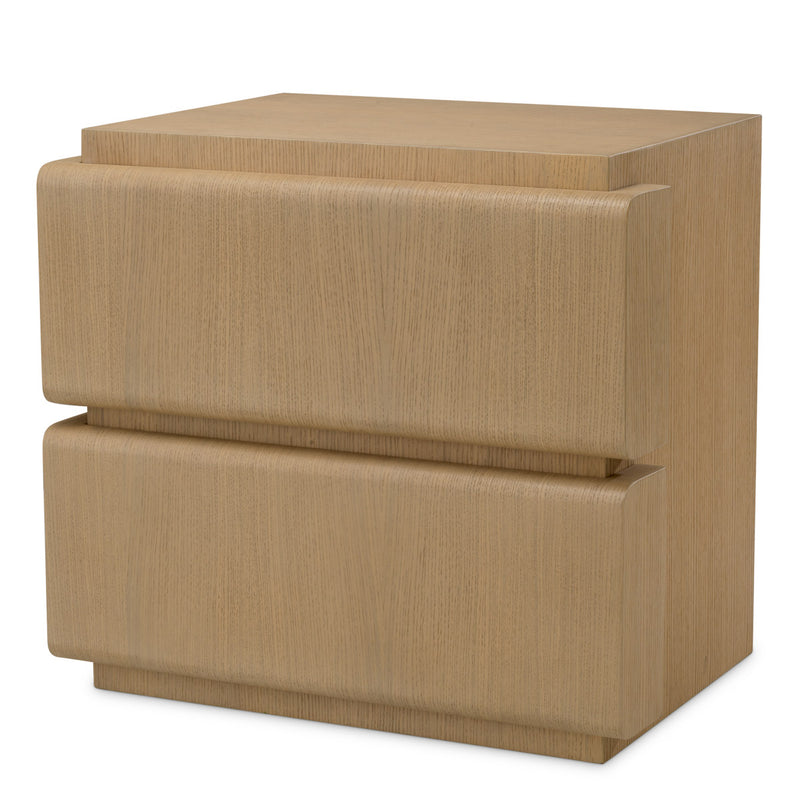
Lacquered and painted wood nightstands are practical and visually crisp. A damp cloth takes care of everyday spills, and the clean surface reads well from across a room. The Nightstand Colston is a strong example—flat-front drawer, slab top, a finish that holds up beside both heavily textured bedding and more tailored upholstery programs.
Upholstered nightstands soften a room that's already leaning on soft materials. The Nightstand Velutto brings a wrapped, padded body to the bedside—a quiet piece that works particularly well when the bed itself is heavily upholstered and you want the nightstand to recede rather than compete. The material reads warm and absorbs light, which makes it a better fit for rooms with warmer wood tones than for high-contrast black-and-white compositions.
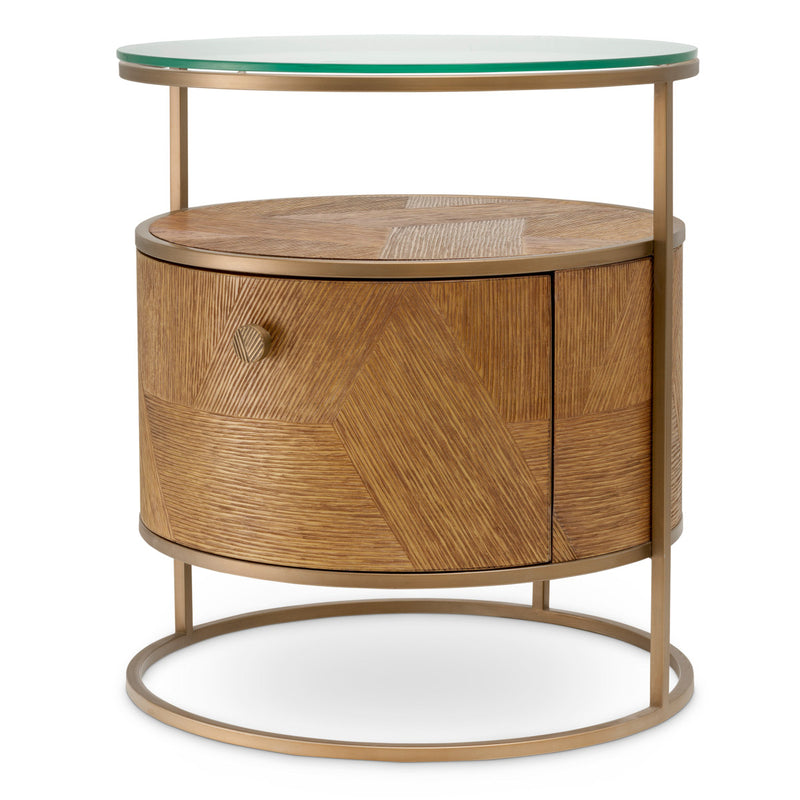
Mixed-material and geometric pieces draw more attention by design. The Nightstand ArtDeco takes a brass-and-structure approach—architectural in proportion, with a composition that has a clear reference point without being a period reproduction. It works best against neutral or grey walls where the bedside needs a focal element, or in rooms where brass is already present in lighting or hardware and you want the nightstand to connect to that thread.


What Goes on the Surface
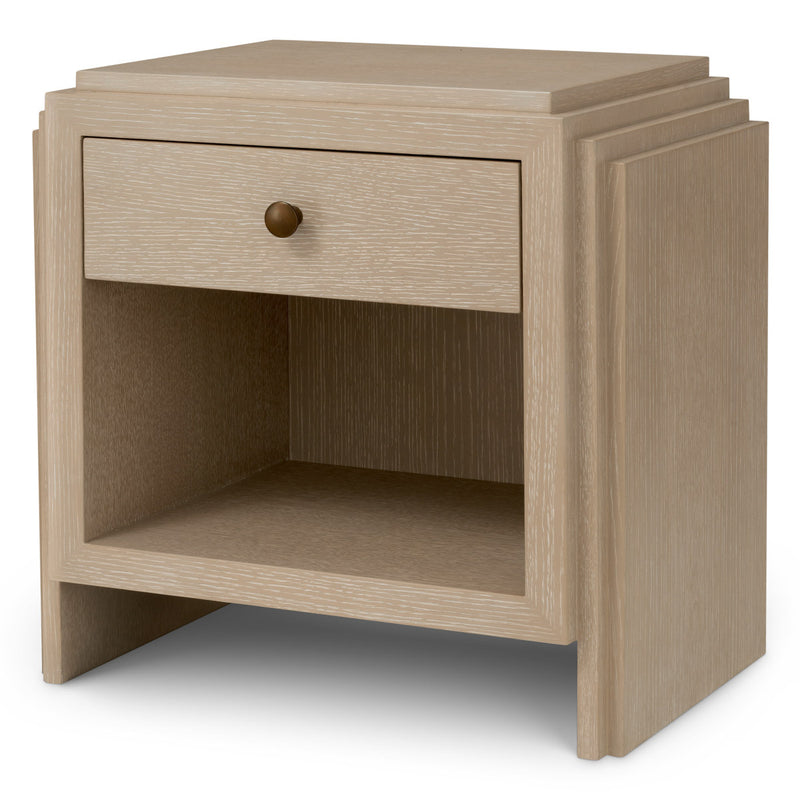
A nightstand functions best when it holds a lamp, one personal item, and leaves room for a glass without looking cluttered. The drawer or shelf below handles the overflow—chargers, reading glasses, the book you're halfway through—out of sight. Most Eichholtz nightstands include at least one drawer, with the smaller profile designs adding an open lower shelf for books or a second item.
Lamp placement matters more than most people realize. The lamp goes at the back corner of the surface, not the center. Centering a lamp on a nightstand makes it look like a display; pushing it back frees the front half for things you actually reach for during the night. For bedroom table lamps, the bottom of the shade typically looks best at around eye level when you're sitting up—usually 22–26 inches above the nightstand surface, depending on shade size. Eichholtz table lamps are designed with this kind of room placement in mind, with proportions that read well at arm's reach.
Planning Around Lead Times
Most Eichholtz nightstands ship from the warehouse network in two to four weeks for in-stock items—meaningfully faster than the twelve to twenty-four weeks standard at most luxury furniture houses where pieces are made to order. If you're working toward a specific move-in date or renovation completion, confirming in-stock status at the time of order is worth doing. The team at Eichholtz Las Vegas can verify availability and estimated delivery before you commit.
Nightstands purchased through the trade program ship directly to your client's home or your receiving warehouse. Trade pricing is available across the full Eichholtz nightstand collection for qualified interior designers. The showroom in Tivoli Village carries a selection of nightstands in person—the right place to check proportions and finishes before ordering a pair.
See the Collection at the Showroom
Visit Eichholtz Las Vegas at Tivoli Village to see the full nightstand collection. Our team can help you match heights, finishes, and headboard styles before you order.
Apply for Trade Access