Skip to content


A ceramic lamp is one of the few objects in a home that carries the maker's mark all the way to finished form. The drip of glaze, the slight variation in the base, the way the surface absorbs and reflects light differently depending on where you stand — none of that is accidental. It is the direct result of how the piece was made.
The Drip-Effect Finish
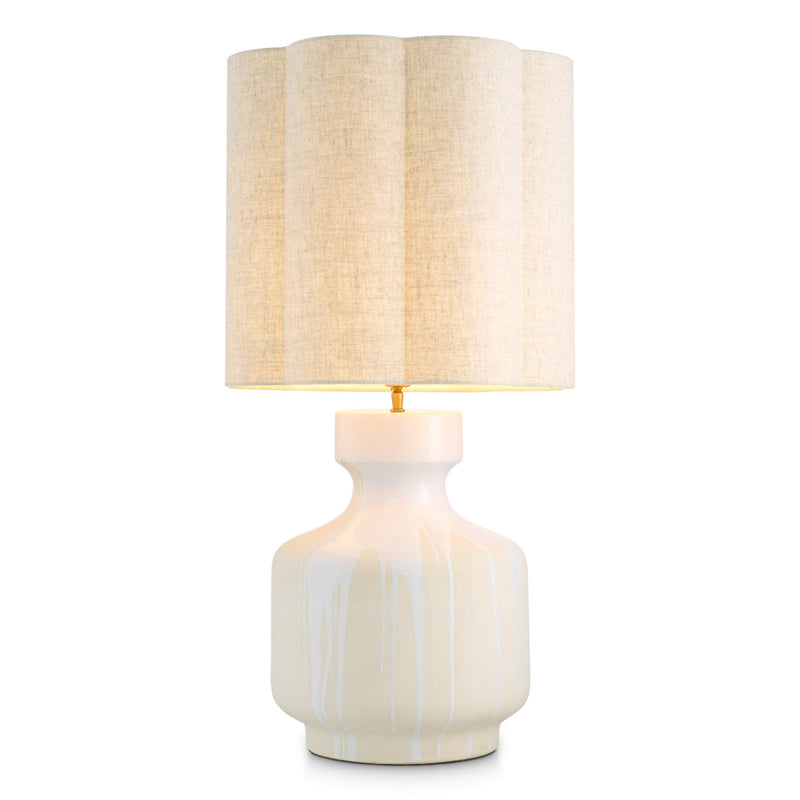
The drip-effect finish on Eichholtz ceramic lamps produces a surface pattern that is distinct on every piece. The distribution of glaze — how it pools near the collar, where it thins toward the base, where the color deepens — differs from lamp to lamp. This is intrinsic to the nature of drip-effect glazing and is what makes each piece distinct.
- Natural color variation. Even within the same colorway, no two lamps will have the same glaze distribution. This is a characteristic of the drip-effect finish, not a quality-control gap.
- Weighted ceramic base. The fired clay body provides genuine mass, so the lamp sits with real stability even under a wide linen shade.

Brass and Linen
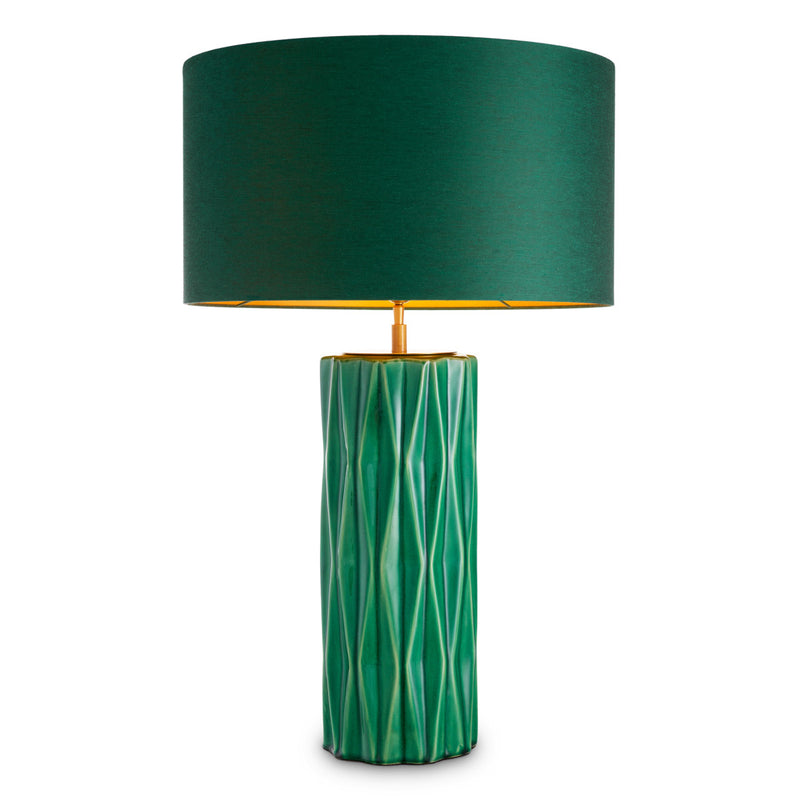
The ceramic base is paired with vintage brass hardware. Vintage brass hardware — a collar ring, lamp holder, and finial — is fitted by hand to the ceramic body. Eichholtz uses a warm vintage brass finish rather than polished lacquer. The aged quality of the brass reads well against the irregular surface of the ceramic. Both materials resist perfection. Both look more interesting over time than they did when new.
The shade is a linen-mix fabric, typically in off-white or natural, stitched around a frame and attached to a brass fitting. Linen scatters light softly. It diffuses more evenly than a tight-woven synthetic, and the warmth it lends to white has a quality that synthetic blends can approximate but not match. A linen shade also ages honestly: it develops character over years without discoloring the way cheaper alternatives do.
The combination of ceramic, vintage brass, and linen is not purely visual. Each material has a different weight, texture, and behavior over time. Together they produce a lamp that reads as a single considered object rather than three parts joined in a factory.
Why No Two Are Alike
This phrase gets used loosely in furniture marketing. For ceramic lamps with a drip-effect finish, each lamp genuinely is unique.
Designers who work with these lamps use this variation intentionally. A pair of Lorena lamps on a console will share their form and finish category but each will carry its own quiet character. Together they read as a pair; looked at closely, they are distinct. This combination of consistency and individuality is genuinely difficult to achieve by industrial means. It is native to work that moves through human hands.
Seeing Them at the Showroom
Seeing a ceramic lamp in person is worth it. The surface has texture that photographs only partially capture: the slight topography of the glaze drip, the transition between glazed and bare clay, the way the vintage brass collar meets the ceramic at the shoulder. These are details that reward a close look.
We will carry the full Eichholtz ceramic lamp range at our Las Vegas showroom when we open this summer. Grand Opening is Monday, July 27, 2026. These are in-stock pieces at the Eichholtz warehouse — not made to order — which means typical delivery runs two to four weeks rather than the twelve to twenty-four weeks standard on made-to-order luxury furniture. For a handmade piece, that timeline is worth noting.


Trade Access for Designers
Interior designers specifying for client projects can apply for Trade Program access at Eichholtz Las Vegas — trade pricing across the full collection, including our ceramic lighting range.
Apply for Trade Access