Skip to content


Electric light controls a room's function. Candlelight controls its feeling. Hurricane lanterns and candle holders are how a well-designed interior makes that shift — from a room that looks finished to a room that feels inhabited.
At Eichholtz Las Vegas, candle holders and hurricane lanterns are among the most considered pieces a designer or homeowner can add to a room. They are compact objects that produce outsized atmosphere. Placed well, they complete a surface, anchor a vignette, or turn a dining table into the center of an evening. This guide covers how they work, how to choose between them, and where they go.
The right hurricane lantern doesn't decorate a room. It changes the quality of the light in a room — and everything that follows from that.
What a Hurricane Lantern Does Differently
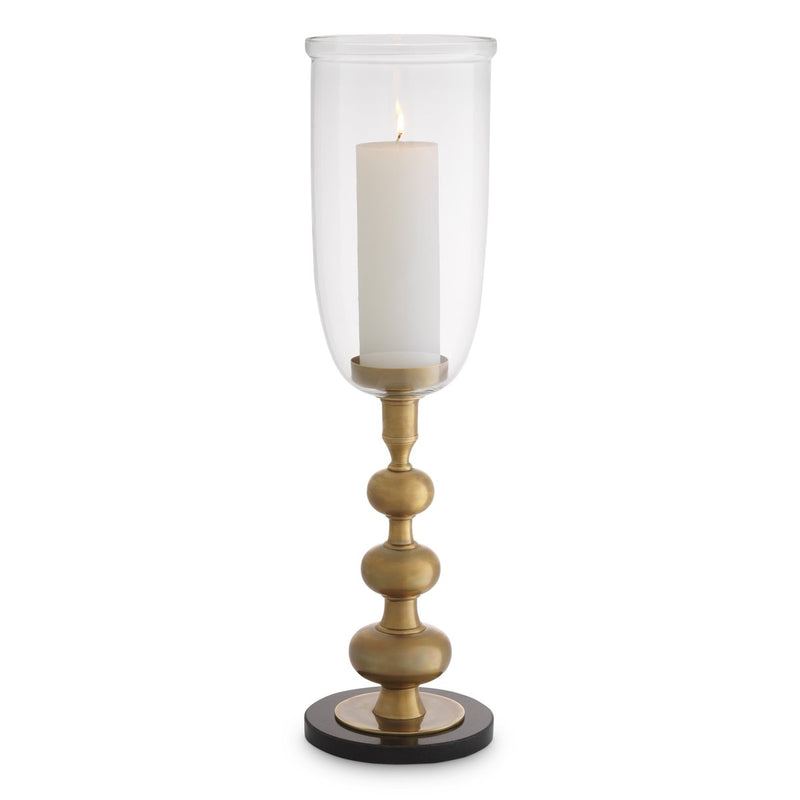
A hurricane lantern is a glass cylinder — sometimes clear, sometimes frosted — that surrounds a candle flame and protects it from drafts while concentrating the light it throws. The name comes from the ship's lanterns designed to hold a flame in high winds. In a home, it does something more useful. It creates a column of warm, contained light that reads from across the room.
The visual effect is different from a bare candle holder. The glass acts as a lens, softening and amplifying the glow. At dinner, a pair of hurricanes flanking a low centerpiece produces a quality of light that no overhead fixture can replicate — diffuse, warm, and directional all at once. At a console table in an entry, a single large hurricane reads as a sculptural object during the day and a light source in the evening. Two functions from one piece.
The size matters more than most buyers expect. A small hurricane gets lost on a large dining table. A large one overwhelms a side table. The general principle: match the scale of the hurricane to the scale of the surface. For dining tables and sideboards, go larger — twelve to eighteen inches tall — so the light reaches across without competing with the conversation. For side tables and nightstands, a smaller format keeps the proportion right without competing with the lamp beside it.
Clear Glass vs. Frosted Glass
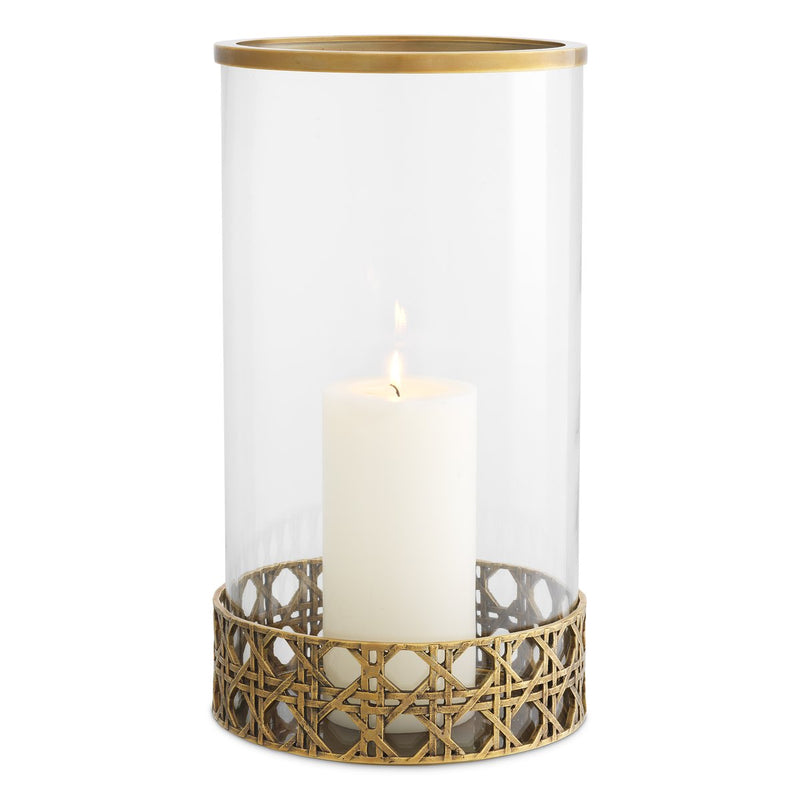
The glass finish on a hurricane lantern changes how it reads in a room, lit and unlit. Clear glass — like the Ashbourne, which pairs vintage brass hardware with a straight glass cylinder — lets the flame show directly. You see the candle itself, the flicker, the movement. It is the more dynamic choice, and the one that reads most visually active. In a room with a lot of still surfaces — stone, matte plaster, dark wood — a clear-glass hurricane brings life.
Frosted or opaque glass diffuses the flame entirely, replacing the point source of light with a broader glow. The effect is gentler and more ambient. If the goal is to soften the light rather than animate the room, frosted is the better choice. Worth noting: a frosted hurricane with a warm-finish metal base — aged brass, for instance — reads as a cohesive object even when unlit, without the dark glass interior that a clear hurricane shows.
- On a dining table. Two large hurricanes flanking a low centerpiece is the standard placement. The glass holds the flame steady against air conditioning drafts, and distributes the glow evenly across the table surface.
- On a console or sideboard. A single oversized hurricane at one end, or a trio of different heights grouped together, anchors the wall above it. Beside a mirror, the reflected light doubles the effect.
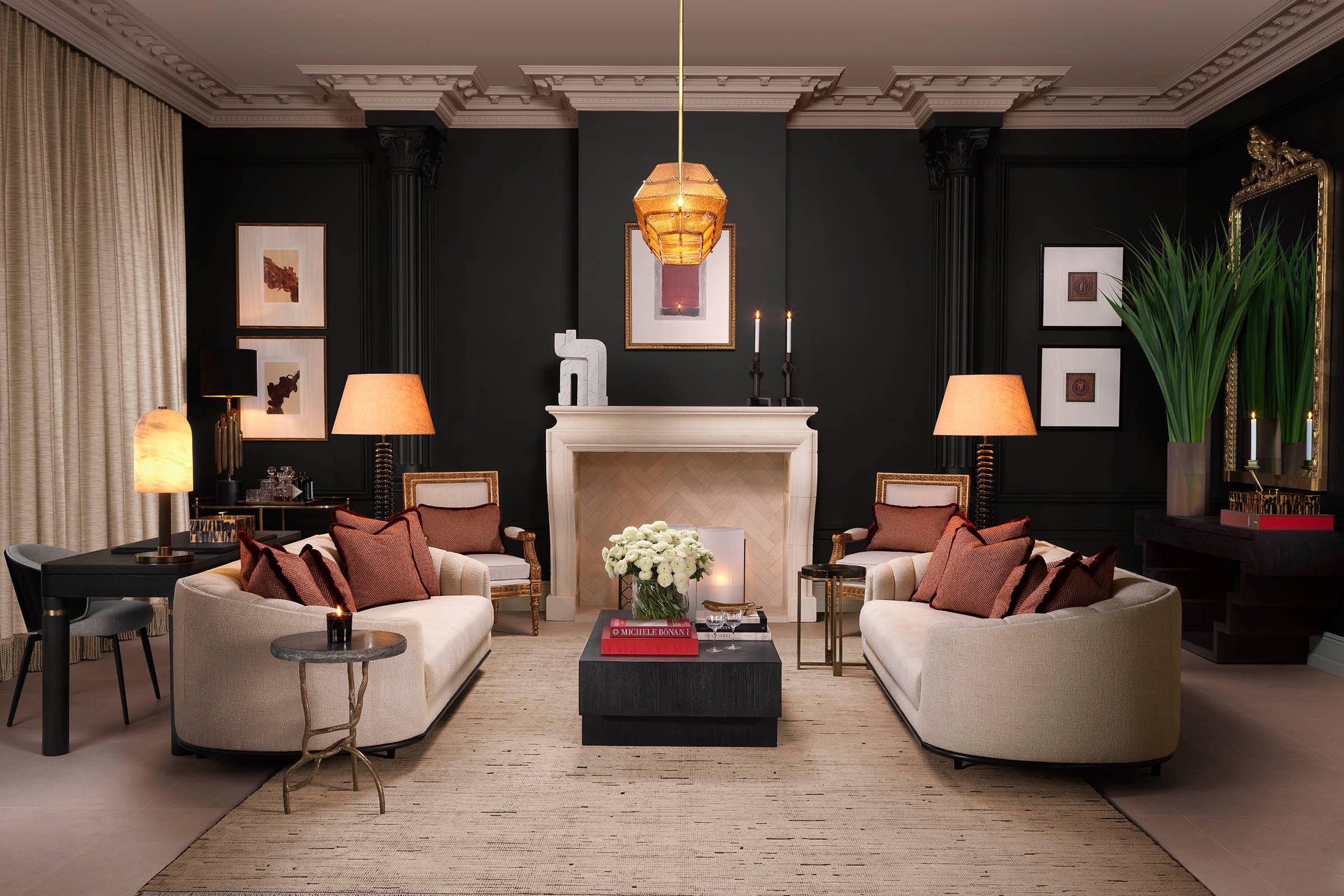
- Flanking a fireplace. On the hearth or the mantel surround, hurricanes at low level bring the eye down and add warmth to the focal point when the fireplace is not in use — which in Las Vegas is most of the year.
Candle Holders: Scale, Finish, and the Logic of Grouping
A candle holder is a simpler object than a hurricane lantern — no glass surround, no enclosure — but scale and material matter more than with almost any other table accessory. A candle holder too small for the surface disappears. One too large reads as crowded in. The holder should look intentional, not incidental.
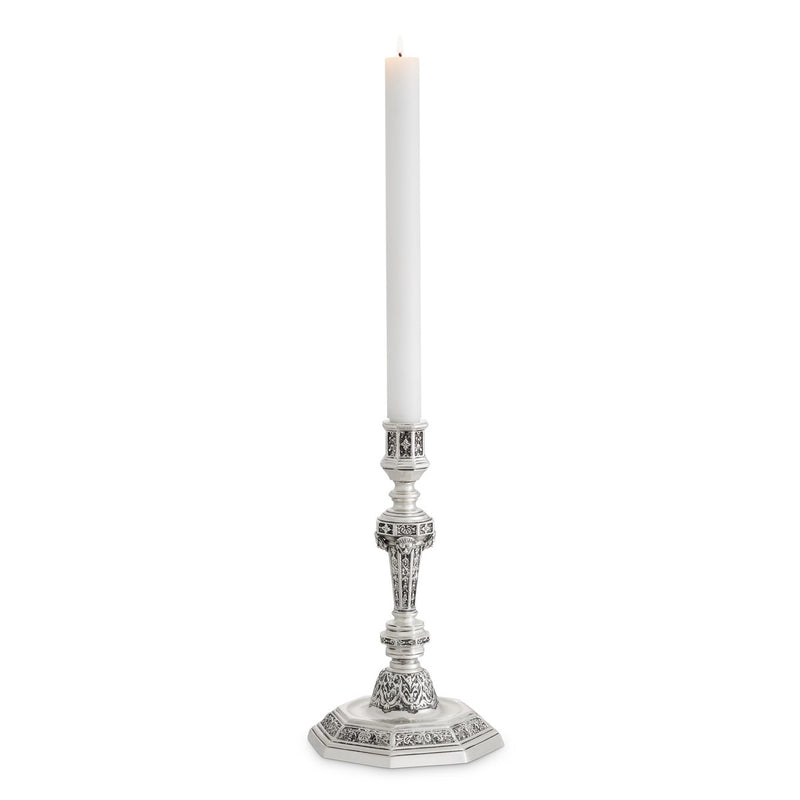
The Eichholtz collection includes candle holders in antique silver, vintage brass, and bronze — three finishes that behave differently in a room. Antique silver reads as cool and sculptural; it suits rooms with stone surfaces, gray or ivory upholstery, or palettes that mix light and dark tones. Vintage brass is warmer and pairs naturally with rooms that already carry brass hardware, lighting, or frame details — which describes a large portion of the Eichholtz catalog. Bronze bridges the two: warm in candlelight, more neutral in daylight.
The most effective candle holder groupings follow a simple principle: vary the height, keep the finish consistent. Three holders in the same antique silver at ten, fourteen, and eighteen inches creates a small still life on a console. Three holders in mixed finishes at the same height reads as clutter. The finish anchors the group; the varying heights give it movement.
Three Pieces Worth Knowing


Layering Candlelight with Electric Light
The most common mistake with candlelight is treating it as an occasion-only addition — the candles come out for dinner parties, get put away the next morning. In a well-designed room, candle holders and hurricane lanterns are permanent fixtures, used or unused depending on the hour. The pieces are always visible; the light they produce is available on demand.
That permanence changes how you select them. A hurricane lantern or candle holder needs to read well in daylight and under electric light before it is ever lit. The Dameron L in vintage brass has an architectural quality at rest, like a column in miniature. The Delavigne candle holders in antique silver are cast objects with real visual weight — they hold a surface even unlit, the way a good sculptural object does. They earn their place during the day and transform the room at night.
When layering candlelight with electric light, run the dimmers lower than feels natural and let the candles fill the difference. The combination of a dimmed overhead fixture, two lit hurricanes on the dining table, and a candle holder on the console produces a quality of light that no single source achieves on its own. Interior designers call this layering the light. It is why a room that photographs beautifully in daylight can still feel flat in the evening — the layers are missing.
Availability and Lead Time
Candle holders and hurricane lanterns are among the fastest pieces to ship from the Eichholtz catalog — compact, in-stock, and not made to order. Most pieces in the collection ship from the Eichholtz warehouse network in two to four weeks, compared to the twelve to twenty-four weeks typical of made-to-order upholstery or custom case goods. For accessories, that lead time matters: a room in progress often needs a few finishing pieces quickly, without waiting months for a custom order.
At the Eichholtz Las Vegas showroom at Tivoli Village, the candlelight collection is on display in room context — alongside the surfaces and furniture they are meant to sit with. If you are trying to match a hurricane lantern's scale to an existing dining table, or work out which finish sits best beside your room's brass hardware, the showroom is the right place to make that call.
Visit Us at Tivoli Village
See the full candlelight collection in room context at the showroom — and apply for designer trade access.
Apply for Trade Access