 Skip to content


Hurricane lanterns and candle holders are among the most overlooked decisions in a luxury interior. They are small objects. They are also the objects that determine what a room feels like after six in the evening — when overhead lights go low and every surface either holds the eye or disappears into shadow.
Eichholtz has taken this category seriously for decades. The collection includes more than fifty hurricane lanterns alone, ranging from compact glass-and-brass pieces suited to nightstands and entry consoles to tall architectural forms designed for dining tables and fireplace hearths. Alongside them sits a full range of candle holders in brass, nickel, stone, and glass — from tapered pillar forms to low dome shapes to tealight sets in natural onyx and alabaster.
The right hurricane lantern is not decoration. It is light — placed where electric lighting cannot reach.
What a hurricane lantern actually does
The original function of a hurricane lantern was practical: the glass cylinder protected a candle flame from wind. In interior use, that same form does something more interesting. The glass amplifies the flame and concentrates the glow, creating a pool of warm light that reads more intimate than a table lamp and more permanent than an exposed candle. The effect is different from electric light in a way that is difficult to replicate — it moves, it breathes, and it produces a warmth that even the best bulb does not.
In a luxury room, hurricane lanterns tend to find their best placements in a few consistent locations:
- Dining table centerpiece. A tall hurricane placed at the center of a dining table — or a pair flanking a low arrangement — drops the focal point to seated eye level. This single change shifts a dinner from functional to atmospheric without requiring any other alteration to the room.
- Console table styling. A large hurricane at the midpoint of a long console creates vertical interest and anchors the surface between lower objects. A brass-and-glass form reads as intentional in any material palette; clear glass alone is more restrained and works in rooms where the palette is already busy.
- Fireplace hearth. When the fireplace is not in use — for most of a Las Vegas year — a pair of hurricanes placed at hearth level fills the visual void and keeps the focal wall active without requiring a fire. Two matched pieces at different heights work better than two identical ones.
- Covered patio or terrace. Several Eichholtz hurricanes are built to work in both indoor and outdoor settings. The same piece can sit on a dining table inside and move to a covered patio table when the season allows — a practical flexibility for a climate where outdoor evenings are genuinely long.
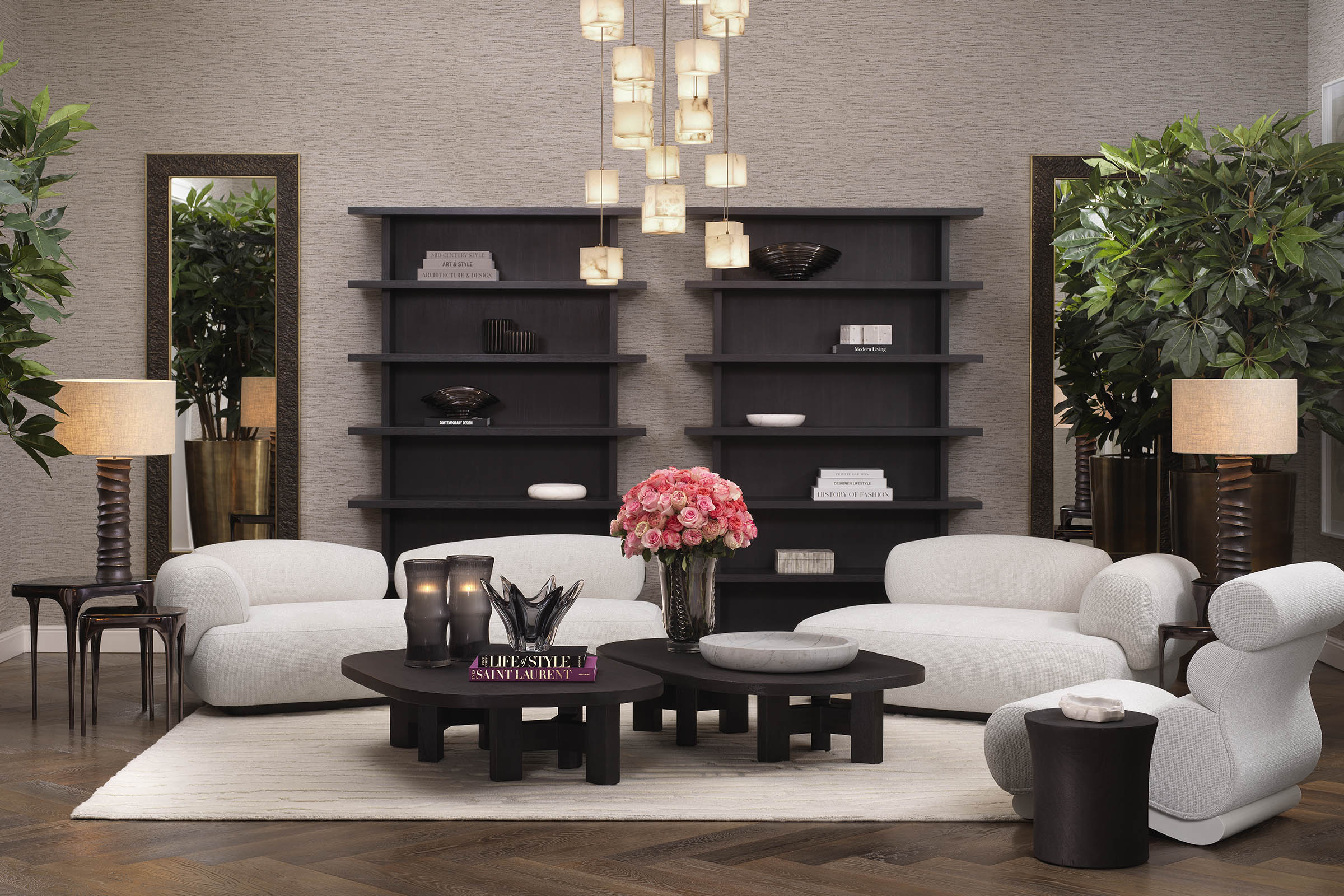
Candle holders — scale, material, and how to group them
A candle holder is a different object from a hurricane — it presents the flame rather than enclosing it. The choice of scale and material drives almost everything about how it reads in a room.
Tall pillar holders in brass or blackened steel add height to a surface the way a small sculpture does, with the added dimension of light. They are most effective on mantels, sideboards, and long consoles where the surface runs wide enough to absorb the vertical element without feeling overwhelmed. Shorter, denser forms — a dome shape, a stone-base piece — read as objects first and holders second. They work well on coffee tables, nightstands, and smaller consoles where a tall object would compete with everything around it.
Tealight holders are a third category, and they operate by a different logic. They work through repetition: three, five, or seven of the same holder grouped loosely creates a pool of light rather than a collection of separate objects. The material carries most of the design work — green onyx, alabaster, and marble each catch a tealight flame differently. On a dining table or on a decorative tray on a coffee table, a grouping of tealight holders in a single natural stone reads as considered and complete rather than assembled at random.
The Eichholtz collection spans all three scales, which makes it practical to mix within a single room without losing coherence. A tall hurricane on the console, a dome-form candle holder on the coffee table, a cluster of stone tealights on the dining table — three distinct objects working at three different heights, sharing a material language.


Grouping and scale — the practical rules
With candle holders and hurricanes, odd numbers work better than even ones. Three objects at varied heights read as a composition; two objects read as a formal pair, which is harder to make feel natural outside of a symmetrical setting. Five is richer — it requires a longer surface and more deliberate spacing, but it produces a strong visual statement on a wide dining table or a generous console.
When grouping pieces from different categories, vary the height but keep the material palette tight. A tall brass hurricane alongside a medium glass hurricane and a short brass candle holder — all sharing the same finish family — reads as a collected set. Crossing too many materials in a small group creates visual noise. The objects stop feeling chosen and start feeling random.
For tealight holders specifically, the opposite rule applies: repetition is the point. Three or five identical holders in the same stone — rather than a mix of different materials — creates a single visual statement rather than several competing ones. The variation in the natural stone grain handles the visual interest on its own.
Evening light in a desert climate
The light in Las Vegas is flat and direct for most of the day. When the sun sets, the shift in a room is more extreme than in cities with softer ambient light — interiors go from very bright to very dark without much in between. Candle light and hurricane lanterns fill that transition better than a second overhead fixture on a dimmer. They hold the middle register of warmth that electric light at low wattage tends to lose.
Covered patios and outdoor dining areas in the region are genuinely usable for most of the year. A hurricane lantern on an outdoor dining table here is a practical object — it extends the table's useful hours by an hour or two past sunset and gives an outdoor dinner the same quality of atmosphere as an indoor one. For this reason, we keep both indoor and outdoor-rated hurricane lanterns on the floor at the showroom, and carry a number of pieces that work comfortably in both settings.
We keep a full selection of hurricane lanterns and candle holders at Eichholtz Las Vegas throughout the year. They are among the pieces that leave the showroom most readily — not specified for a project months in advance, but bought because they work the same evening they are placed. That immediacy is one of the things that makes this category worth paying attention to.
Visit the Showroom
See our full selection of hurricane lanterns and candle holders in person at Tivoli Village — or apply for trade access to explore the complete Eichholtz catalog.
Apply for Trade Access


