Skip to content


A hurricane lantern is a candle protected by glass — typically a cylinder, column, or bell of clear or tinted glass that shields the flame from drafts while letting the light radiate outward. Eichholtz has made this format one of the most recognizable elements in its catalog: each hurricane in the collection is designed as a room object in its own right, not just a candle accessory.
This article is about how to use them well. Hurricane lanterns work in almost every room of a home, but the way they work — grouped, scaled, placed — determines whether they add atmosphere or disappear. Understanding a few basic principles makes the difference.
Candlelight does something that no electric fixture can replicate: it moves.
Why Hurricane Lanterns Belong in a Serious Interior
Good lighting design in a home has three layers: ambient light (the overhead fill), task light (the targeted beam), and accent light (the warm, directional glow that makes a room feel inhabited after dark). Most luxury interiors do the first two well. The third layer is where hurricane lanterns come in.
Electric accent lighting — a table lamp on a console, a picture light over art — is warm and consistent. But it is always on or always off. A lit hurricane lantern introduces a quality that is genuinely different: the flame moves slightly, responds to air movement in the room, and casts a soft, living shadow that shifts as the evening progresses. No bulb does this.
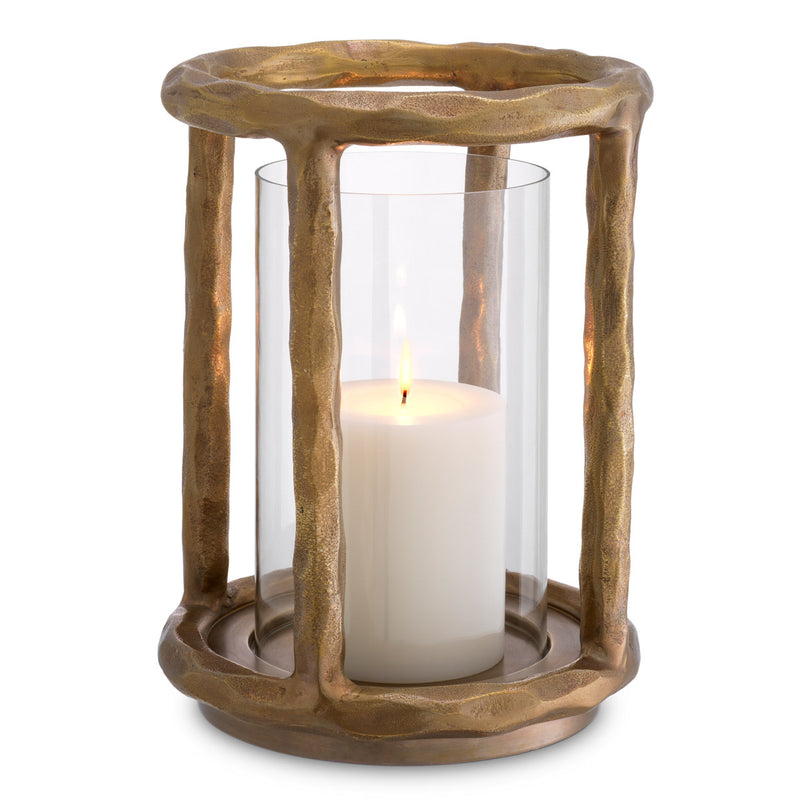
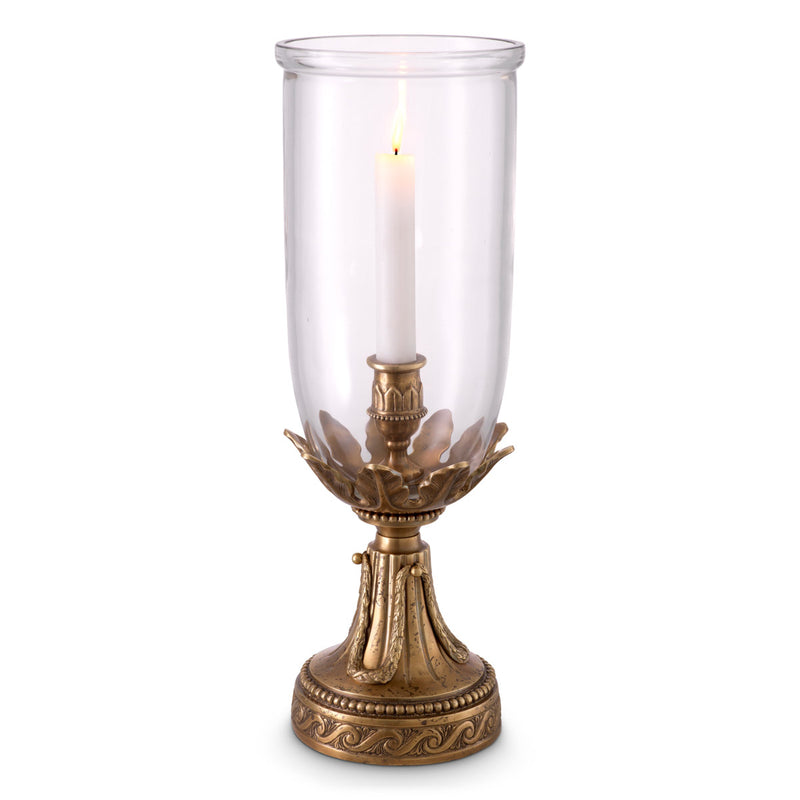
The other quality that makes hurricane lanterns useful is their presence even when unlit. A well-chosen lantern is a sculptural object — a glass column with a brass base, a ribbed cylinder with aged bronze fittings — that reads as finished decor in daylight and comes fully alive at night. The Eichholtz collection covers a wide range of scales and materials, from compact table-height pieces to tall floor-adjacent statements that anchor a corner.
Where They Actually Go
The most common placements in a well-styled room:
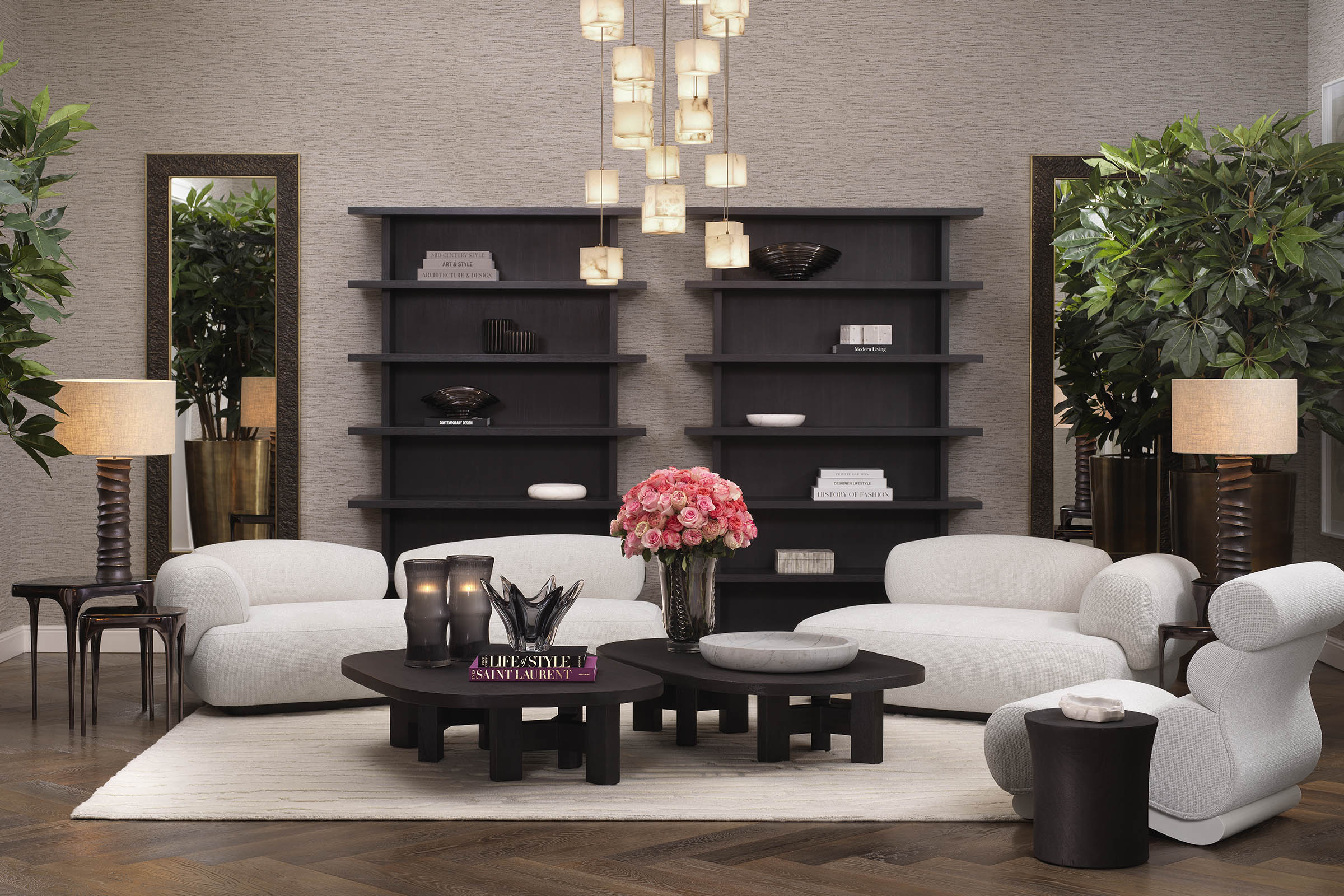
- The coffee table. A group of two or three hurricanes of varying heights, clustered toward the center or one end of the table, adds vertical interest to what is typically a flat surface. Pair with a low bowl or a stack of books to break the symmetry.
- The console table. A large hurricane on each end of a console creates a sense of ceremony — particularly effective in an entry hall, where the first impression of a home is set. The flanking placement frames whatever sits between them, whether that is a vase, sculpture, or nothing at all.
- The dining table. Replacing a formal centerpiece with a row of three hurricanes of different heights is a reliable dinner-party move. The low glow is flattering and the scale sits below the sightline across the table, so guests can see each other.
- The bookcase or shelf. A single hurricane tucked among books and objects keeps a shelving unit from reading as purely utilitarian. The glass catches and disperses light from other sources in the room even when the candle is not lit.
- The bedroom side table. A compact hurricane is one of the few bedside objects that improves the room both lit and unlit. It reads as jewelry on the table during the day and becomes the room's best light source in the evening.
How to Scale Them Correctly
Scale is the part most people get wrong. A single small hurricane on a large coffee table disappears. A single tall hurricane on a console in a high-ceiling room might be exactly right, but two identically sized ones flanking it will read as a hotel lobby rather than a home.
The right approach is to think about groups and contrast. Three hurricanes on a coffee table should use at least two different heights — ideally three. The tallest should be roughly a third of the way up the space between the table surface and the bottom of any chandelier overhead. The middle steps down by around eight to ten inches. The smallest can be quite compact.
On a console table, the same principle applies horizontally. Two tall hurricanes bookending the console work if the surface is at least 48 inches wide. On narrower consoles or surfaces with more objects already present, a single large hurricane placed slightly off-center is cleaner.
For dining tables, keep all three (or five) at the same height so the row reads as intentional. The uniformity here is the point — it creates a sense of ritual rather than casual styling.
Three Pieces Worth Starting With
The Eichholtz hurricane catalog runs to more than thirty pieces, spanning clear glass, tinted glass, ribbed cylinders, smooth columns, and several sizes within each form. Three pieces cover a wide range of placements and aesthetics and are a practical starting point.


Grouping and Layering
Hurricanes work best in odd numbers — three, five, or seven. Even numbers tend to read as formal or institutional. The exception is the flanking pair on a console, where symmetry is intentional and appropriate.
When layering hurricanes with other objects, keep the glass clear of anything visually competing at eye level. A hurricane next to a tall flower arrangement loses the contest — the flowers are more complex and the glass gets lost. Place hurricanes adjacent to lower, quieter objects instead: a stack of books, a smooth bowl, a sculptural piece that has mass but not visual complexity.
Mixed materials read well. Brass-base hurricanes alongside a travertine tray. Dark bronze fittings next to a white ceramic vase. The glass itself is neutral enough to bridge most material combinations, which makes these pieces unusually flexible across different rooms and palettes.
Care and Candle Choice
Most Eichholtz hurricane lanterns are designed for standard pillar candles. The interior diameter is worth checking against the candle diameter before you buy — a candle that is too narrow for the glass will tip, and one that is too wide will not seat properly. The collection notes for each piece at our showroom include the recommended candle sizing.
For a clean burn with minimal soot on the glass, use a high-quality paraffin or beeswax pillar candle trimmed to a quarter-inch wick before each lighting. This small step is the difference between glass that stays clear all evening and glass that needs cleaning after every use.
Flameless LED pillar candles are a practical alternative for coffee tables where guests might brush against them, for homes with children or pets, or for placements where a real flame is not practical. The best ones flicker realistically and respond to a remote — the effect at a distance is convincingly close to the real thing.
See Them in the Showroom
Hurricanes are harder to judge online than most room objects. The scale, the quality of the glass, the weight of the base — these read very differently in person than in a photograph. Several pieces from the collection are on display at Eichholtz Las Vegas, where you can see them in a fully styled room context and alongside the other pieces they will live with.
Design Access for Trade Clients
Interior designers working on client projects can access trade pricing on the full Eichholtz catalog — including the complete hurricane and candle collection — through our Designer Trade Program.
Apply for Trade Access