Skip to content


A barstool is one of the most specific purchases in a home. The height has to work for the counter it serves. The material has to hold up to regular use. The silhouette has to belong in the room — not just at the island. Get all three right and the space feels finished. Miss one and you have a seat that no one quite uses the way you imagined.
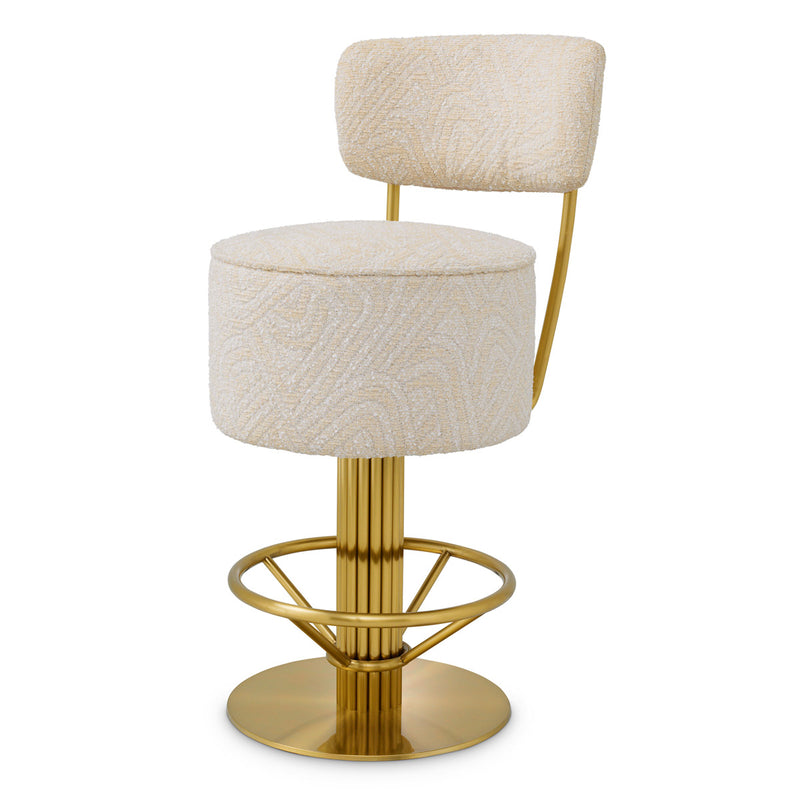
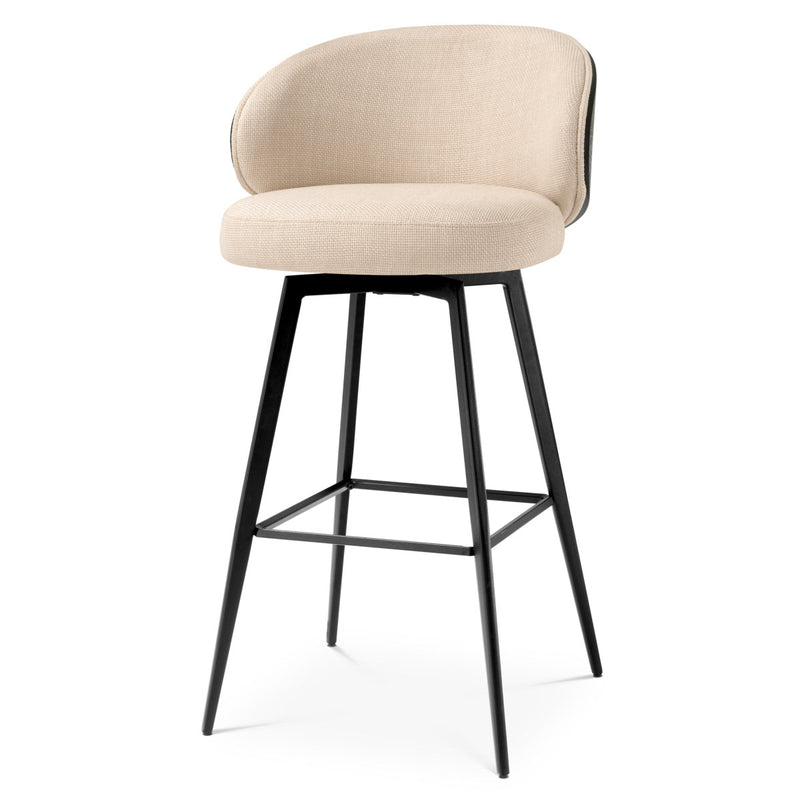
The Eichholtz collection carries thirty-five barstool designs, which covers more ground than the category might suggest: wrapped leather and boucle, with back and without, counter height and bar height, individual pieces and sets of two. The range reflects a practical truth — choosing a barstool involves three separate decisions happening at once, and clarity on each one makes the process faster and the result better.
The right barstool doesn't just fill a gap at the island — it connects the kitchen to the rest of the room.
Counter height or bar height: the decision that comes first
The most fundamental choice is seat height. Counter stools — typically 24 to 26 inches to the seat — are designed for standard kitchen islands, which run 36 inches off the floor. Bar stools — 28 to 30 inches — are built for raised counters, home bars, and elevated island extensions, which typically sit between 41 and 43 inches high. Using the wrong height doesn't produce a subtle mismatch. It produces a seat that's uncomfortable enough that no one sits in it for more than a few minutes.
A reliable rule: leave 10 to 12 inches between the seat of the stool and the underside of the counter. That gap is what allows a person to sit with their legs at a comfortable angle. Less than that and knees hit the overhang. More than that and the seat feels too low, and elbows end up at counter height rather than resting comfortably below it.
- Counter height (24–26 in). Designed for standard kitchen islands at 36 inches. The most common choice in residential projects and the right starting point for most island configurations.
- Bar height (28–30 in). For raised counters, wet bars, and elevated island extensions. Standard in custom kitchen builds with a dedicated drinks or prep bar.
- 10–12 inches of clearance. The gap between the seat and the underside of the counter that makes a stool comfortable for an adult. Confirm this measurement against your actual counter before ordering.

With a back or without
The choice between a backed and backless stool comes down to how the space is used, not just how it looks. A stool without a back tucks completely under the counter when no one is sitting, which keeps the island looking clean and the sightlines open. In an open-plan space where the island is visible from the living room, that visual cleanliness matters — a row of stools pushed in disappears from the room entirely.
A stool with a back offers support for longer sessions. If the island doubles as a homework station, a remote-work desk, or a spot for a proper breakfast rather than just a quick coffee, back support changes the experience significantly. The same logic applies to dedicated home bars — if guests settle in for a drink and a conversation rather than just passing through, a back rest is a hospitality decision as much as a design one.
Several Eichholtz designs come in both configurations, which is useful when the same silhouette needs to serve two different spots. The Carleton line is available in counter and bar heights, with back and without — which means a project can specify one design family across an island and a bar without mixing visual registers.


Material — what the stool reads as in the room
The material of a barstool does more than determine how it wears — it determines how the seat registers visually from the living room. A stool upholstered in boucle or velvet reads as soft and textile-forward, pulling the kitchen into the same material palette as the sofas and chairs in adjacent rooms. In open-plan homes where the kitchen is part of the main living area, that continuity matters.
A woven or cane seat reads lighter. It works particularly well in rooms that already carry natural materials — stone countertops, wood cabinetry, linen window treatments. There's a coherence to using a natural-texture seat in that context that an upholstered stool can't replicate, and it tends to age more forgivingly in high-use kitchens.
Leather and faux leather are the practical anchor of the category. They wipe clean easily, hold their form over time, and don't absorb spills the way fabric does — which matters in a working kitchen. Eichholtz designs in this material use generous seat padding and well-constructed bases, so durability doesn't come at the cost of comfort or appearance.
The frame finish is a separate decision that deserves the same attention. A brushed brass base at a white marble island reads warm and deliberate. The same form in blackened steel on a dark oak counter reads grounded and contemporary. Both are correct choices — the palette of the room is what decides, not the stool in isolation.
Ordering multiples: what to confirm before you commit
Most islands seat two to four people, which means most barstool purchases are for two to four identical pieces. Several Eichholtz designs are sold in sets of two, which simplifies that calculation slightly. For larger configurations, confirming that the model is available in the quantity you need is worth doing early. Running short and reordering isn't always fast, and a partial set of mismatched stools while waiting on a second delivery is a real project headache.
If you're specifying for a space that has both a kitchen island and a raised bar or breakfast counter, the default is to use the same stool family across both spots — counter height at the island, bar height at the bar. The shared silhouette and material ties the two areas together. Mixing designs across a space is possible when there's a deliberate reason, but it adds visual complexity to an area that usually benefits from restraint.
Working through the decision at the showroom
The single most useful thing you can do when selecting a barstool is sit in it at the correct counter height. A 36-inch island counter changes how a seat feels compared to a 42-inch bar, and no amount of spec sheet comparison makes that physical difference clear. At the Eichholtz Las Vegas showroom at Tivoli Village in Summerlin, you can sit through the options and make the height and material decisions in person — which is the most reliable way to get it right the first time.
Trade customers specifying multiple seats for a residential or hospitality project can work through the full range, compare frame finishes side by side, and confirm availability before committing. For projects with delivery timelines, Eichholtz in-stock pieces typically ship within two to four weeks from the warehouse network — considerably faster than the twelve to twenty-four weeks that made-to-order seating from most luxury brands requires. That lead time difference matters when a project is in its final furnishings phase and the kitchen is the last room to resolve.
Trade pricing and project support
The Designer Trade Program offers trade pricing on the full Eichholtz catalog, including the barstool collection.
Apply for Trade Access