Skip to content


An accent chair is exactly what it sounds like: a single chair that holds its own in a room, independent of the sofa it sits near. It is not a dining chair and not a desk chair. It is the piece you add where a second sofa is too much and a bare corner is too little — the seat that anchors an arrangement, marks a reading nook, or gives a conversation a proper fourth position around a coffee table.
We carry a wide range of armchairs, lounge chairs, and swivel chairs at Eichholtz Las Vegas — from high-backed upholstered wingbacks to open, sculptural loungers to swivel chairs with solid brass or satin-steel bases. The breadth is intentional. A sofa sets the room’s vocabulary. An accent chair makes an argument. Because it’s a single object rather than a commitment of eight feet, you have more freedom to take a material or a silhouette further than you would with a sofa. This guide covers how to think about that freedom.
One chair in the right place does more for a room than a matching pair ever could.
Silhouette: The Decision That Everything Else Follows
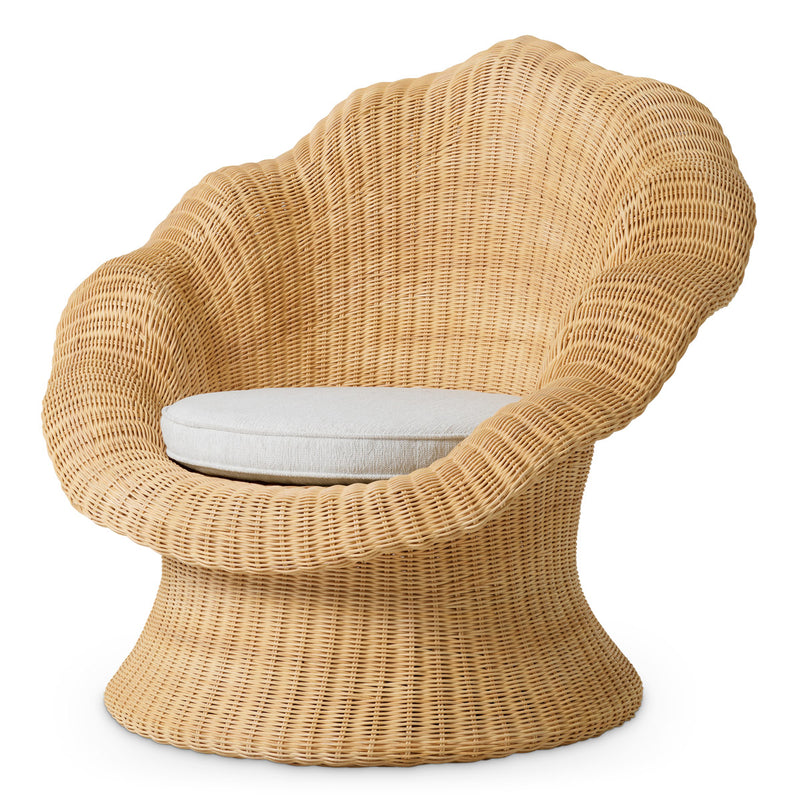
Before fabric, before finish, the silhouette of an accent chair determines what kind of room you get. High-backed, upright chairs — traditional wingbacks, tufted armchairs with camelback profiles, any chair where the back rises well above seated shoulder height — read formal and anchoring. They define the corner they occupy. They’re at home in libraries and studies, beside a bed in a primary bedroom where the chair is meant to be a private destination, or flanking a fireplace where the verticality of the back balances the height of the mantel.
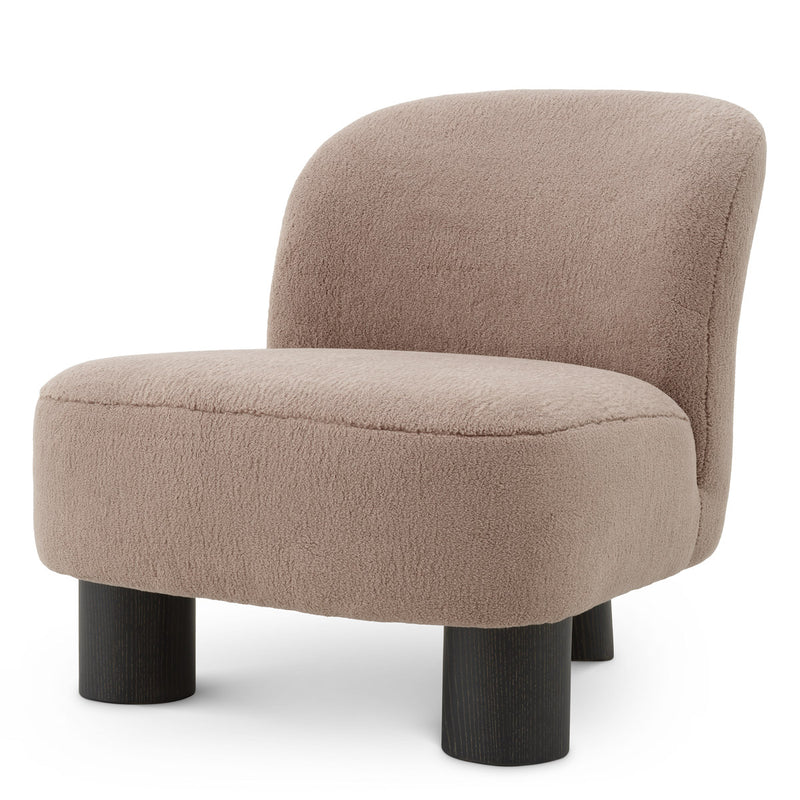
Low, open-armed lounge chairs — the kind that lean back slightly and invite you to stay — belong in sitting rooms and anywhere the goal is relaxed conversation rather than composed seating. Their visual weight is horizontal rather than vertical. Placed correctly, they pull a sofa arrangement down in scale and make a large room feel more intimate. Too close to a sofa, and they compete. Angled into the grouping at thirty to forty-five degrees, and they complete it.
Swivel chairs are a category of their own. Practical in home offices and dressing rooms, yes — but increasingly popular in open-plan living areas where you want a seat that can rotate to a conversation or turn toward a window without being physically moved. The swivel base tends to read as lighter and more modern than a four-leg frame. If the rest of the room is heavily structured — large sectional, heavy coffee table, grounded credenza — a swivel chair introduces just enough flexibility to prevent the grouping from feeling stiff.
- High-backed armchairs. Best beside a fireplace, in a library, or flanking a bed. The taller back reads as architectural — it defines the corner it occupies and gives the room a clear focal point.
- Lounge chairs. Best in sitting rooms and reading nooks. Place them angled into the seating group rather than alongside the sofa, so they face into the conversation rather than running parallel to it.
- Swivel chairs. Best for open-plan living and home offices. The rotating base makes the chair feel multi-purpose without looking utilitarian — and it scales better than two stationary chairs in a tight footprint.
Upholstery: Where You Can Actually Take a Risk
The fabric or leather on an accent chair is where the room can go somewhere interesting. Because you’re committing to one piece rather than a full suite, the upholstery choice carries less risk than it would on a sofa — and more reward when it works.
Boucle has become the dominant upholstery fabric in contemporary luxury interiors for a reason: it photographs well, reads as tactile, and has enough texture to hold its own against hard surfaces like marble, stone, and lacquer. Cream and off-white boucle reads soft and warm. A tighter-weave boucle in a mid-grey or taupe reads more urban and structured. Both are versatile enough to work in rooms that are already busy, because boucle absorbs light rather than reflecting it.
Velvet does the opposite. It reflects light directionally — what you see from one angle is different from what you see from another. A chair in a deep charcoal velvet can read almost black in shadow and closer to graphite in direct light. That quality makes velvet chairs very good at holding attention in a room where most other surfaces are matte. The risk is that velvet reads theatrical quickly. Use it against a neutral wall or a room that’s otherwise restrained, and it anchors the space without overwhelming it.
Leather — especially a burnished chestnut, a cognac, or a blackened cowhide — brings a different register entirely: grounded, slightly masculine, long-lasting. Leather chairs age well in a way that fabric chairs do not. The patina that develops over years of use is usually an asset rather than a liability. This makes leather a sensible choice for a chair that will be used daily: a reading chair, a desk chair with some ambition, a seat beside a window that gets real sun.
If the room already has a lot happening — pattern on the rug, varied materials on the tables, an interesting chandelier — a tightly woven performance fabric in a neutral weave (chenille, textured cotton, a plain linen-look) is the correct answer. The chair absorbs the room’s palette without redirecting it. Reserve the bolder upholstery choices for rooms that have already earned the contrast.
Placement: The Thing Most Rooms Get Wrong
An accent chair placed parallel to a sofa — both facing the same direction — does not create a seating group. It creates a waiting room. The two pieces don’t address each other. The conversation space between them has no geometry.
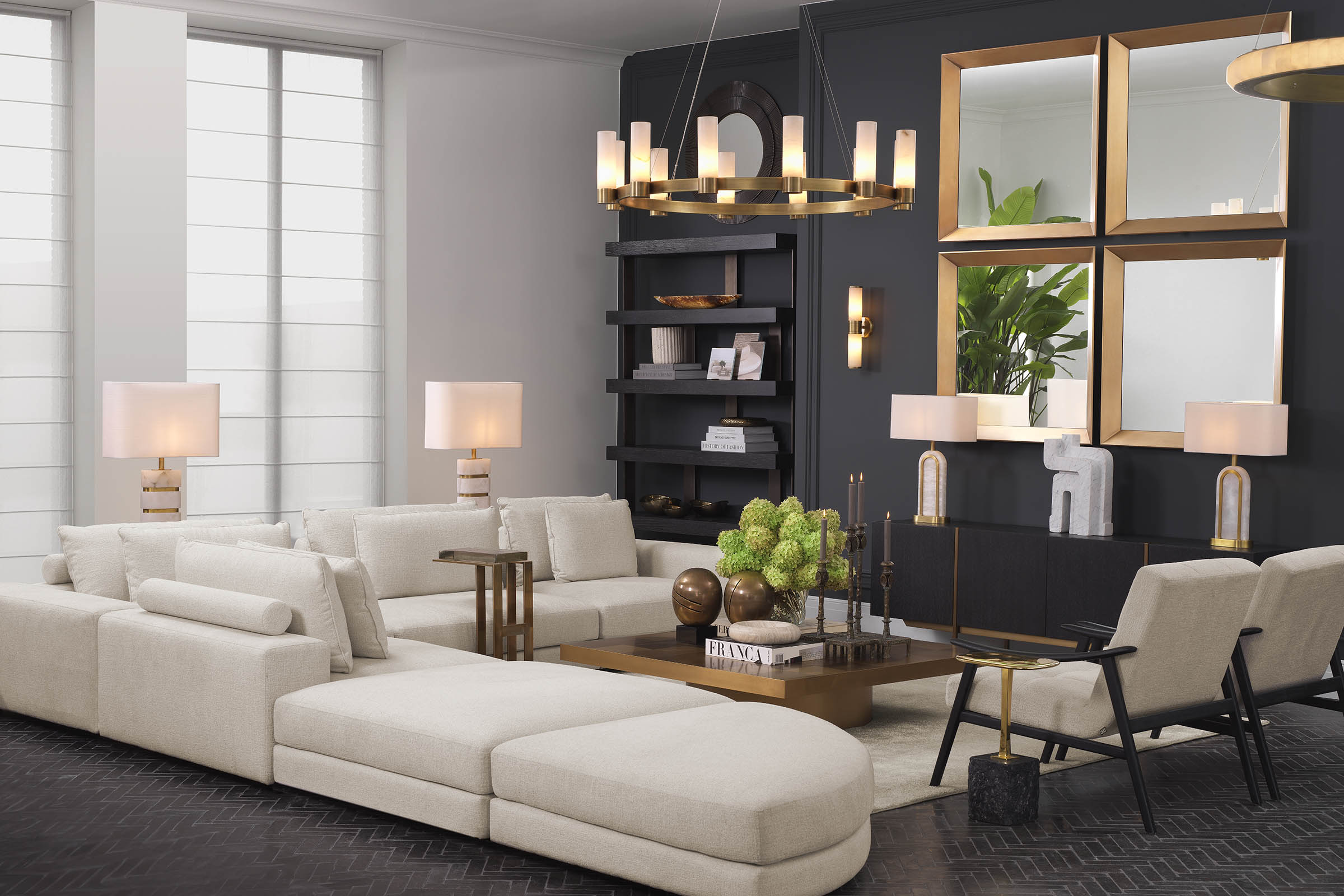
The correction is simple: angle the chair toward the sofa at somewhere between thirty and ninety degrees, with a small side table or a round coffee table between them. This creates a grouping that reads as a destination — a place in the room where two people can sit facing each other and actually talk. The classic version is the L-shape: sofa on one wall, two chairs on the adjacent wall, round coffee table in the center. It works in rooms of almost any size because the 90-degree angle opens the grouping toward the rest of the room rather than closing it off.
Beside a bed, the scale of the chair matters most. A large, deep lounge chair crowds a bedroom — it eats too much visual weight. A smaller upright armchair or a compact, low-backed chair with a slim frame reads as considered rather than afterthought. Place it against the wall with a floor lamp beside it, and you have a proper reading corner that also makes the bedroom feel like a room rather than a sleeping box.
In an entry or foyer, a single accent chair is one of the most effective statements a house can make. A chair against the wall — flanked by a floor lamp on one side and a tall vase or sculpture on the other — signals that the home is furnished with intent. It invites you to stop. For practical guidance on building the full entry vignette, we covered it in an earlier Journal piece on first impressions.


Ordering, Lead Times, and What the Showroom Is For
Eichholtz Las Vegas is a brand store, which means the full Eichholtz catalog is available to specify from our showroom — even pieces that are not on the floor at any given time. In-stock Eichholtz pieces ship from the Eichholtz warehouse network and typically arrive in two to four weeks. That is a meaningful difference from the twelve to twenty-four weeks that is standard for custom or made-to-order luxury upholstery from most other sources. If you are working with a hard move-in date, that lead time gap matters.
For designers specifying chairs for a project — a master bedroom suite, a library, a hotel-lobby seating grouping — the trade program gives access to trade pricing on the full catalog, the full upholstery matrix, and our staff on the floor for side-by-side comparisons. We opened this showroom specifically to be a specification resource, not a walk-in retail point. Bring the floor plan, bring the material samples, and use the space to make the decision correctly.
The Best Way to Decide Is to Sit in It
Reading about an accent chair and sitting in one are different experiences. The proportions that look right in a photograph may sit wrong in person — too deep, too upright, too wide for the room you are furnishing. The fabric that looks neutral on screen has a different quality in light. These are the things the showroom is for.
We have a full range of armchairs, lounge chairs, and swivel chairs on the floor at Tivoli Village, Suite 160. Our Grand Opening is summer 2026, but the showroom is open for designer appointments and project consultations now. If you have a room that needs a chair — or you’re not yet sure what kind of chair it needs — come in and we’ll narrow it down.